


















Facades
today

Coming Soon MILAN - ITALY
Opening day of Facades Today: voices shaping the future of façades.

Location

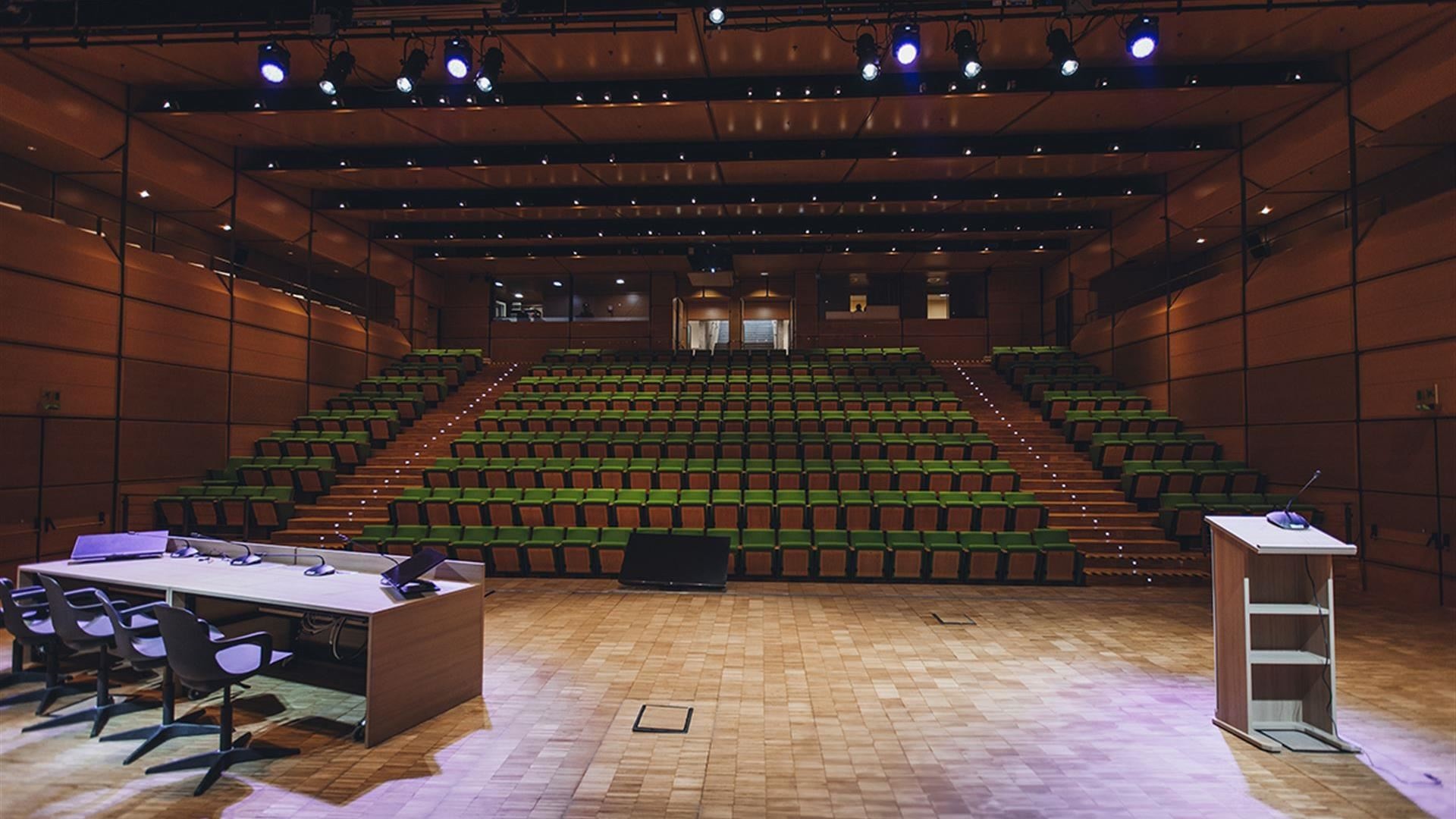
Facades Today will be held at the Monte Rosa 91 Auditorium in Milan.
Milan, Monte Rosa 91, Auditorium
Coming Soon — 09:00 to 18:00

The Format?

Facades Today is a one-day international event packed with fresh perspectives on the future of building skins.
Through a fast-paced format of short talks and case-driven presentations, the day is structured into three thematic chapters:
1

Breaking Ground

Experts reveal insights from research, prototyping and experimentation—what’s driving innovation in façade systems today?
2

Tools & Tectonics

From responsive materials to AI-driven workflows, we explore the digital and physical tools behind emerging envelope designs.
3

Context & Meaning

Façades don’t exist in isolation.
This segment looks at their cultural, social and environmental role in shaping urban identity.

With 12+ speakers from architecture, engineering and manufacturing, the program moves fast: 15 minutes per talk, big ideas, no fluff.
Join us to hear what’s next in façades — straight from those shaping the mading

Explore the Future of Façade Design

A one-day conference on innovation, design, and cultural meaning in building envelopes.  
Expect bold insights, case studies, and what’s next in façades.
Learn More
1.

DATE

Coming Soon — 09:00 to 18:00
2.

LOCATION

Milan, Monte Rosa 91 – Auditorium
3.

AUDIENCE

Designers, engineers & makers and facade enthusiasts.
4.

CONTACTS

facades@foolsforfacades.com

Event Agenda

Topics may be adapted by the speakers depending on their area of expertise.
Thematic tags support a clear narrative across the day, and help the audience navigate the diversity of approaches and disciplines.

Time
Session
Theme
09:00 - 09:15
Moderator – Opening Remarks
Introduction
09:15 – 10:15
Speakers 2–5 – Talks on Cultural Interfaces & Digital Design
Visions / Methods
10:15 – 10:30
Coffee-Break
10:30 – 11:30
Speakers 6–9 – Talks on Glass, Bioclimatics & Performance
Materials / Methods
11:30 – 12:00
Speakers 10–11 – Innovation & Lifecycle Focus
Materials
12:00 – 13:15
Lunch Break
13:15 – 13:45
Speakers 12–13 – Retrofitting & Climate Adaptation
Visions / Env.
13:45 – 14:00
Panel Discussion – Façades Ahead: Challenges & Change
All Panelists
14:00 – 14:15
Coffee Break
14:15 – 14:45
Guest Talk + Audience Q&A
Cross-cutting
14:45 – 16:00
Networking & Exhibition Walkthrough + Wrap-up
Informal
16:00 – 18:00
Closing Aperitivo + Meet the Speakers
Networking

Join the Day

REGISTER TO ATTEND Register your interest to attend and stay updated about the full program and speakers.

Thank you! Your submission has been received!
Oops! Something went wrong while submitting the form.

Share Your Voice

APPLY AS A SPEAKER. Submit your proposal and be part of the conversation on façades shaping tomorrow’s cities.

Thank you! Your submission has been received!
Oops! Something went wrong while submitting the form.

Speakers

Speaker 1

Role - Company

Speaker 2

Role - Company

Speaker 3

Role - Company

Speaker 4

Role - Company

Speaker 5

Role - Company

Speaker 6

Role - Company

Speaker 7

Role - Company

Speaker 8

Role - Company

Speaker 9

Role - Company

Speaker 10

Role - Company

Speaker 11

Role - Company

Speaker 12

Role - Company

Followed by professionals from:

ARUP
April 23, 2026
URBAN ICONS

Morpheus, Engineering the Limits of the Free-Form Façade

Link successfully copied!
Milan, 24th April 2026

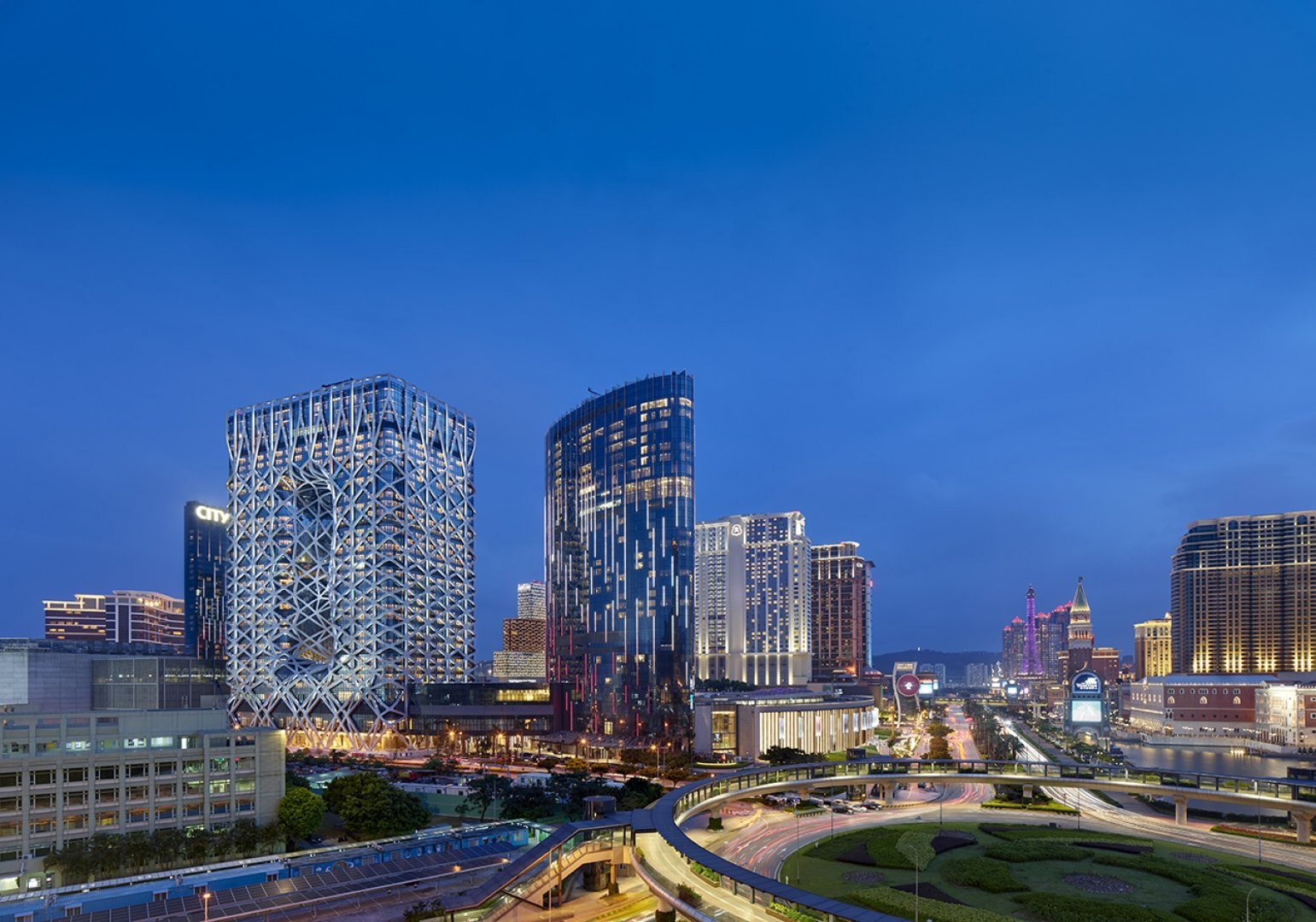
In a city defined by spectacle, excess, and constant reinvention, the skyline of Macau is a testing ground for architectural ambition.

Yet among its towers, Morpheus stands apart.

Designed by Zaha Hadid Architects and engineered by BuroHappold Engineering, the building is widely recognised as the world’s first free-form high-rise exoskeleton. A structure that does not sit behind the façade, but becomes the façade itself.

This is not simply a question of form.

Morpheus represents a fundamental shift in how buildings are conceived, designed and constructed. A project where geometry, structure, envelope, fabrication and performance are no longer separate layers, but a single, integrated system.

With more than 30 façade systems, hundreds of bespoke components, and a fully parametric workflow, Morpheus pushes façade engineering beyond conventional limits.

It is not just complex.
It is systematically complex.

Urban Context and Programmatic Intensity

Morpheus is located within the City of Dreams, one of Asia’s most prominent integrated resort developments, operated by Melco Resorts & Entertainment.

This context is crucial.

Macau is not just a city, but a high-density entertainment ecosystem, where architecture must:

  • attract global attention
  • operate at extreme occupancy levels
  • integrate multiple programmes simultaneously

The building accommodates:

  • approximately 770–780 guest rooms and suites
  • sky villas and luxury hospitality spaces
  • gaming areas and event facilities
  • restaurants, spa, rooftop pool
  • large-scale public atrium

All of this is contained within a 150,000 m² vertical structure, constrained by planning limits and existing foundations.
© Simon Bertrand

The challenge was not only architectural.
It was organizational, spatial and infrastructural.

From Rectangular Block to Spatial Void

The project began from a highly pragmatic constraint.

ZHA inherited existing foundations from a previous, unbuilt tower.
Rather than redesigning the footprint, the team chose to extrude the existing rectangular base vertically.

This produced a monolithic volume.

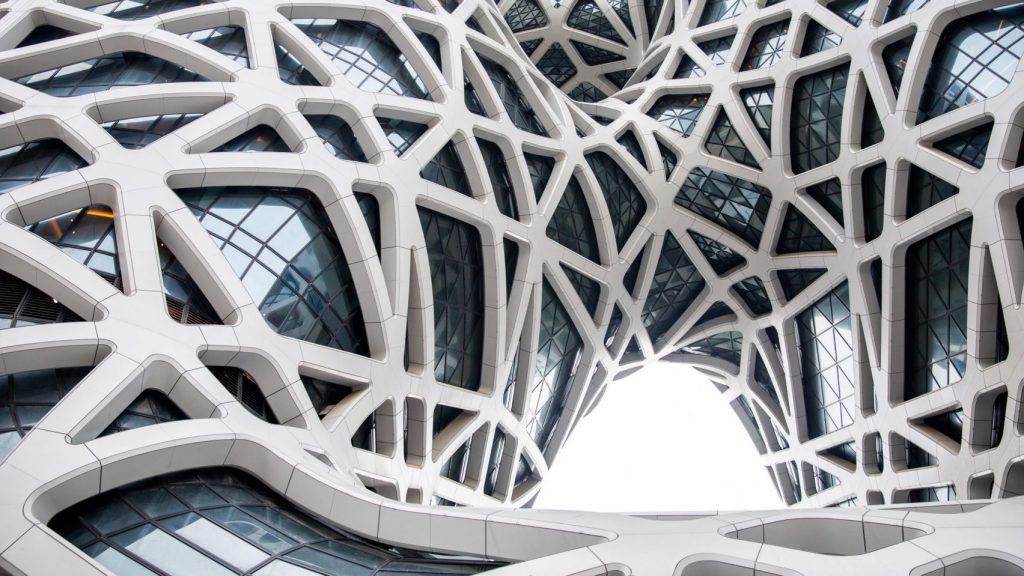
But instead of articulating the façade outward, ZHA carved the building inward.

A series of voids are subtracted from the volume, creating:

  • a full-height central atrium
  • three large voids cutting across the building
  • visual and spatial connections between interior and exterior

These voids generate what is described as an “urban window”, linking the internal communal spaces with the city.

The architecture is therefore not additive, but subtractive.

Form is not applied.
It is revealed.
© Simon Bertrand
The Exoskeleton, a Structural Revolution

At the heart of Morpheus lies its most radical innovation: the free-form exoskeleton.

This structural system:

  • wraps the entire building
  • carries primary loads
  • replaces conventional vertical columns

Unlike traditional towers, where structure is internal and façade is applied externally, Morpheus reverses this logic.

The exoskeleton becomes:

  • load-bearing system
  • architectural expression
  • façade framework

This approach delivers a key spatial advantage.

By eliminating internal columns, it creates:

  • uninterrupted interior volumes
  • highly flexible layouts
  • dramatic public spaces

But it also introduces extreme complexity.

The façade must now:

  • align with irregular structural geometry
  • adapt to varying node spacing
  • respond to structural movement

The façade is no longer independent.
It is in constant negotiation with structure.

Parametric Design as Necessity

The geometry of Morpheus could not be managed through conventional design tools.

The project demanded a fully integrated parametric modelling workflow, where geometry, structure and façade systems could be coordinated in real time.

Using Rhino and Grasshopper, the design team developed:

  • a continuous digital model of the exoskeleton
  • a reference surface for the façade envelope
  • a topological mesh describing the building skin

This model was not descriptive.
It was generative and analytical.

Key parameters included:

  • node alignment with floor slabs
  • orientation of connecting beams
  • offset distances between structure and glazing

These constraints allowed the team to:

  • rationalise geometry
  • define façade zones
  • assign appropriate systems

Parametric design was not a tool of expression.
It was the only way to make the building possible.

A Matrix of Façade Systems

Despite its continuous appearance, the façade is composed of more than 30 distinct systems.

These include:

Primary systems:

  • unitised flat glazing (tower areas)
  • single-curved glazing (corners)
  • faceted glazing (transition zones)
  • triangulated glazing (free-form areas)

Secondary systems:

  • aluminium cladding for exoskeleton
  • spandrel and vision panel assemblies
  • bespoke connection systems

Each system responds to:

  • geometric conditions
  • structural constraints
  • installation logic
  • performance requirements

The façade is not a repetition of elements.
It is a coordinated field of variation.

The Free-Form Zone, Extreme Customisation

The central voids represent the most extreme condition.

Here:

  • no floor slabs exist
  • structural nodes are widely spaced
  • geometry is fully three-dimensional

The façade in this area is composed of 242 unique panels.

© Ivan Dupont

These panels form macro-panels, reaching up to:

  • 20 m in width
  • 10 m in height

Each macro-panel:

  • is fabricated as a single unit
  • subdivided for transport
  • reassembled on site

To achieve curvature:

  • smaller flat glass units are combined
  • steel plate frames provide structural support

Every panel is different.
Yet all are part of a coherent system.

Structural Movement and Façade Independence

The exoskeleton behaves dynamically:

  • during construction
  • under wind loads
  • due to thermal expansion

To accommodate this:

  • panels are supported at a single primary node
  • secondary nodes allow sliding and rotation
  • flexible joints absorb movement

This strategy ensures:

  • minimal stress on glazing
  • long-term durability
  • adaptability to structural behaviour

The façade is not rigid.
It is designed to move.

Glazing Strategies and Material Performance

Different zones required different glazing strategies.

Tower areas:

  • double glazing
  • low-E coatings
  • acoustic laminated units

Free-form areas:

  • single glazing
  • laminated glass with PVB
  • heat-strengthened glass for reliability

Performance considerations included:

  • solar gain control
  • acoustic performance
  • maintenance accessibility
  • resistance to extreme weather

The façade is engineered not only for form, but for long-term performance.

Construction as Design Driver

Construction sequence fundamentally shaped the façade design.

Because the exoskeleton was installed first:

  • external access was limited
  • façade installation had to occur internally

This led to:

  • separation of panels into spandrel and vision components
  • internal fixing systems
  • prefabrication strategies

In the atrium:

  • full-height scaffolding was used
  • installation proceeded from top to bottom
© Ivan Dupont

Construction was not a final step.
It was embedded in the design process.

Environmental and Energy Strategies

Morpheus integrates a range of environmental solutions:

  • solar control glazing to reduce heat gain
  • exoskeleton acting as shading device
  • selective air conditioning only in occupied zones
  • energy recovery systems
  • intelligent building management

These strategies balance:

  • performance
  • energy efficiency
  • user comfort
Project Team
  • Client: Melco Resorts & Entertainment
  • Design Architect: Zaha Hadid Architects
  • Executive Architect: Leigh & Orange
  • Façade & Structural Engineer: BuroHappold Engineering
  • MEP: JRP
  • Main Contractor: Dragages Hong Kong

Façade Contractors:

  • Jangho Group
  • Kyotec Group
  • Hacely
FFF perspective

Morpheus is not just an iconic building.

It is a paradigm shift.

It demonstrates that:

  • façade and structure are becoming one system
  • geometry is becoming a design language
  • customisation is replacing repetition

Most importantly, it shows that complexity is no longer a limitation.

It is a design resource.

The future of façades will not be simpler.

It will be more intelligent, more integrated, and more precise.

And Morpheus is one of the first buildings to fully embrace that reality.
Community in Numbers
150+
Countries Covered
2,000+
Companies Engaged
10,000+
Professional Followers
Followed by Professionals from:
AriseHealth logoOE logo2020INC logoThe Paak logoThe Paak logoEphicient logoEphicient logoEphicient logoToogether logoToogether logoToogether logoToogether logoToogether logoToogether logoToogether logoToogether logoToogether logoToogether logoToogether logoToogether logoToogether logoToogether logoToogether logo
About the event

"Facades Today": is a one-day conference exploring contemporary approaches to façade design, innovation, and cultural meaning.
Expect critical insights, surprising case studies, and practical visions for what comes next in urban envelopes.

Learn more
  • Location

    Location:
    Milan, Monte Rosa 91 - Auditorium

  • Date:
    April 24, 2026 — 09:00 to 18:00

  • Audience:
    The people who shape buildings—designers, engineers & makers

  • Contact: events@foolsforfacades.com
Was your product part of an Urban Icon?

Join the archive that celebrates architecture’s most iconic façades.
If your company played a role—through materials, systems, or expertise—let us know.
We’re building a record of the people and products behind the world’s most influential buildings.

Get Featured

Share your research with our global community

Are you working on façade innovation, materials, or design methods?
Submit your study and be part of the conversation shaping tomorrow’s architecture.

Submit Your Study
Further articles