





















In a city defined by glass towers, reflective skins, and spectacular skylines, Wasl Tower introduces a different architectural language.
Rising approximately 302–303 metres along Sheikh Zayed Road in Dubai, the tower is designed by UNS / UNStudio in collaboration with Werner Sobek, who was responsible for structural engineering, façade engineering, MEP engineering, sustainability consultancy, acoustic planning, site supervision, general planning, and BIM coordination.
But what makes Wasl Tower particularly relevant for façade design is not only its height or its twisting form.
It is the way the building envelope becomes a passive climate control system.
Wrapped in thousands of slanted terracotta ceramic fins, the façade acts as a 360-degree environmental layer. It filters sunlight, reduces heat gain, supports airflow, and helps stabilise internal temperatures while maintaining outward views.
In this project, ceramic is not used as decoration.
It becomes a technical system.
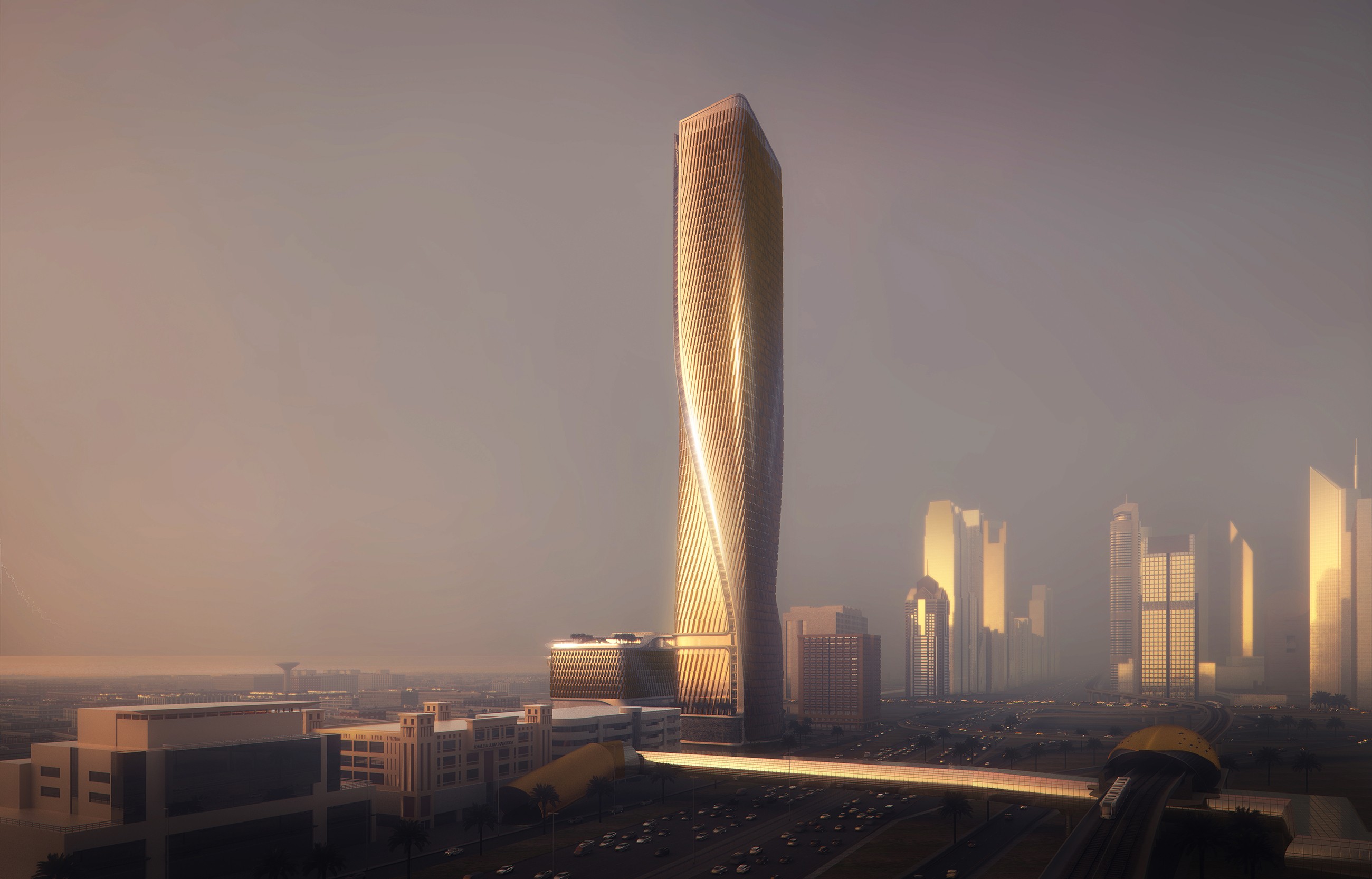
Wasl Tower is described as a new landmark for Dubai: a 64-storey mixed-use tower combining hotel, residential, office, hospitality, wellness, retail, and public spaces within a single vertical structure.
The building includes a Mandarin Oriental hotel, apartments, offices, restaurants, bars, spa areas, swimming pools, elevated public amenities, and shared social spaces distributed across multiple levels.
Rather than operating as a single-function tower, Wasl Tower is conceived as a vertical city.
Its architectural form reinforces this idea. The tower rises with a sinuous, twisting profile, often described as a contrapposto gesture — a form that shifts as it climbs and appears different from every angle.
This movement is not only visual.
Through engineering modifications to the tower’s geometry and structural stiffness, Werner Sobek reduced wind loads by approximately 20%. The result is a building where architectural expression and structural efficiency work together.
The tower’s form, therefore, is not a sculptural gesture alone.
It is part of the performance strategy.
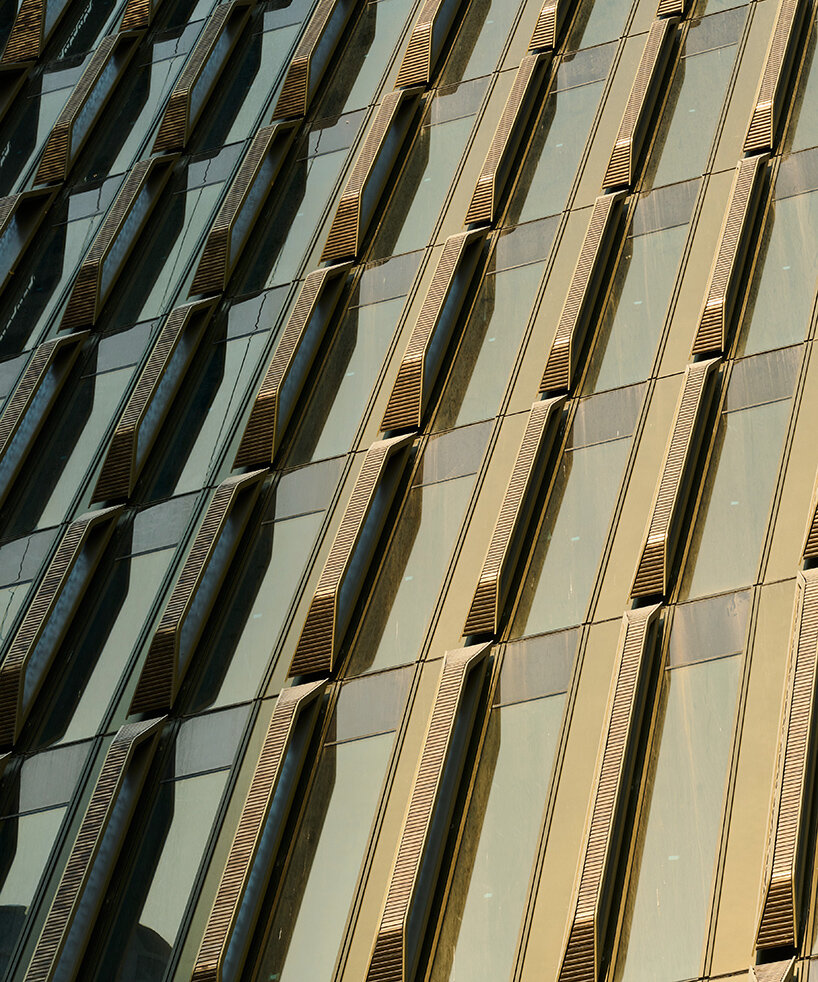
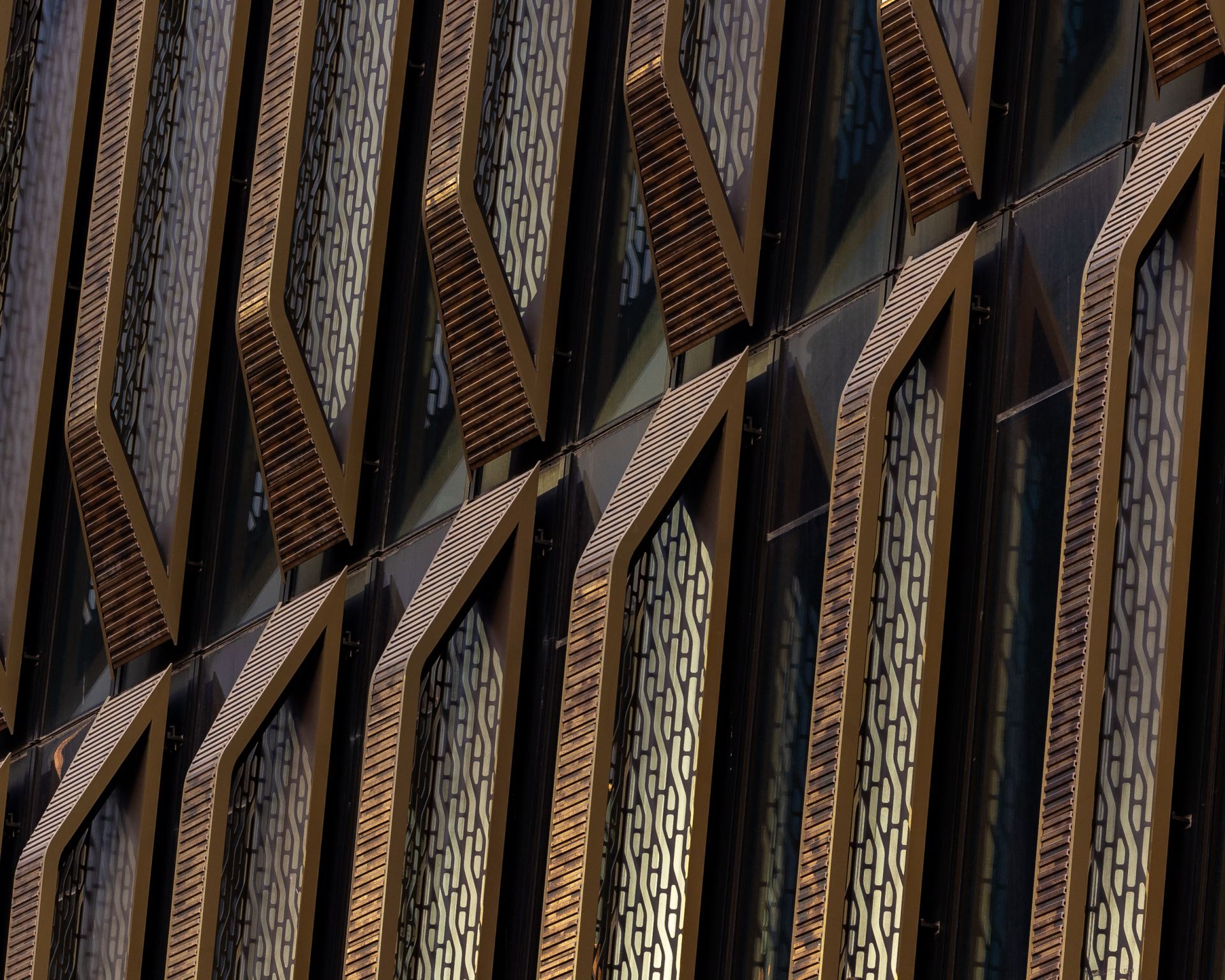
The most distinctive feature of Wasl Tower is its ceramic slat façade.
The façade is composed of thousands of slanted terracotta fins that wrap the tower as a continuous outer layer. These fins are positioned to reduce direct solar exposure while still allowing views toward the outside.
In Dubai’s hot, high-radiation climate, this is essential.
The ceramic fins act as passive sun protection. They reduce solar heat gain before it reaches the glazed curtain wall behind them, helping to lower cooling demand. According to the project information, this contributes to a reduction in cooling loads of around 10% compared to older buildings in the city.
The system is not simply a screen.
It is a layered façade strategy:
This transforms the façade into a 360-degree environmental interface.
Terracotta is one of the oldest architectural materials, but at Wasl Tower it is used in a highly contemporary way.
Ceramic has several properties that make it particularly relevant for a high-rise façade in Dubai:
In Wasl Tower, these properties are scaled up to high-rise architecture.
The terracotta fins help protect the building envelope from extreme heat and contribute to more stable internal conditions. Their low thermal conductivity means that they do not transfer heat as aggressively as more conductive materials, helping the façade operate as a buffer between exterior climate and interior comfort.

This is why the project is important.
It does not treat ceramic as a nostalgic or decorative material.
It treats ceramic as a performance material.
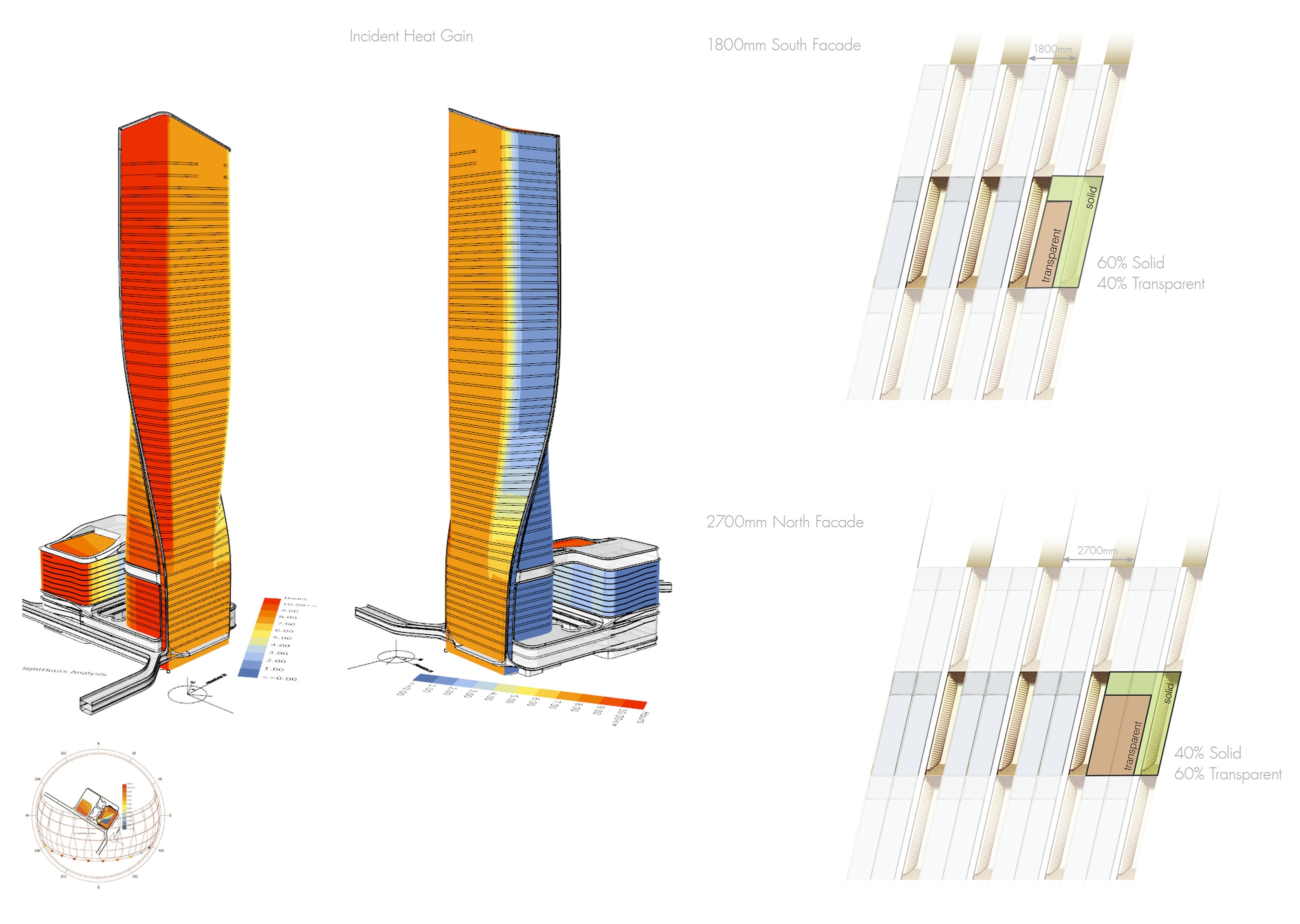
The ceramic fins are not applied uniformly.
Their geometry, density, and positioning are developed in response to solar orientation. The façade works as a continuous system, but one that adapts across the tower depending on exposure, daylight requirements, heat gain, and environmental performance.
This creates a careful balance between:
The tower therefore avoids the typical glass-box problem of many high-rise buildings in hot climates.
Instead of relying only on high-performance glass or mechanical cooling, Wasl Tower uses the façade itself to reduce demand at source.
This is one of the key lessons of the project:
the best energy strategy often begins before energy is consumed.
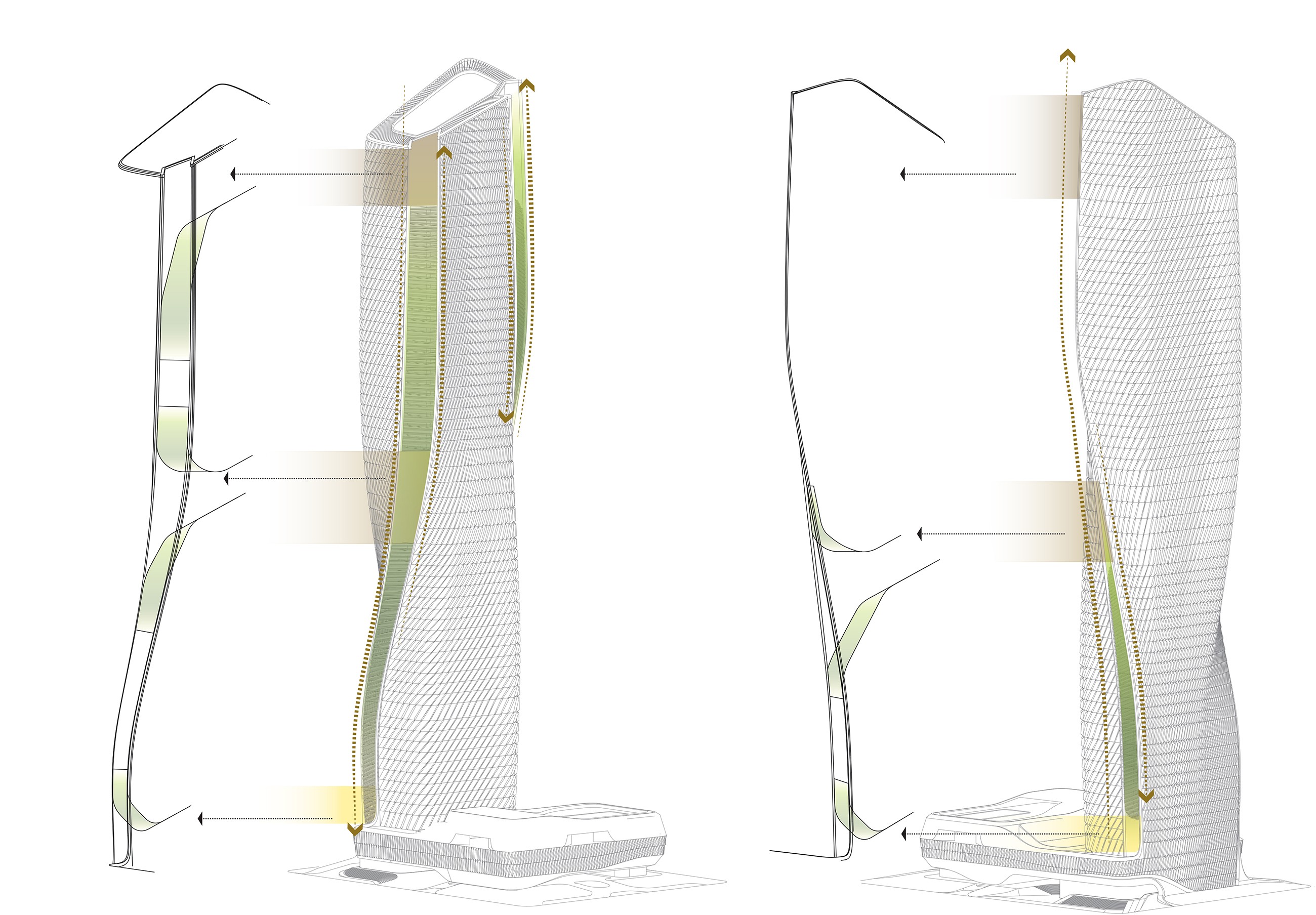
Beyond shading, the ceramic fins contribute to passive cooling through the cavity between the outer ceramic layer and the inner glazed curtain wall.
This cavity allows heat to dissipate before it enters the interior environment. Air movement across the façade supports the performance of the ceramic layer and reduces the burden on mechanical cooling systems.
The façade therefore operates through three combined actions:
This is where the façade becomes more than cladding.
It becomes a climate-moderating system.

Wasl Tower also demonstrates the connection between façade design and structural strategy.
The tower uses a carefully engineered structural framework with an outrigger solution and minimised core dimensions, avoiding additional shear walls. This allows the structure to support flexibility, efficiency, and long-term adaptability.
The project information also notes that engineering modifications to geometry and stiffness reduced wind loads by approximately 20%.
This matters for high-rise façade design because wind pressure affects:
In a 300-metre tower, façade performance cannot be isolated from structural behaviour.
The envelope, structure, and wind response must be coordinated from the beginning.
Wasl Tower is described as one of the world’s tallest buildings to use such a comprehensive ceramic façade system.
This is significant because ceramics are more commonly associated with low-rise cladding, tiles, rainscreen systems, or traditional architectural surfaces.
Here, ceramic is scaled into a high-rise façade strategy.
Each terracotta fin forms part of a larger system that combines:
The innovation is not the material alone.
The innovation is the system integration.
Wasl Tower offers an alternative to the dominant high-rise language of fully glazed towers.
In many hot climates, glass remains associated with modernity, transparency, and prestige. But uncontrolled glazing can increase cooling loads, glare, thermal discomfort, and long-term energy demand.
Wasl Tower proposes a different model.
It keeps transparency, but filters it.
It keeps architectural expression, but connects it to climate.
It uses materiality not only for image, but for performance.
The ceramic façade becomes both:
This dual role is what makes the project powerful.
The same element that gives the tower its character is also doing technical work.
The façade is central to the sustainability strategy, but it is not the only component.
The project also integrates solar thermal panels, reflective glazing, LED lighting, daylight-responsive systems, district cooling, an integrated heat pump system, low-VOC finishes, recycled PET acoustic panels, and regionally sourced materials.
The structural design also reduced concrete use by approximately 3,000 cubic metres.
This reinforces an important idea:
sustainability in high-rise architecture is not achieved through one feature.
It comes from the coordination of façade, structure, systems, materials, energy strategy, and user comfort.

Project: Wasl Tower
Location: Dubai, UAE
Height: approximately 302 metres
Architect: UNS / UNStudio
Engineering: Werner Sobek
MEP Design: SEED Engineering Consultants
Programme: mixed-use, including hotel, residences, offices and amenities
Façade: unitised aluminium, glass and ceramic curtain wall system with terracotta fins
Key feature: one of the tallest ceramic façades in the world
Sustainability strategies: passive ceramic shading, reflective glazing, daylight-responsive systems, district cooling, integrated heat pump systems, low-VOC finishes, recycled PET acoustic materials and regionally sourced materials




























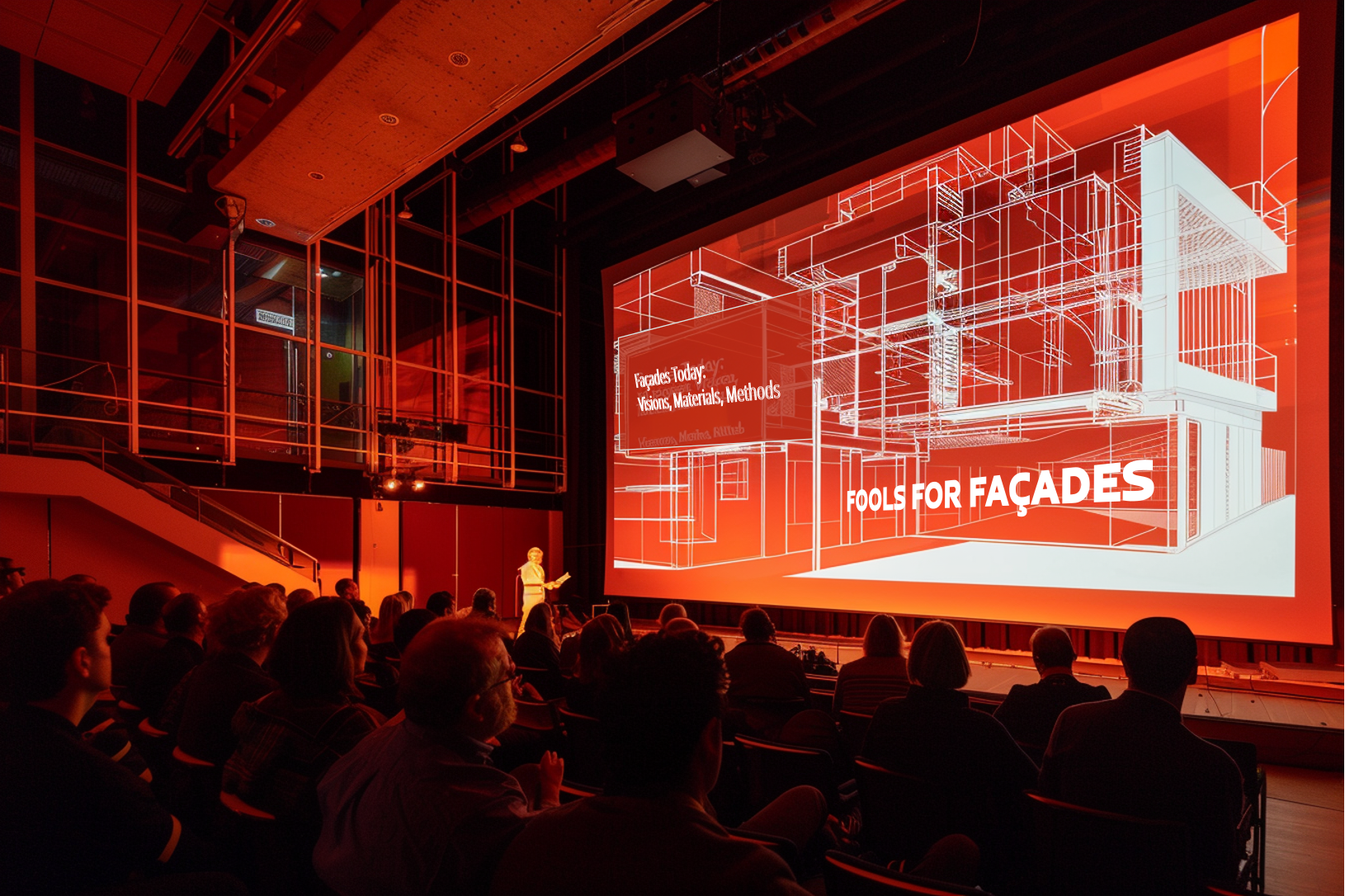
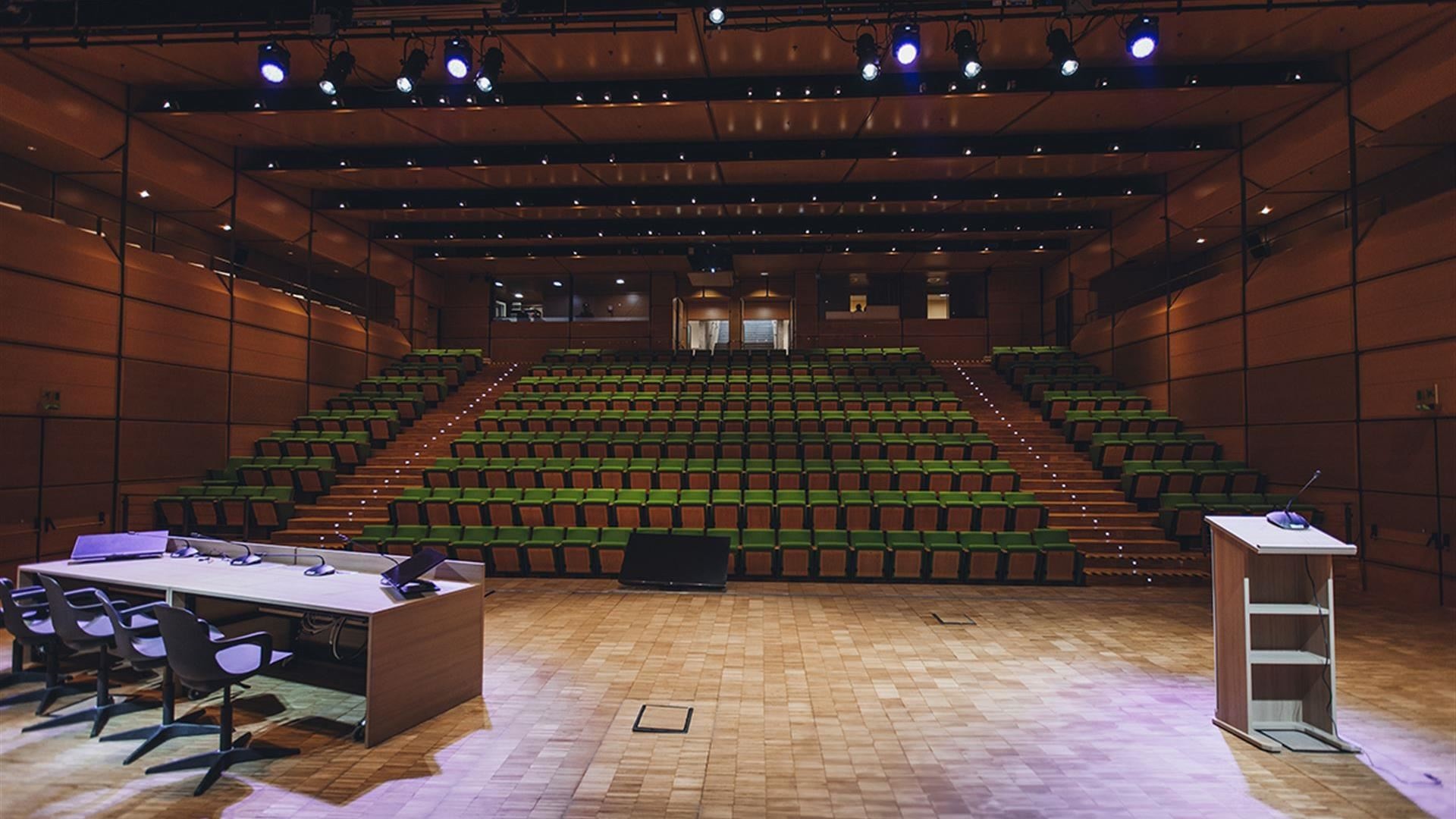
"Facades Today": is a one-day conference exploring contemporary approaches to façade design, innovation, and cultural meaning.
Expect critical insights, surprising case studies, and practical visions for what comes next in urban envelopes.

Location:
Milan, Monte Rosa 91 - Auditorium

Date:
April 24, 2026 — 09:00 to 18:00

Audience:
The people who shape buildings—designers, engineers & makers

Contact: events@foolsforfacades.com
Join the archive that celebrates architecture’s most iconic façades.
If your company played a role—through materials, systems, or expertise—let us know.
We’re building a record of the people and products behind the world’s most influential buildings.
Are you working on façade innovation, materials, or design methods?
Submit your study and be part of the conversation shaping tomorrow’s architecture.


.png)
.png)
.png)