
























Can modular buildings finally eliminate scaffolding from façade installation?
This research proposes a customised unitised curtain wall system specifically designed for prefabricated prefinished volumetric construction (PPVC).
Through numerical modelling, mock-up validation, and waterproofing testing, the study demonstrates how façade installation can become faster, safer, more reliable —and significantly lower in cost and carbon impact.
Prefabricated prefinished volumetric construction (PPVC) is often presented as the logical future of high-performance housing.
Entire volumetric modules — complete withfinishes, services, and fixtures — are transported to site and stacked into position.
But there is one persistent weakness:
The façade at the module-to-module interface.
In practice, the envelope is where modular logic frequently breaks down.
In many real projects, façades become the very reason modular buildings lose their efficiency advantage.
The research by Hajirezaei, Sharafi and Noroozinejad Farsangi [1, 2] addresses precisely this weak link.
Not by redesigning curtain walls. But by redesigning how they are installed.
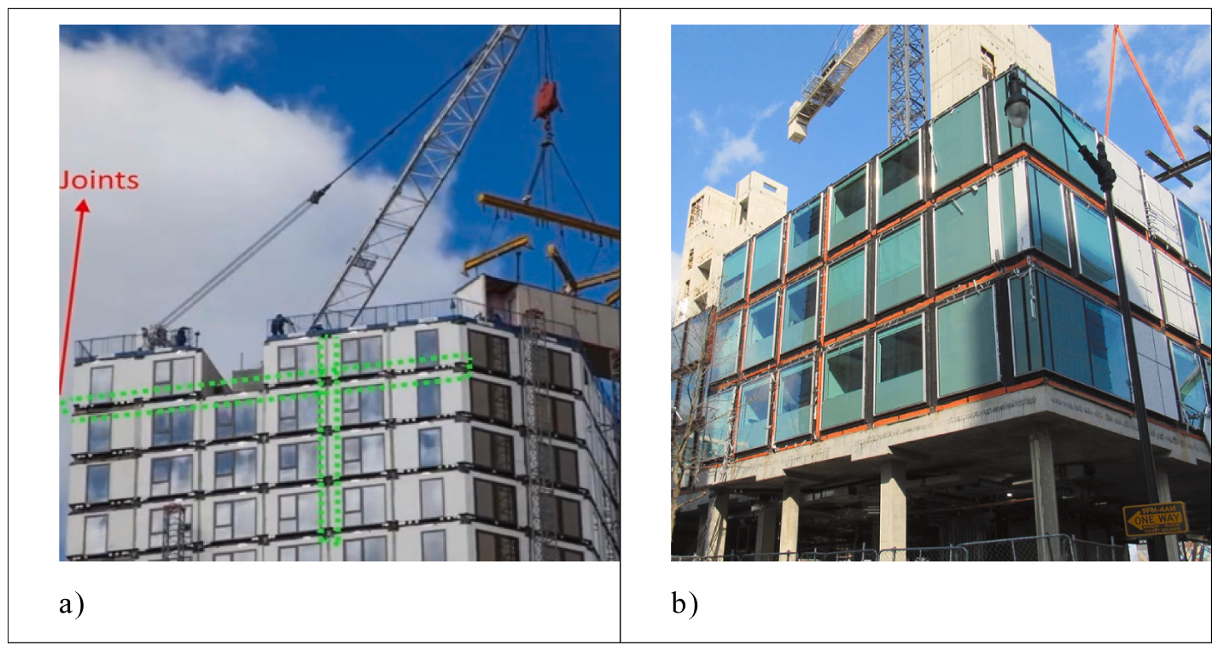
Conventional façade typologies were developed for continuous concrete or steel frames — not discrete stacked boxes.
Stick Curtain Walls
Window Wall Systems
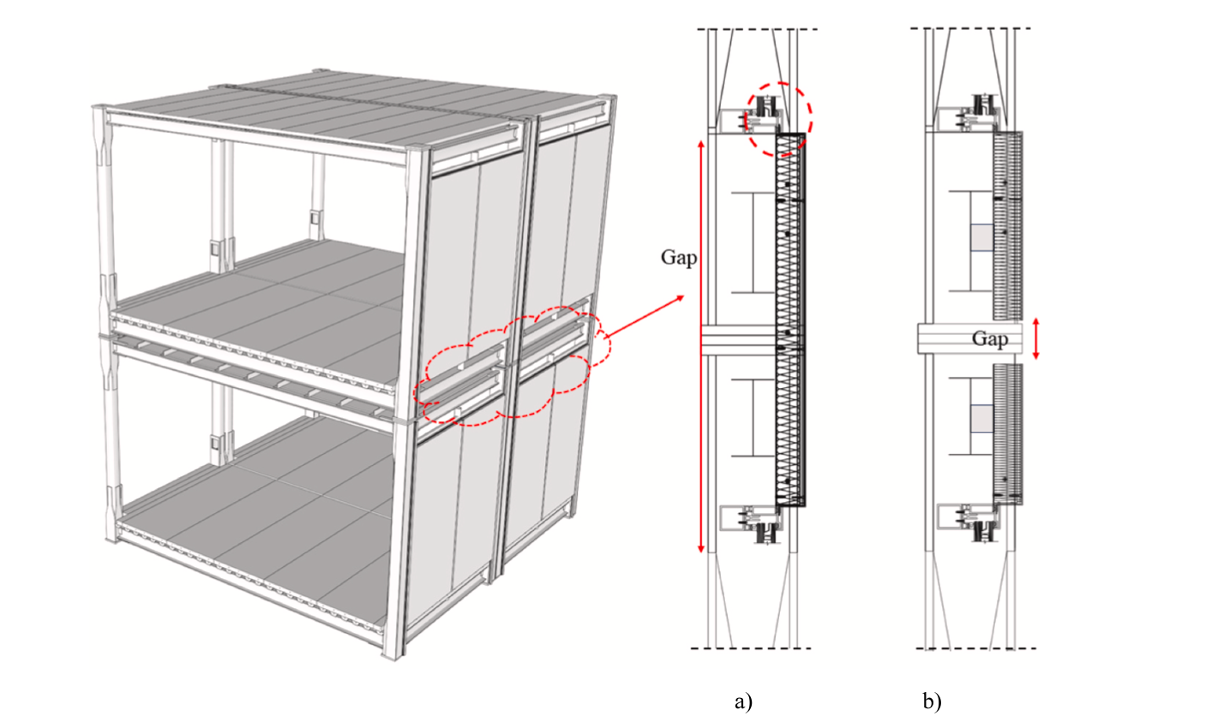
The Resulting Problems
Most critically:
Modular buildings create vertical and horizontal gaps that traditional façade systems were never designed to resolve elegantly.
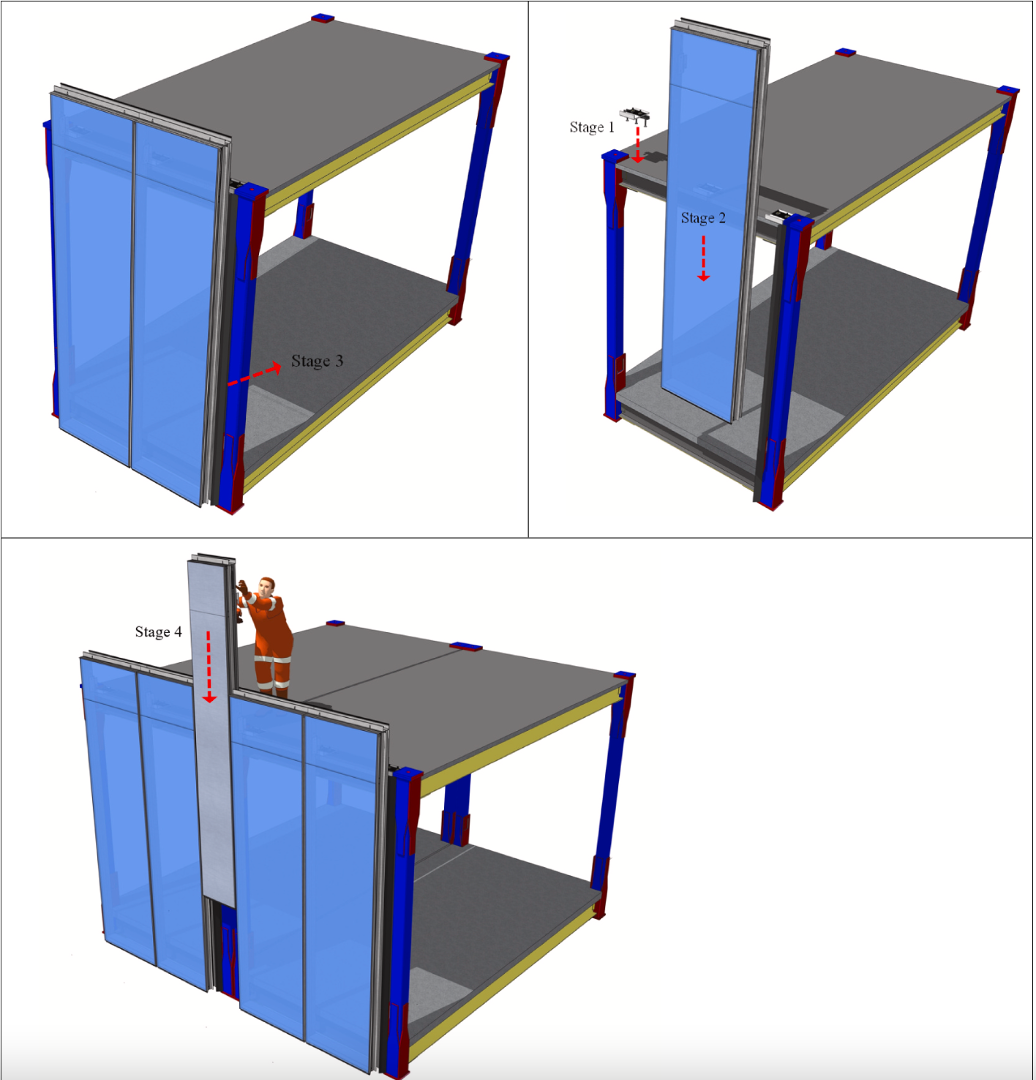
The core contribution of the study
Facade installation is not a new façade product.
It is a new installation methodology built around:
The innovation lies in sequencing.
Instead of:
The proposed strategy enables:
No scaffolding.
No mast climbers.
No exterior gap sealing after stacking.
Façade installation becomes integrated into module assembly itself.
To validate the concept, the authors performed preliminary structural assessment under Australian Standards Facade installation.
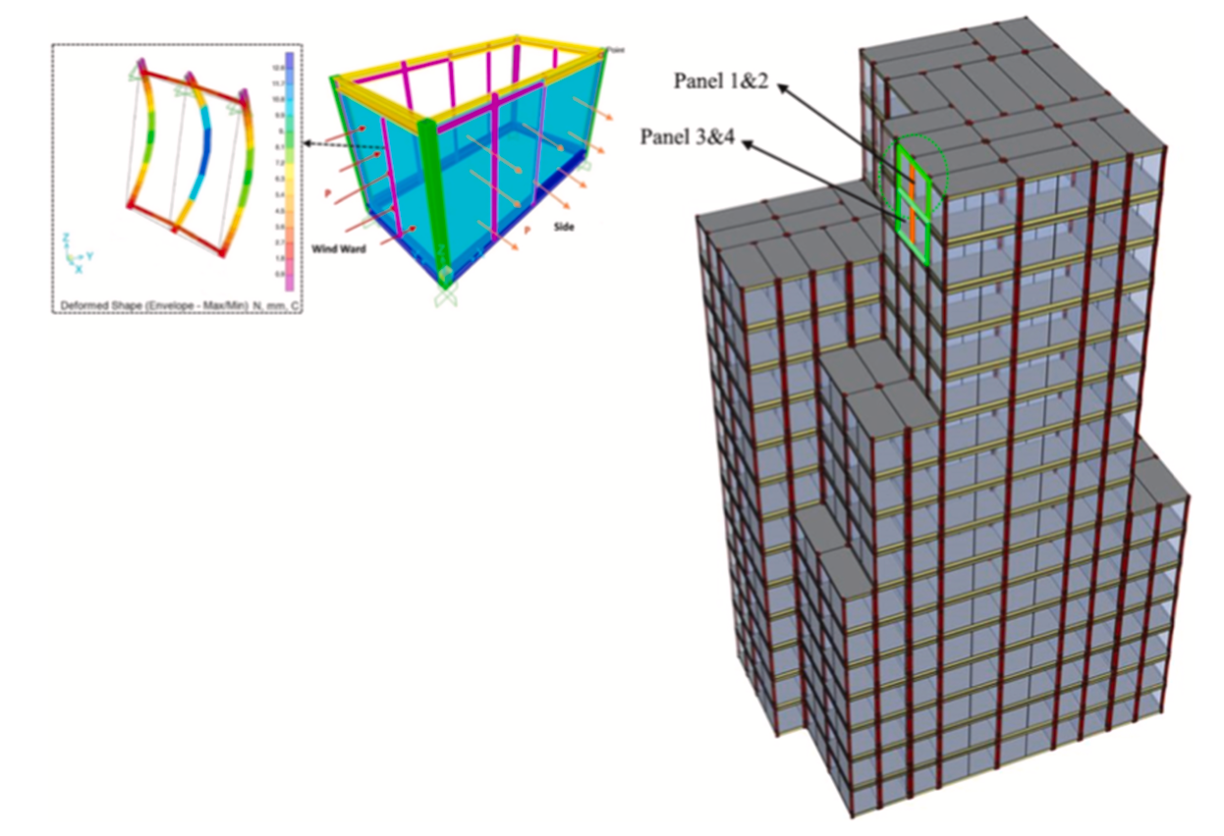
Wind Design Parameters
Finite element modelling using SAP2000 and ABAQUS evaluated:
Selected Structural Configuration
Results
The system satisfies both serviceability and ultimate limit state requirements.
Importantly, modelling assumed pinned stack-joint behaviour — a conservative assumption representing lower-bound rotational stiffness.
Misalignment is one of modular construction’s hidden enemies.
Even small deviations during fabrication or stacking can:
The proposed system addresses this at two levels:
Off-Site
On-Site
This is significant.
Many façade failures occur not because systems are poorly designed — but because they cannot absorb real-world deviation.
This system anticipates imperfection.
A two-storey half-scale mock-up was constructed
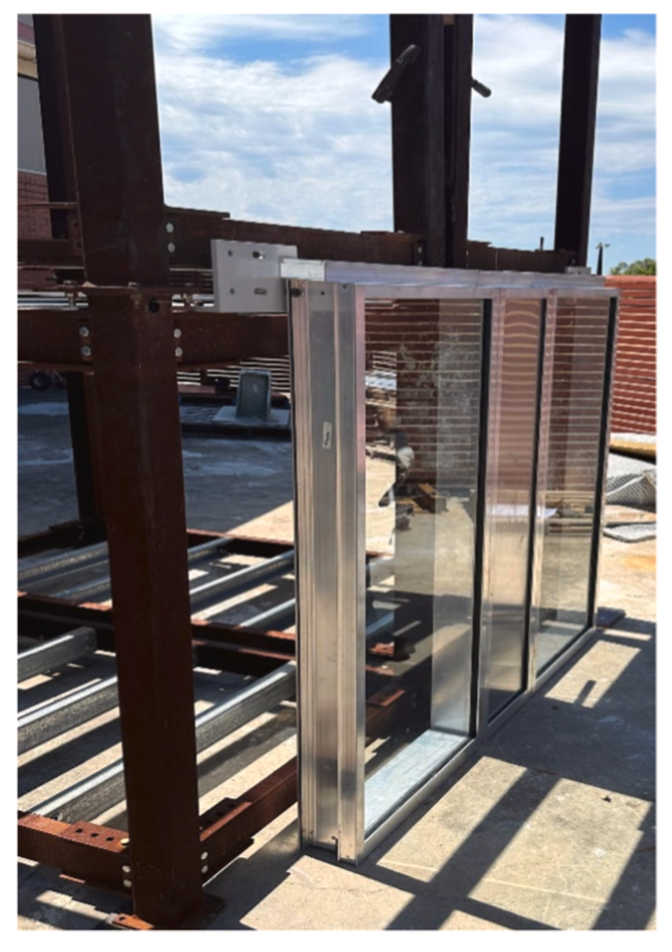
Testing focused on:
Even without lubrication, gaskets maintained integrity and remained in position after installation.
This suggests that the system can tolerate imperfect site conditions without compromising seal performance.
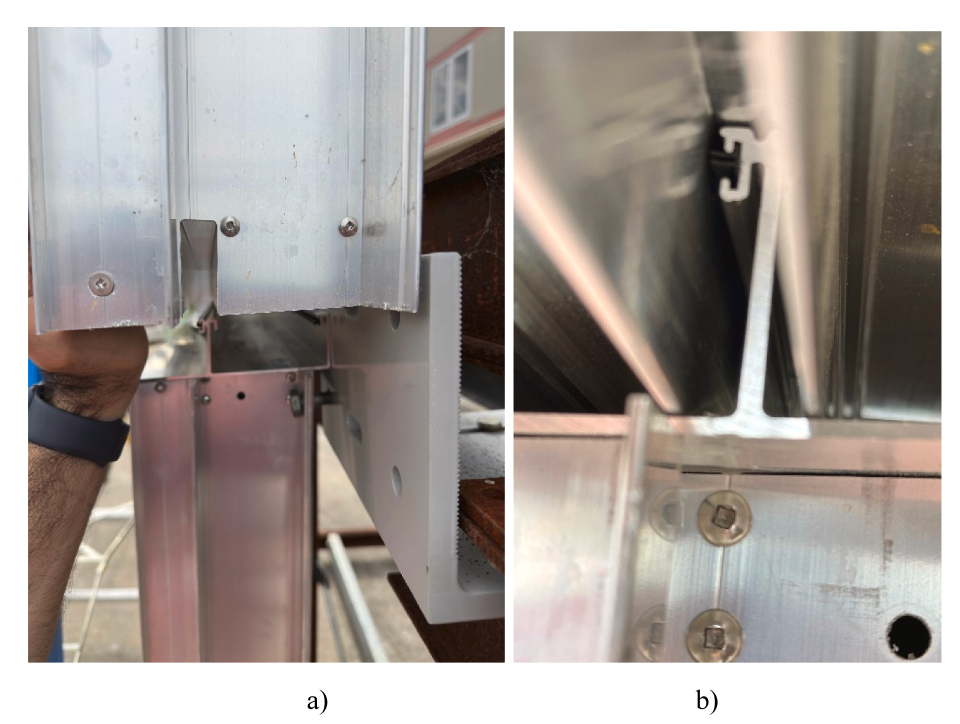
Water ingress has historically been the most severe defect category in PPVC projects.
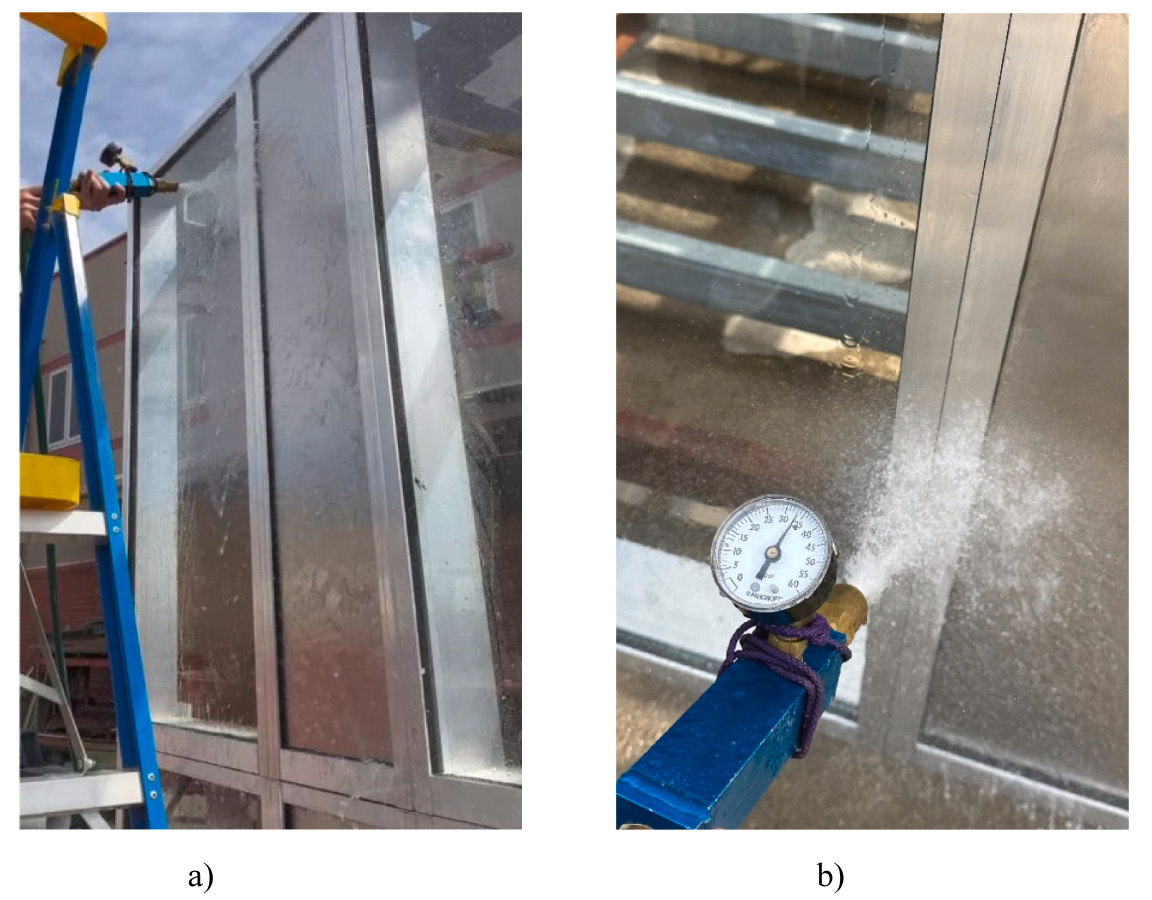
Testing followed AAMA 501.2 procedures:
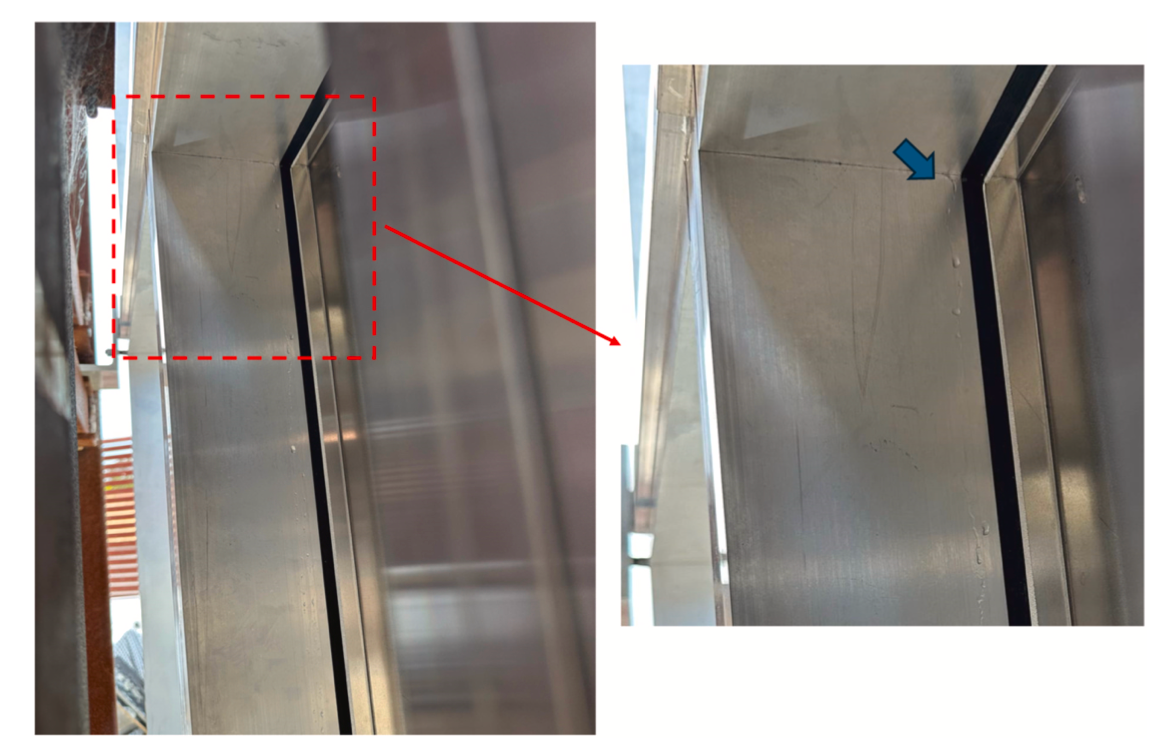
The stack joint interlock and mullion engagement maintained watertightness under field-simulated spray conditions.
The authors acknowledge that chamber-based pressure differential testing would provide additional validation for high-rise applications.
But within field spray parameters, the system performed reliably.
Two real projects were used as benchmarks:
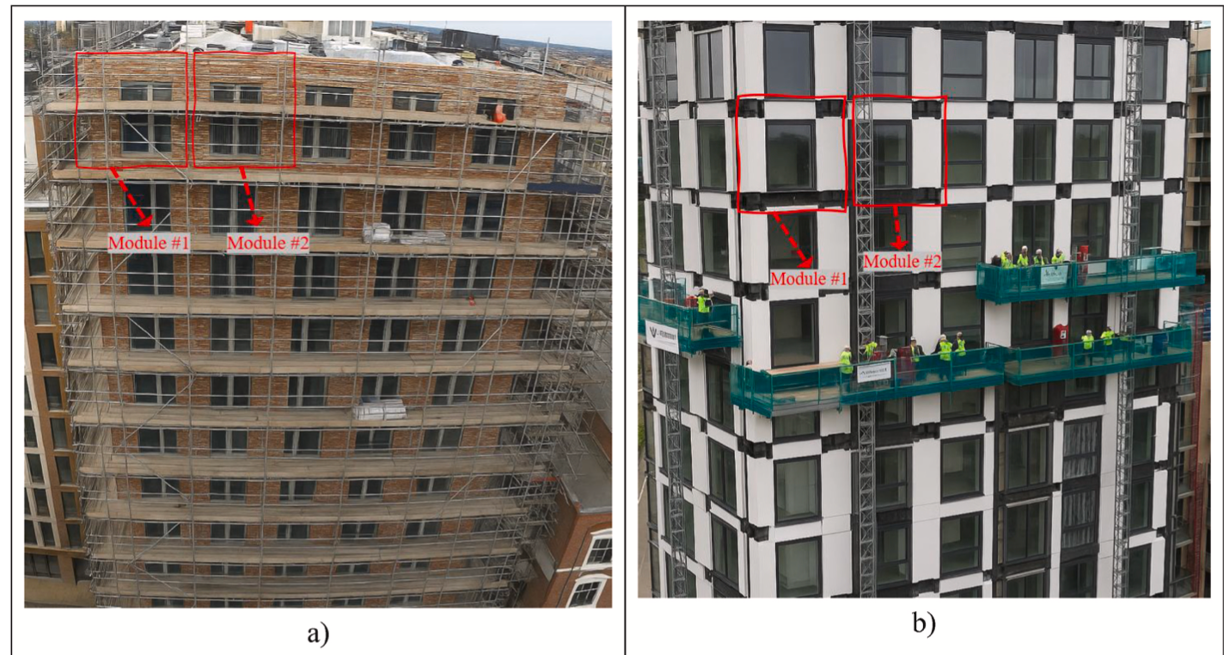
Valentine Project (10-storey)
Mapleton Crescent (27-storey)
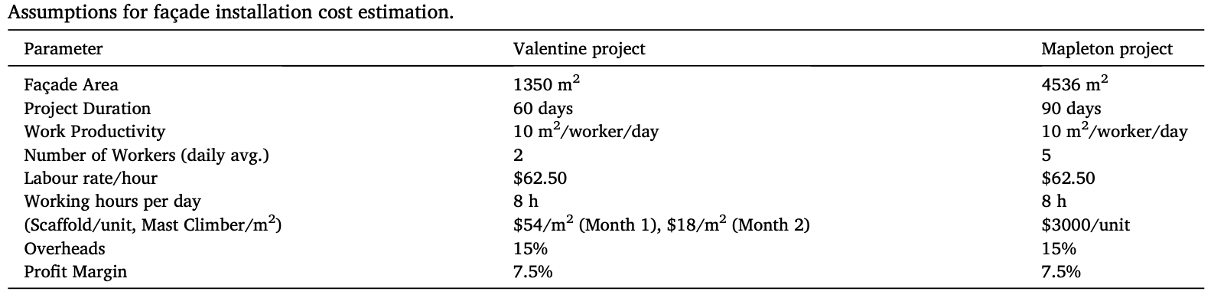
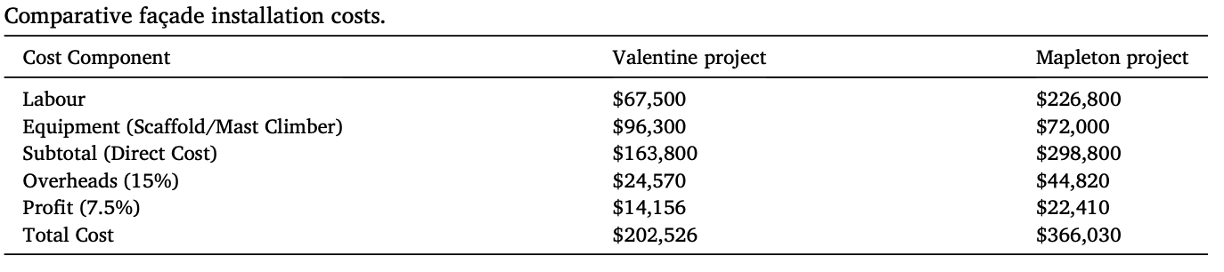
Proposed System
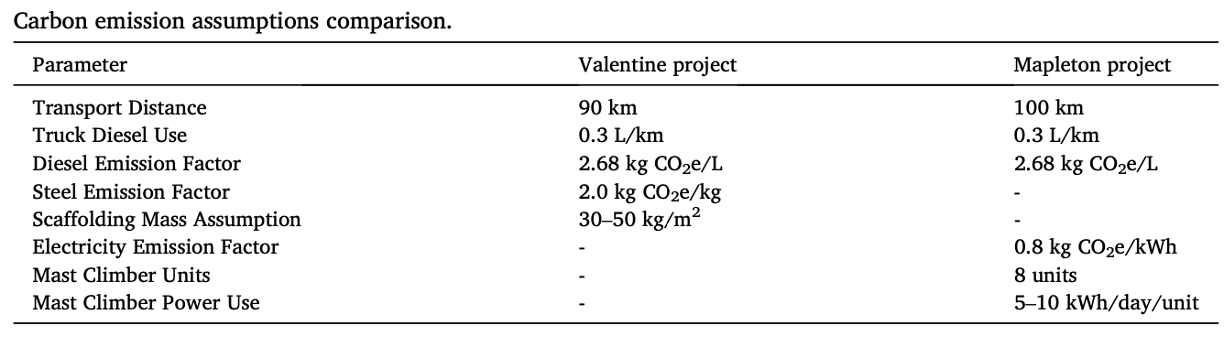
Beyond cost, the elimination of temporary works reduces:
This is not a marginal improvement.
It is structural decarbonisation through procedural simplification.


Working at height remains one of the leading causes of fatalities in construction.
Removing scaffolding and mast climbers from façade installation:
Façade engineering is rarely discussed in safety terms.
But in modular construction, installation strategy directly affects worker risk profiles.
This research suggests a broader principle:
Industrialised construction demands industrialised façade logic.
If modules are factory-finished, façades must:
The façade cannot be an afterthought.
It must be designed for stacking.
The authors identify future research needs:
The concept is validated at proof-of-concept level.
Scaling and lifecycle evaluation are the next frontier.
The paper does not claim to revolutionise curtain wall technology.
It does something arguably more important:
It repositions installation methodology as a design variable.
In modular construction, the envelope is not merely about performance metrics.
It is about logistics.
Sequence.
Carbon.
Safety.
Tolerances.
And when those are aligned, façade installation no longer slows industrialisation.
It accelerates it.
1. R. Hajirezaei, P.Sharafi, E.N. Farsangi, P. Rahnamayiezekavat, Façade systems for industrialised prefabricated prefinished modular construction. Automation in Construction, 2025. 176 DOI: 10.1016/j.autcon.2025.106269.
2. R. Hajirezaei,P. Sharafi, E. Noroozinejad Farsangi, An Innovative Façade System for Prefabricated Prefinished Volumetric Construction: Experimental and Numerical Investigations. Journal of Building Engineering,2026 DOI: 10.1016/j.jobe.2026.115538.





























"Facades Today": is a one-day conference exploring contemporary approaches to façade design, innovation, and cultural meaning.
Expect critical insights, surprising case studies, and practical visions for what comes next in urban envelopes.

Location:
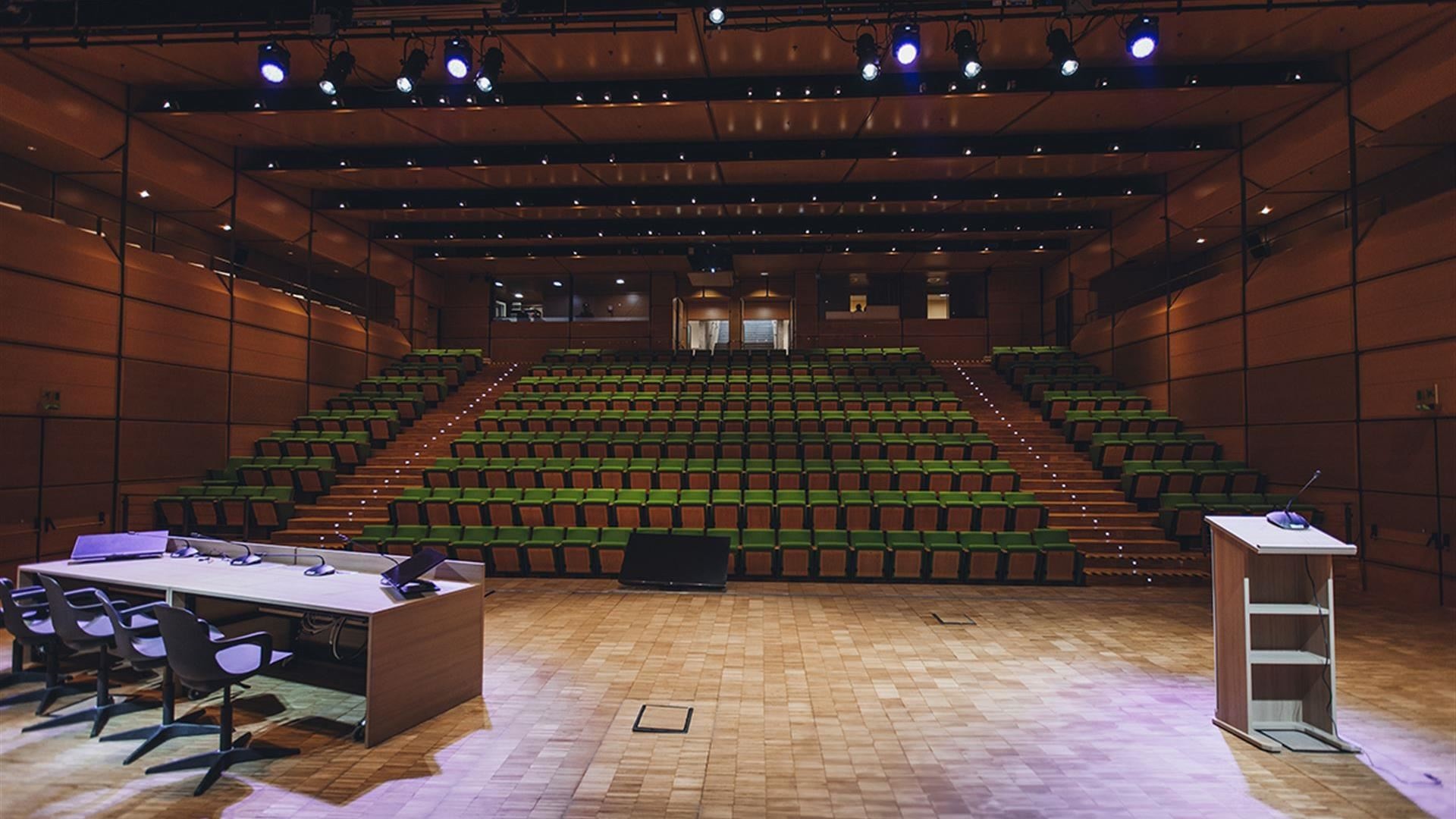
Milan, Monte Rosa 91 - Auditorium

Date:
April 24, 2026 — 09:00 to 18:00

Audience:
The people who shape buildings—designers, engineers & makers

Contact: events@foolsforfacades.com



Join the archive that celebrates architecture’s most iconic façades.
If your company played a role—through materials, systems, or expertise—let us know.
We’re building a record of the people and products behind the world’s most influential buildings.
Are you working on façade innovation, materials, or design methods?
Submit your study and be part of the conversation shaping tomorrow’s architecture.


.png)
.png)
.png)