
0


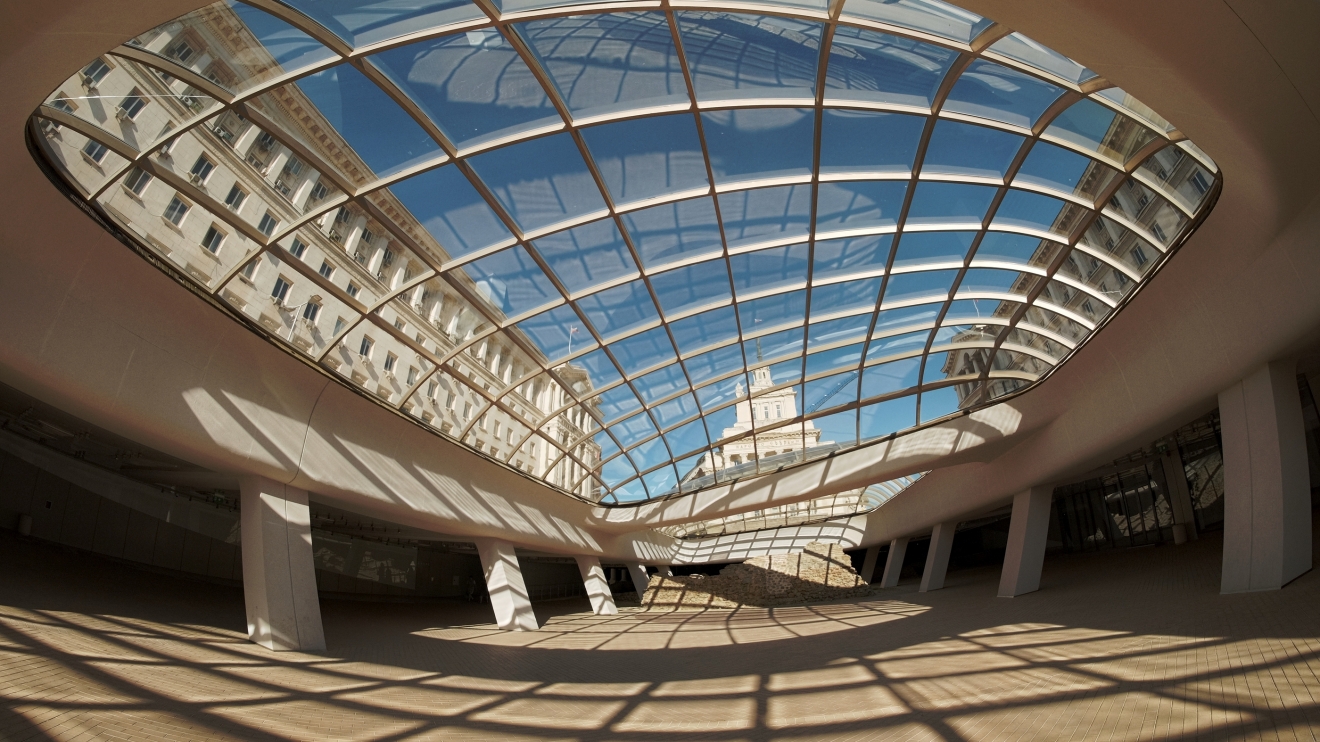
Where complex geometry becomes buildable glass.
Architectural glass is often discussed through transparency, coatings and visual identity.
But before a complex glazed element reaches the façade, it must be cut, machined, bent, laminated, tempered and assembled with enough precision to turn geometry into a buildable component.
This is where Color Glass operates. Based in Sofia, Bulgaria, with production facilities in Radomir, the company has more than twenty years of experience in architectural glass processing.
Its integrated production cycle includes cutting, CNC machining, edge finishing, drilling, laminating, tempering, IGU assembly, glass bending and ceramic printing. For architects, façade consultants and contractors, this becomes especially relevant when standard flat glass is no longer enough. Curved façades, coated glass and complex geometries require manufacturing precision to become architecture.
Color Glass operates through a fully integrated in-house production process, managing multiple stages from raw glass to finished architectural elements. Its capabilities include cutting, CNC machining, edge finishing, drilling, laminating, tempering, IGU assembly, bending and ceramic printing.
This integrated structure is particularly valuable in technically demanding projects. A bent panel may later need to be laminated. A coated surface must survive thermal forming. Edge conditions must respond to the final fixing or IGU assembly.
Considering these stages as one production sequence allows the glass to be treated as a complete architectural component rather than a series of disconnected processes.
When glass bends in two directions, manufacturing precision becomes part of the architecture.
Curved Glass Beyond a Single Radius
Curved glass is one of Color Glass’s main specialisms.
While conventional bending often creates a simple cylindrical surface, more complex architecture can require glass to bend in two planes at the same time.
Color Glass works with double-curvature, or 3D bent glass, where every surface can become geometrically unique.
The company can process bent panels up to approximately 2 × 3 metres.
This allows glass to follow domes, sculptural corners and compound surfaces without reducing the design to flat or singly curved segments.
The challenge, however, is not only achieving the intended shape. Each panel must fit precisely within the complete system. One of Color Glass’s most significant references is the glass dome project at The Largo in central Sofia.
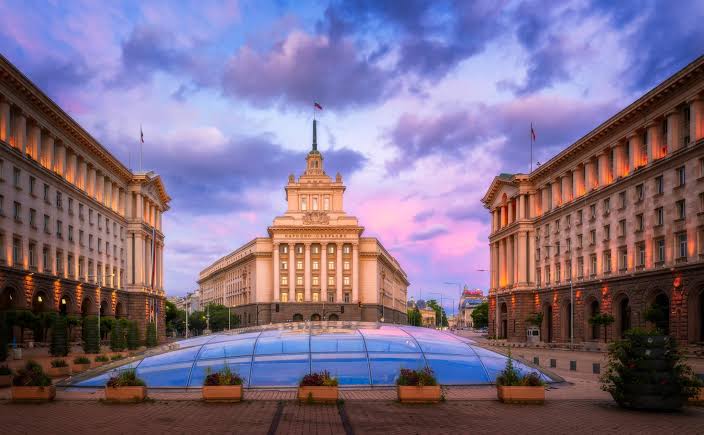
The project includes laminated glass elements forming complex corner geometries within three glass domes. The panels are double-curved, bending in two directions simultaneously, and each piece has a unique geometry.
There are no standard repeated panes.
Every element must align with adjacent panels and the supporting structure to form one continuous compound surface.
Combined with lamination for structural safety, the project demonstrates the relationship between 3D bending, geometric control and glass processing precision.
When Geometry Meets Manufacturing
Complex architectural glass often appears effortless once installed. The manufacturing process is not. Every curved panel involves decisions related to thickness, coating, heating behaviour, curvature, edge preparation and final assembly. A geometry may be possible digitally but difficult to manufacture consistently.
A panel may achieve its shape but develop optical distortion. A coating may perform well when flat but react differently during thermal forming. This is where processing knowledge becomes part of the façade design dialogue. Color Glass supports clients with technical review and engineering input when complex glazing solutions require optimization before production. The objective is not simply to manufacture what is drawn. It is to preserve architectural intent while understanding how the glass can actually be produced. Color Glass also provides digital ceramic printing permanently fused into the glass surface. Patterns, graphics and colour can therefore become part of the glass itself. Beyond visual identity and transparency gradients, ceramic printing can also support bird-safe façade design.
Beyond the Conventional Façade Panel
Color Glass’s capabilities extend beyond conventional façade panels. The company also produces spiral bent laminated glass railings, structural architectural glazing, fused decorative glass, bespoke interior glass, laminated safety glass, tempered glass and insulated glazing units. Across these applications, the challenge remains similar: translate geometry into glass without losing precision.
The same processing expertise used for a curved façade panel can also support a spiral balustrade or bespoke structural glass element. Façade projects increasingly depend on coordination between architecture, engineering, manufacturing and construction. For flat standard panels, glass processing can appear relatively straightforward. For curved, coated, laminated or three-dimensionally formed glass, the processor becomes part of a much more technical process. Color Glass can review glazing solutions, identify processing constraints and help optimize complex elements before production.
This early dialogue can reduce the gap between design intent and manufacturing reality. The value is not only in producing the glass. It is in understanding the route from geometry to finished component. The future of architectural glass will not be defined by transparency alone. Glass is increasingly expected to bend, laminate, carry coatings through thermal processes and integrate permanent patterns. Color Glass’s work shows how specialist processing can expand the architectural possibilities of the material. Specialist glass processing expands the architectural possibilities of the material, allowing complex geometry, precision and performance to develop as one integrated system. When glass moves beyond standard forms, manufacturing expertise becomes part of the architectural design itself.
Complex geometry demands more than design. It requires processing precision, and manufacturing control.
Bending Coated Glass at Sofia Airport
The Sofia Airport Air Traffic Control Tower presented a different technical challenge.
Its cylindrical geometry required curved façade panels measuring approximately 160 × 200 cm.
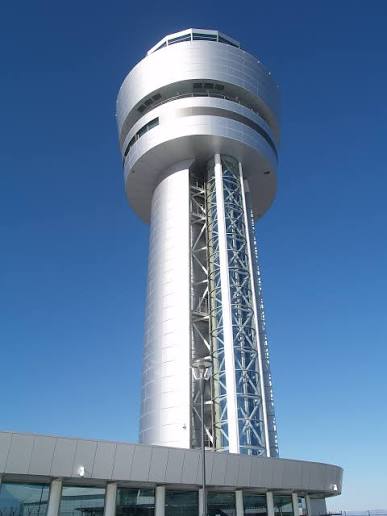
The specification included 8 mm AGC Stopray Hoziron coated glass, bent and edge-finished by Color Glass before being incorporated into IGUs by the main contractor.
Bending coated glass requires careful thermal control.
The coating can be more sensitive to heat, optical distortion and surface damage than standard clear glass.
Color Glass therefore had to maintain the required curvature while preserving the surface and visual quality of the coating.
Consistency was critical.
Even small variations in panel curvature could create alignment issues between adjacent IGUs across the round façade.
The tower remains an important reference for Color Glass’s experience in bending coated architectural glass for public infrastructure.
Color Glass highlights an important reality in façade design:
complex glass architecture depends on complex manufacturing knowledge.
A project may begin with a curve, a dome or a continuous transparent surface, but the quality of the façade depends on how each panel is processed and integrated.
Color Glass shows how complex architectural glass depends on more than form alone.
From double-curvature panels to coated bent glass, precision in manufacturing becomes part of the façade design process itself.
For Fools for Façades, the key point is clear: when geometry becomes more ambitious, the processor moves closer to the engineering conversation. Because in complex glazing, design freedom only exists when manufacturing can make it buildable.Because when glass leaves the flat plane, manufacturing becomes part of the architecture.
Events
%201.png)

%201.png)
%201.png)
News

Other Posts
Was your product part of an Urban Icon?
Join the archive that celebrates architecture’s most iconic façades. If your company played a role—through materials, systems, or expertise—let us know. We’re building a record of the people and products behind the world’s most influential buildings.
Further articles
The Newsletter
Stay close to the future of façades.
Receive curated stories, technical insights, interviews, and event updates from the global façade industry. One edition every Friday.
Oops! Something went wrong while submitting the form.
By subscribing, you agree to our Privacy Policy and consent to receive updates.

An independent editorial platform for façade innovation, material intelligence, and architectural envelope design.
Sections
Platform
Contact
© 2026 Fools for Façades. All rights reserved.
.svg)
.svg)