
0


Terracotta on the supertalls
Glass dominated the skyline for half a century. On some of New York's tallest new towers, a much older material is coming back.
At the end of the nineteenth century, terracotta was the skin of the skyscraper. It was light, fireproof, mouldable and cheap compared with stone, and architects like Louis Sullivan used it to dress the first steel frames in ornament. Then the curtain wall arrived, and for decades the tallest buildings in the world were wrapped almost entirely in glass and aluminium.
In the last few years, New York has seen that story turn. Two of Manhattan's most prominent supertalls, One Vanderbilt by KPF and 111 West 57th Street by SHoP Architects, have put fired clay back on the skyline, at heights that would have been unthinkable for the material a century ago.
One Vanderbilt: 42,000 white spandrels
At One Vanderbilt, completed in 2020 next to Grand Central Terminal, KPF wanted an element of masonry from the very start of the competition, as design director Darina Zlateva explained to The Architect's Newspaper. On a supertall, that translated into high-performance terracotta integrated into the spandrels of a unitized curtain wall.
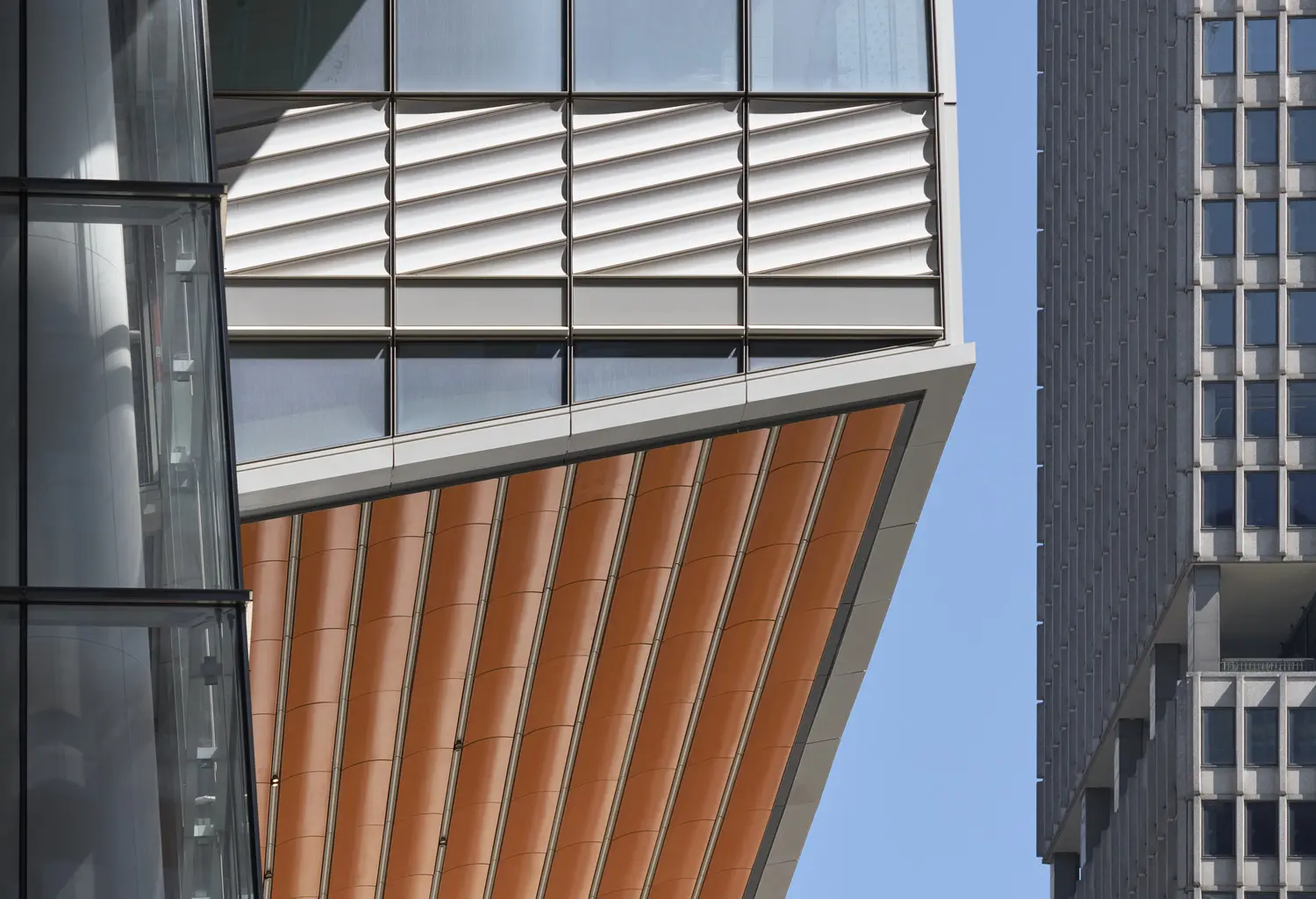
The numbers show the scale of the shift. Boston Valley Terra Cotta, the Buffalo-based manufacturer, reports that it produced all 42,000 white terracotta spandrels on the tower, plus around 2,500 soffit panels inside and out, for more than 140,000 square feet of terracotta. The pieces were extruded, the most efficient way to produce long repeated profiles, and then cut to follow the tower's tapering geometry. Permasteelisa North America assembled them into unitized panels with glass and aluminium.
111 West 57th: terracotta, bronze and a wave
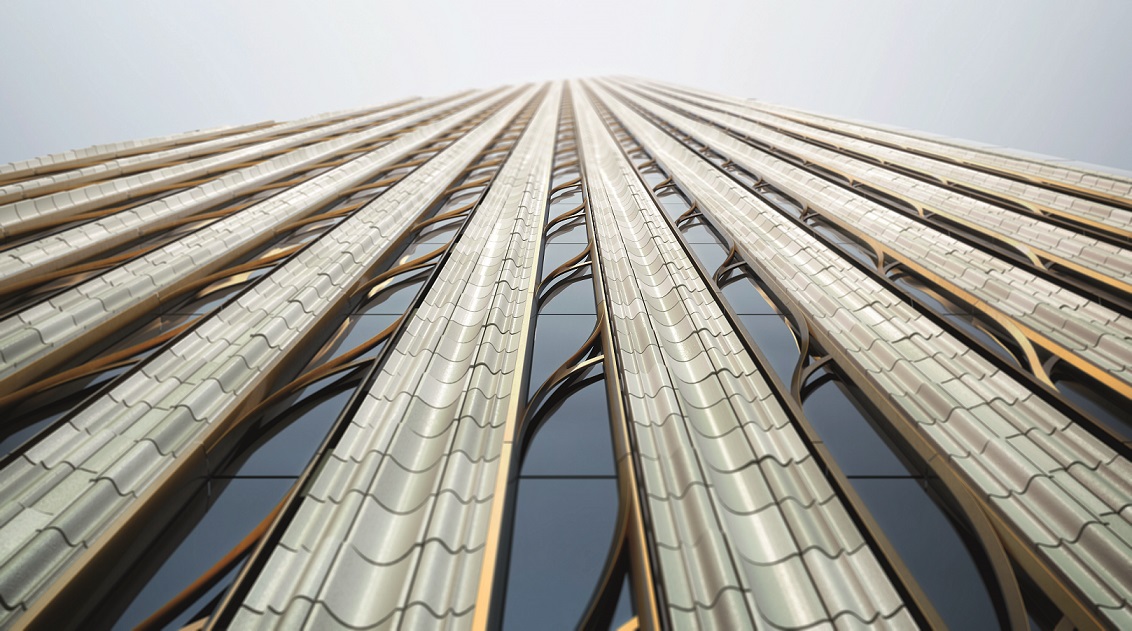
A few blocks north, SHoP's 111 West 57th Street, the slender Steinway Tower completed in 2021 on Billionaires' Row, takes a different route. Its east and west elevations are clad in vertical bands of terracotta with bronze filigree running between them, while the north and south faces are glazed.
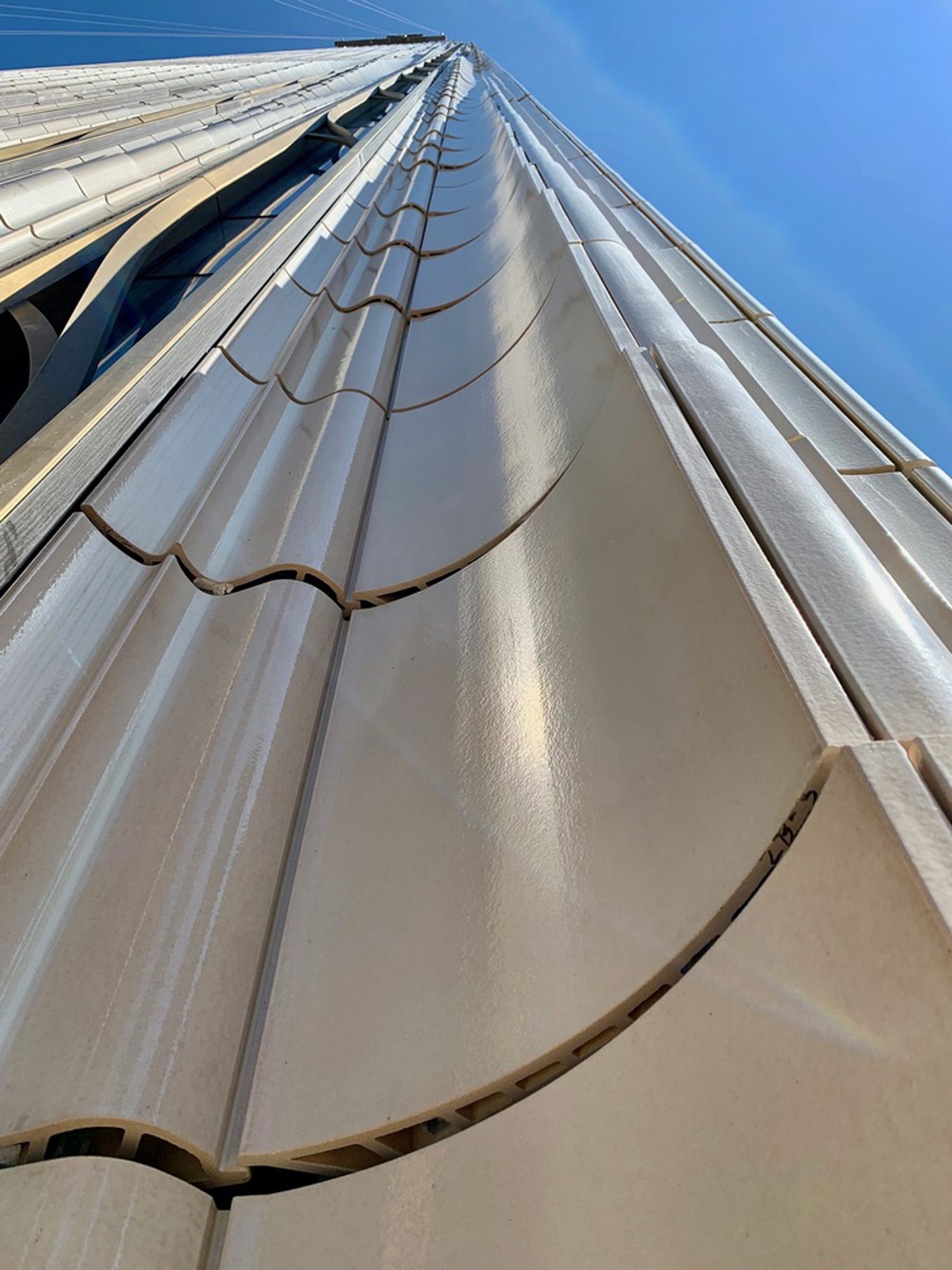
According to The Architect's Newspaper, the quasi-fluted terracotta strips were generated from a three-dimensional wave geometry produced by a computational script, giving the façade a lenticular effect that changes as people move past it. Facades+ lists NBK Architectural Terracotta among the manufacturers, with a custom unitized system from ELICC and BuroHappold as façade consultant.
Why terracotta, why now
Several reasons come together in these projects.
Context. Both towers sit next to landmark buildings: Grand Central Terminal and the historic Steinway Hall. Terracotta lets a twenty-first-century tower speak the language of its neighbours, and it gives a supertall a sense of solidity that a fully glazed skin cannot.
Performance. Clay is non-combustible and very durable once fired, and it does not need a coating that will degrade over time. Replacing part of a glass curtain wall with an opaque, insulated spandrel also reduces solar gain and improves thermal performance.
Industrialisation. Modern terracotta is not a craft product in the old sense. Extrusion, custom glazes developed over years, digital geometry and unitized curtain wall assembly allow tens of thousands of pieces to be produced and installed at the speed a tall building requires.
Surface. Glazed and profiled terracotta catches light in a way glass cannot. At One Vanderbilt, KPF and Boston Valley worked on the glaze for years and tested mock-ups in real conditions to find a finish that echoed the warm tones of Grand Central.
What it asks of façade teams
Terracotta at height is not without challenges. Every piece has to be anchored and tested for wind loads, movement and long-term durability, and redundant attachments are part of the design. Colour and glaze vary naturally between firing batches, so quality control and early mock-ups are essential. And integrating a heavy, brittle ceramic element into a lightweight unitized system requires close collaboration between architect, manufacturer and curtain wall contractor from the concept stage.
A New York trend, for now
It would be too early to call this a global shift, but in New York the direction is clear. After decades of glass, some of the city's most ambitious towers are choosing a material that Sullivan would recognise. The difference is how it is made: extruded, digitally designed and assembled in factories, then lifted hundreds of metres into the air.
Sources: Boston Valley Terra Cotta; KPF; The Architect's Newspaper; Facades+; New York YIMBY.
All images belong to their respective owners and are shared for educational purposes and to promote façade culture.
Events


News

Was your product part of an Urban Icon?
Join the archive that celebrates architecture’s most iconic façades. If your company played a role—through materials, systems, or expertise—let us know. We’re building a record of the people and products behind the world’s most influential buildings.
Further articles


The Newsletter
Stay close to the future of façades.
Receive curated stories, technical insights, interviews, and event updates from the global façade industry. One edition every Friday.
Oops! Something went wrong while submitting the form.
By subscribing, you agree to our Privacy Policy and consent to receive updates.

An independent editorial platform for façade innovation, material intelligence, and architectural envelope design.
Sections
Platform
Contact
© 2026 Fools for Façades. All rights reserved.

