
0


One Vanderbilt: terracotta returns to the skyscraper
A 1,401-foot tower that looks up to its oldest neighbour
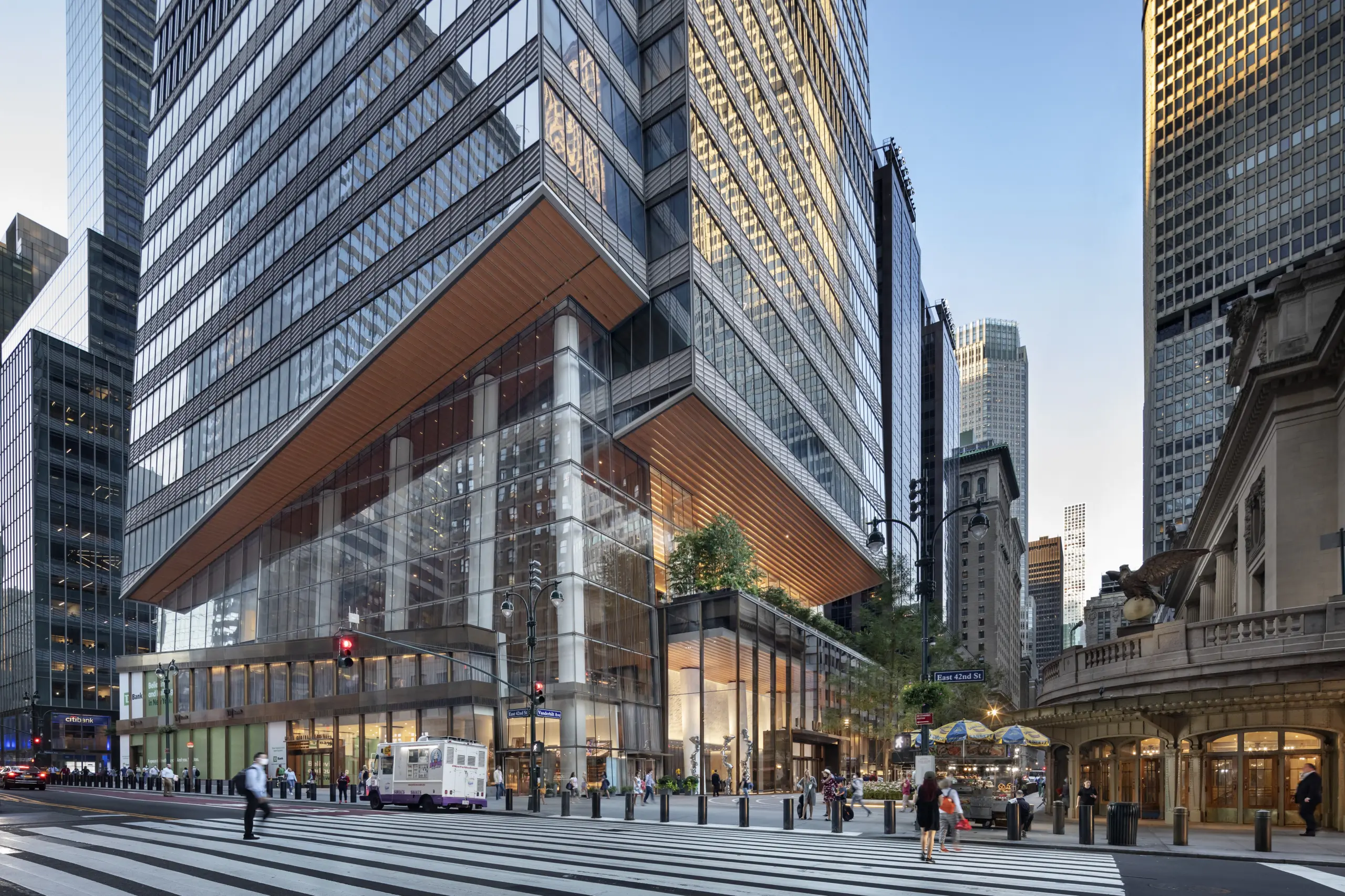
Building next to Grand Central Terminal is a responsibility. When KPF designed One Vanderbilt for SL Green and Hines, the tower was going to rise directly across the street from one of the most loved buildings in New York. The response was not to compete with the terminal, but to borrow from it: its geometry, its colours and above all its materials.
Completed in 2020, One Vanderbilt rises to 1,401 feet (427 metres) on 42nd Street in Midtown Manhattan. Its façade is one of the clearest recent examples of a supertall that combines a contemporary unitized curtain wall with a traditional material: glazed terracotta.
Four volumes and a view
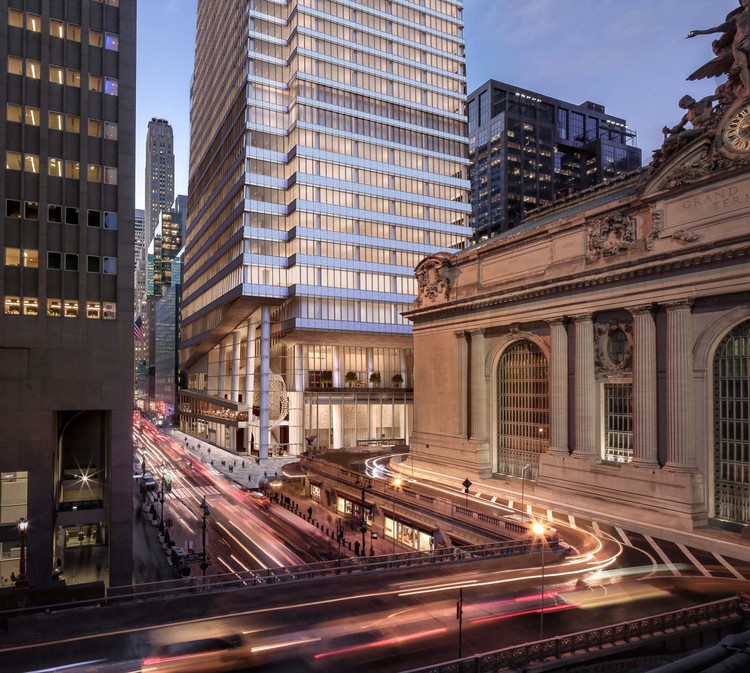
The tower is made of four interlocking, tapering volumes that spiral upwards. KPF's James von Klemperer has described how the pinwheel form allowed individual masses to stop at different heights, so the top diminishes dramatically before ending in a single spire. At street level, the volumes are sliced at an angle to open a view corridor to Grand Central. According to KPF, this reveals the Vanderbilt corner of the terminal's cornice, a view that had been blocked for almost a century.
The façade: glass, aluminium and clay
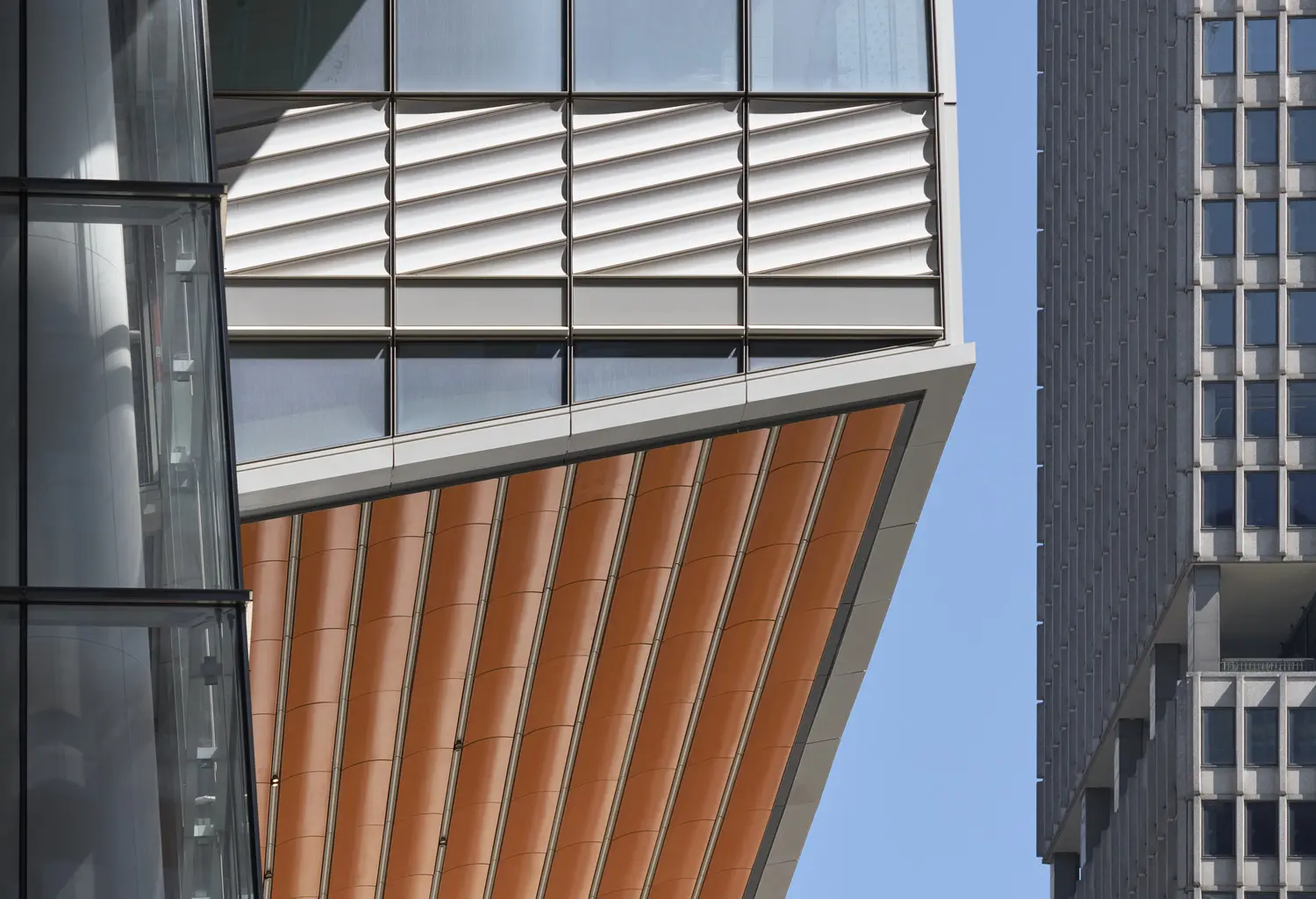
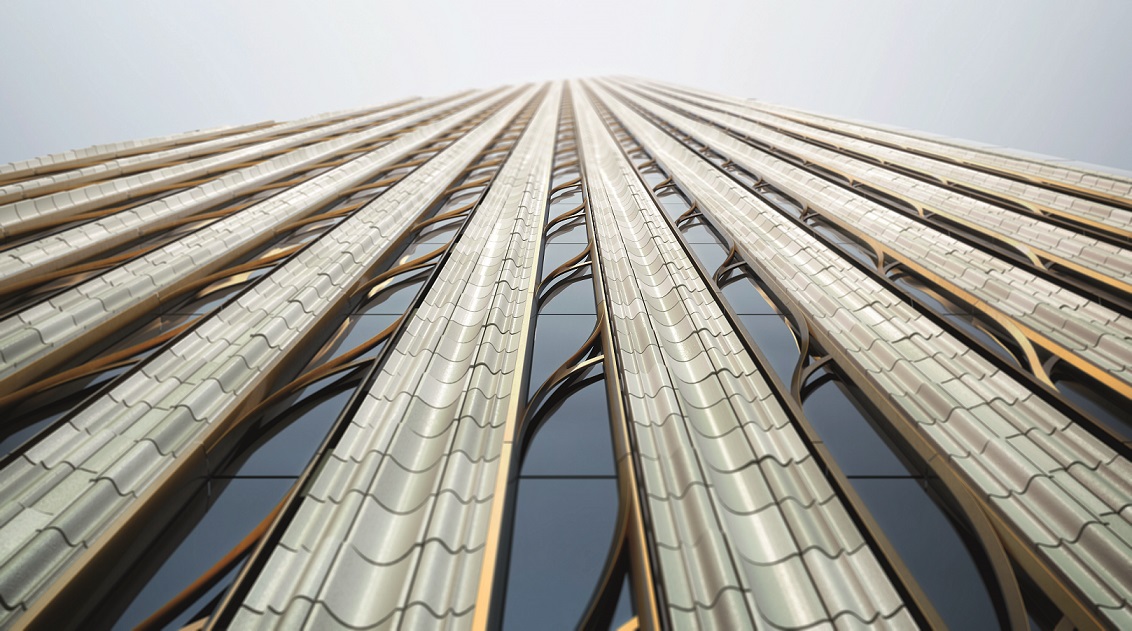
The skin is a unitized curtain wall of glass, aluminium and glazed terracotta, assembled and installed by Permasteelisa North America, with Tishman as construction manager. Bands of glass alternate with spandrels made of diagonally oriented, fluted terracotta pieces. The terracotta runs up the tower to its topmost portion, which is enclosed in an aluminium and glass curtain wall.
Darina Zlateva of KPF has explained that the team felt from the competition phase that the building needed an element of masonry construction. For a supertall, the answer was high-performance terracotta integrated into the spandrel. She has also described One Vanderbilt as a “humanist skyscraper”: the diagonal pieces in each spandrel break down the scale of the tower and lift the eye towards the sky.
42,000 pieces, extruded
Boston Valley Terra Cotta, based in Buffalo, was involved from the concept design phase. The company reports that it manufactured all 42,000 white terracotta spandrels on the façade and around 2,500 soffit panels, for more than 140,000 square feet of terracotta in total. The spandrel units were extruded with a concave profile that catches and reflects sunlight, and the corners of the outer field panels were custom cut after extrusion to follow the façade's gradual changes in dimension as the tower tapers.

Two custom glazes were developed through roughly half a decade of collaboration between KPF and Boston Valley: a light, high-gloss glaze for the curtain wall spandrels and a warmer, reddish-tan glaze for the soffits at the base. Because terracotta varies from batch to batch, a series of mock-ups combining different shapes and glazes was field-tested in real conditions to find a finish sympathetic to the warm tones of Grand Central's train hall.
A dialogue with Guastavino
The soffits are where the relationship with the terminal is most direct. Von Klemperer has said that the reddish-tan terracotta under the public spaces at the base echoes the Guastavino tile vaults inside Grand Central, built more than a century ago. The same material appears in the lobby ceiling, so the building carries its terracotta from the street into the interior.
Why it matters
One Vanderbilt shows that the choice between a modern curtain wall and a traditional material is a false one. The tower performs as a contemporary unitized system, installed at speed, while its spandrels give it texture, depth and a clear relationship with its context. It is also a case study in collaboration: architect and manufacturer working on shape and glaze for years before a single panel was lifted into place.
Sources: KPF; Boston Valley Terra Cotta; The Architect's Newspaper; designboom.
All images belong to their respective owners and are shared for educational purposes and to promote façade culture.
News

Other Posts



Events


Was your product part of an Urban Icon?
Join the archive that celebrates architecture’s most iconic façades. If your company played a role—through materials, systems, or expertise—let us know. We’re building a record of the people and products behind the world’s most influential buildings.
Further articles


The Newsletter
Stay close to the future of façades.
Receive curated stories, technical insights, interviews, and event updates from the global façade industry. One edition every Friday.
Oops! Something went wrong while submitting the form.
By subscribing, you agree to our Privacy Policy and consent to receive updates.

An independent editorial platform for façade innovation, material intelligence, and architectural envelope design.
Sections
Platform
Contact
© 2026 Fools for Façades. All rights reserved.


×
Get featured on FFF
Is your solution part of a project like this?
If your system, product or team played a role in a building worth talking about, tell us. Our editors read every submission and will get back to you.
Thank you! Your submission has been received!
Oops! Something went wrong while submitting the form.