
0



Multi-Layer Façade Systems: A Scientific Review on Criticalities and Future Perspectives
Abstract: The paper investigates the evolution of Multi-Layer Façade systems from integrated envelope configurations towards increasingly computational, adaptive and performance-driven building systems. Building on the framework established by Ingrid Paoletti and Massimiliano Nastri in Technology of the Multi-Layer Façade Systems (2025), the study examines how advances in executive design, construction methodologies and experimental applications are reshaping the technological and methodological development of façades.
The analysis identifies a progressive transition from component-based coordination towards parametric and knowledge-based workflows in which geometric configuration, environmental performance, construction requirements and operational behaviour are progressively interconnected. Particular attention is given to performance-based simulation, multi-criteria optimisation, artificial intelligence, digital fabrication, sensing, digital twins and post-occupancy feedback as emerging instruments for extending the predictive, adaptive and operational capabilities of Multi-Layer Façades.
The most promising developments arise from the integration of these approaches within continuous design-to-construction and design-to-operation workflows. At the same time, their wider implementation remains constrained by interoperability, computational complexity, limited empirical validation, regulatory compliance, data reliability and the explainability of AI-driven processes. The paper therefore identifies the future development of Multi-Layer Façades as a systemic challenge, requiring interoperable, validated and adaptive methodologies capable of integrating executive design, construction and building operation within a coherent performance-based framework.
Keywords: Multi-Layer Façades; executive design; parametric design; performance-based simulation; multi-criteria optimisation; artificial intelligence; digital fabrication; adaptive façades; digital twins; post-occupancy evaluation; construction methodologies; building envelope innovation.
1. Evolution of Multi-Layer Façade Systems: Parametric Modelling and Performance Simulation
The Multi-Layer Façades can be treated computationally as a coupled system in which geometry, layer spacing, openings, shading elements, ventilation paths and environmental boundary conditions are encoded as interdependent parameters. Parametric modelling allows these variables to be modified without reconstructing the façade model at each iteration, while simulation evaluates the resulting effects on thermal behaviour, daylight, solar gains and ventilation. The relevant methodological transfer therefore consists in converting the Multi-Layer Façades from a fixed geometric configuration into a parameterised model in which relationships between layers and performance variables are explicitly encoded (Eltaweel and Su 2017). Multi-Layer Façades configurations can consequently be evaluated through repeated simulation rather than through isolated design checks, with the parametric model supplying the geometric variables and the simulation environment supplying the performance response. This workflow supports the simultaneous evaluation of energy performance and thermal comfort and can be extended to other performance criteria within the same computational loop (Ascione et al. 2015).
.jpg)
For the Multi-Layer Façade, the procedure can operate through successive generation, simulation and evaluation cycles. A façade configuration is generated from a defined parameter set; its geometry is transferred to a building-performance model; the calculated outputs are returned to the parameter space; and the process is repeated for alternative configurations. EnergyPlus-based simulation combined with metaheuristic optimisation demonstrates the feasibility of this iterative procedure for envelope variables whose interactions cannot be evaluated reliably through single-parameter variation (Grygierek and Ferdyn-Grygierek 2019). Hybrid metaheuristic procedures can further reduce the number of explicit evaluations required when the Multi-Layer Façades contain numerous interacting parameters and responsive elements (Yi et al. 2019).
Parametric analysis can also establish relationships between façade geometry and daylight distribution, allowing the position, depth and configuration of solar-responsive elements to be evaluated against visual-performance requirements (Tabadkani et al. 2018).

The computational model must therefore include not only geometric parameters but also the environmental variables that determine its operation.
Building energy simulation and optimisation can be used to establish boundary conditions, calculate performance indicators and compare alternative configurations during the design process (Tian et al. 2018). Optimisation methods applied to building-envelope geometry and construction parameters provide a further mechanism for reducing the search space and identifying configurations that satisfy predefined performance constraints (Kheiri 2018).
For Multi-Layer Façades, this implies a workflow in which the cavity, external layer, openings, shading devices and associated control variables are treated as a coordinated parameter system rather than as independent technical components. The same computational structure can subsequently accommodate dynamic operation, since systematic reviews of dynamic façades identify simulation and measurement procedures for evaluating thermal, optical, ventilation and energy behaviour (Gonçalves et al. 2024) (Figs. 1, 2).
2. Changes in Executive Design: Knowledge-Based Design and Digital Continuity to Fabrication
The Multi-Layer Façades require a knowledge-based process because its geometric definition is inseparable from technical constraints, performance requirements, interfaces and manufacturing information. Parametric envelope design provides the computational structure through which these relationships can be encoded, while technology integration connects the parameters governing the Multi-Layer Façades with simulation and information-management environments (Mainini et al. 2024). The design process can therefore associate each façade parameter with geometric, environmental and technical information, allowing a modification of one condition to propagate through the related model rather than being resolved independently at subsequent stages. Knowledge-based design and decision-support methods provide the framework for organising this information and for maintaining explicit relationships between design variables and decisions (Gerber et al. 2022).
For the Multi-Layer Façades, interactive computational workflows can combine parameter definition, virtual prototyping, simulation, optimisation and continuous knowledge acquisition. This allows alternative configurations to be generated and evaluated while maintaining the relationships between performance requirements, economic constraints and constructability conditions (Bertagna et al. 2021).
Visualisation is relevant within this process not as a final presentation device but as an interface through which alternative configurations and their calculated performance can be compared during design development (Purup and Petersen 2021).
The resulting process replaces sequential transfer between disconnected design activities with iterative exchanges between the geometric model, performance calculations and decision-making environment.
Digital continuity becomes particularly relevant when the Multi-Layer Façades move from design definition to production. Constructability features can be incorporated into computational models so that the geometry of façade panels and their manufacturing requirements remain associated within the same information structure.
Feature-Based Modelling and direct generation of machine codes provide a possible link between the digital definition of façade components and robotic manufacturing and assembly operations (Zadeh et al. 2025). In this context, the Multi-Layer Façades model can contain the information required to derive fabrication operations, assembly sequences and quality-control parameters rather than transferring geometry alone.
The design-to-manufacturing process described for complex building envelopes similarly demonstrates the need to coordinate digital modelling with manufacturing information when geometric complexity and component differentiation increase (Mohsen 2020).
This continuity depends on semantic interoperability. Semantic web technologies provide mechanisms for associating building elements, properties and relationships across heterogeneous AEC information environments (Pauwels et al. 2017). For the Multi-Layer Façades, such structures can maintain correspondence between geometric parameters, performance variables, component information, simulation data and manufacturing databases. Parameter and knowledge transfer across computational platforms can further support the reuse of information and the development of façade design decisions across projects, although platform dependency and vendor lock-in remain limitations (Lin and Shih 2025).
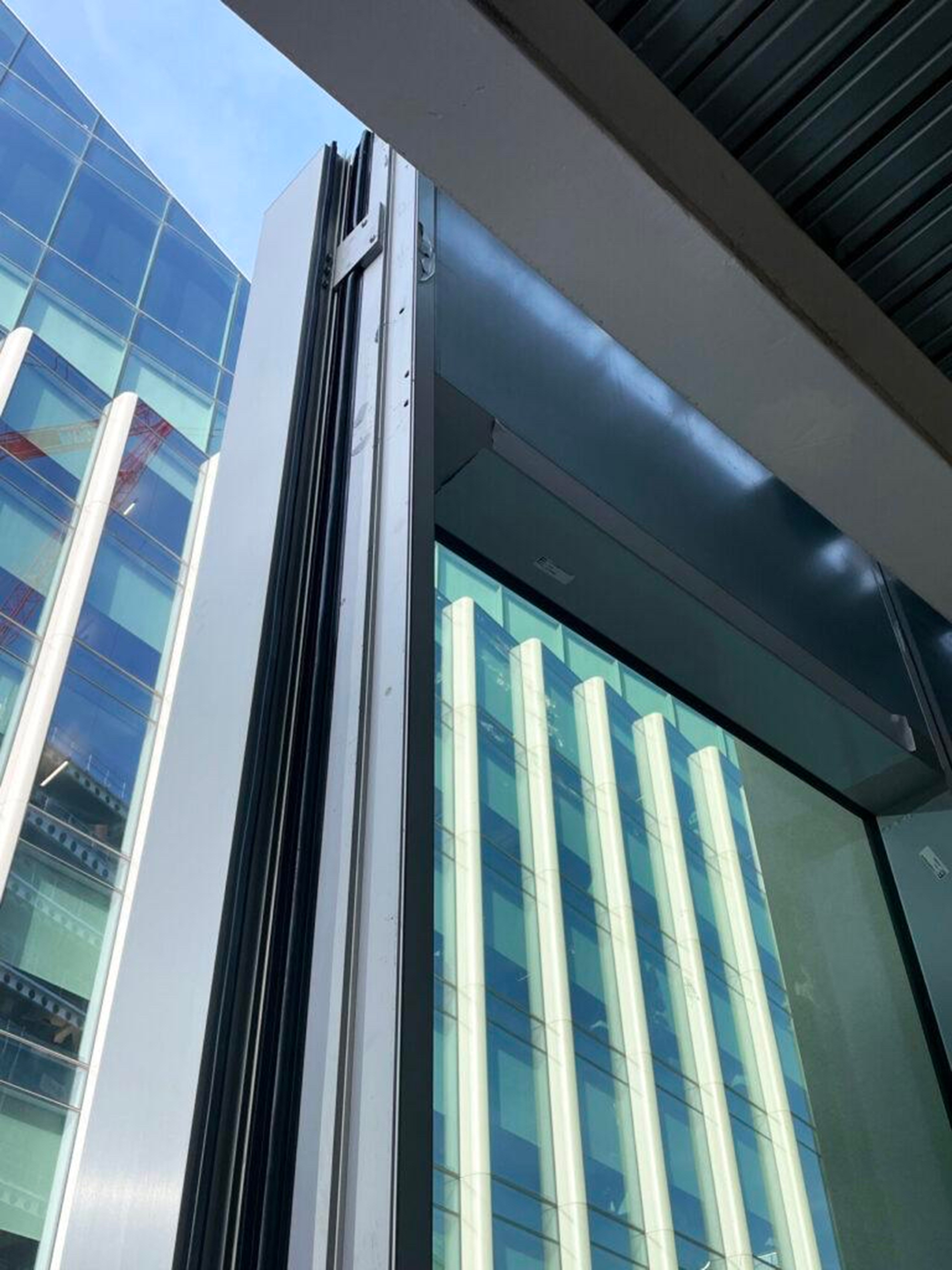
The required procedure is therefore not simply the transfer of a model between software environments but the preservation of the meaning and relationships of the information defining the Multi-Layer Façades throughout design, verification and fabrication (Fig. 3).
3. Advanced Construction Methodologies and Experimental Applications: Multi-Criteria Optimisation and Predictive Control
The Multi-Layer Façades present an optimisation problem because its parameters affect several performance objectives simultaneously. Energy demand, daylight, solar control, thermal comfort, geometric constraints and cost can therefore be formulated as competing objectives rather than optimised independently. Surrogate-assisted evolutionary optimisation provides a procedure for replacing repeated high-cost simulations with predictive models while retaining the exploration of alternative configurations (Brownlee and Vanmosuinck 2025). This enables the optimisation loop to operate on a parameterised representation of the façade while reducing the computational burden associated with repeated performance simulation. Machine-learning approaches similarly provide predictive models capable of estimating building-energy performance from previously calculated or measured data, thereby supporting faster evaluation of façade alternatives (Fathi et al. 2020).
Multi-criteria decision-making can be introduced after or within this optimisation process to structure the selection of Multi-Layer Façades configurations according to explicitly defined criteria. MCDM methods provide procedures for combining different performance indicators and establishing a decision structure in which technical and environmental variables can be compared (Moghtadernejad et al. 2018). When climatic inputs, occupancy conditions or future operating conditions are uncertain, stochastic multi-objective optimisation allows the Multi-Layer Façades to be evaluated against distributions of possible conditions rather than a single deterministic scenario (Zong et al. 2022). Fuzzy modelling provides another mechanism where façade-performance variables or design requirements cannot be expressed as precise thresholds, allowing uncertain or imprecise conditions to be incorporated into the computational evaluation (Mehta 2021).
Optimisation can subsequently be connected to the operation of the Multi-Layer Façades. Rule-based control defines threshold conditions under which façade devices modify their state, creating a direct relation between monitored environmental variables and façade actions (Gong 2024).
A predictive control procedure instead uses a model of future environmental and operational conditions to calculate appropriate control actions before the corresponding condition occurs.
This can involve predicting external loads, indoor conditions and the resulting performance of the façade before adjusting its controllable parameters. Reinforcement-learning workflows extend this principle by incorporating occupant preferences into climate-adaptive façade control, allowing the control policy to be derived from repeated interactions between environmental conditions, façade states and user requirements (Chen et al. 2025).
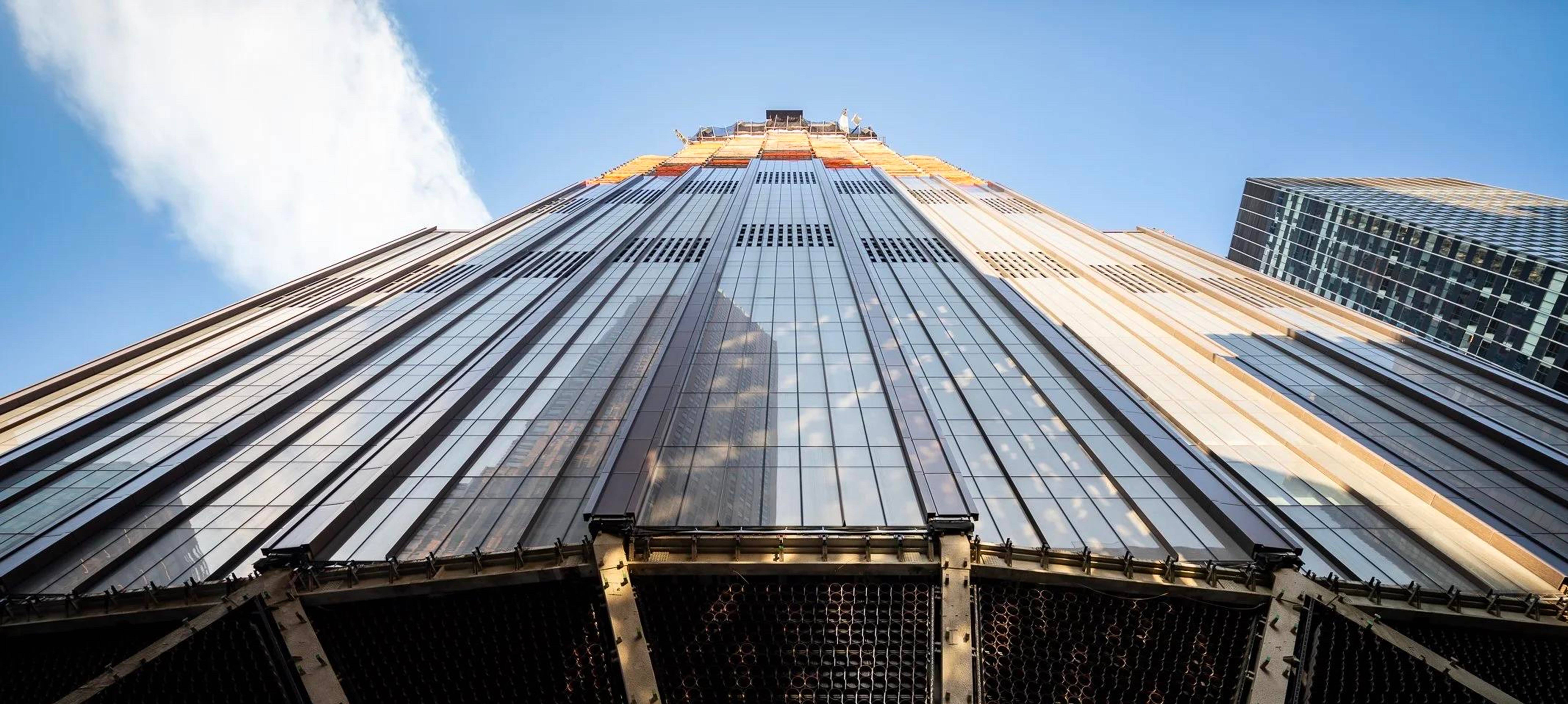
The control layer therefore becomes the operational continuation of the optimisation process: the same relationships between façade parameters and performance that are explored during design can inform decisions during use (Figs. 4, 5).

4. Main Challenges: Sensing, Digital Twins and Post-Occupancy Learning
The operational Multi-Layer Façades can be connected to a digital representation through sensor networks, IoT devices and digital-twin environments.
Temperature, humidity, daylight, air quality and user-interaction data can be acquired continuously and associated with the corresponding façade model, transforming the digital model from a design repository into an operational data structure (Heidari and Khoshelham 2024). Semantic digital twins further support real-time monitoring by associating measured building-performance data with identifiable building and façade entities (Donkers et al. 2021).
This creates a feedback chain in which sensors acquire environmental conditions, the digital model receives and contextualises the data, analytical procedures evaluate the façade state, and control systems can modify responsive elements.
IoT infrastructures extend this process by connecting sensors, actuators and management systems. In façade applications, sensor networks can be embedded in the façade and frame to collect environmental and operational information, while smart actuators can modify the state of responsive elements according to control logic (Giovanardi et al. 2023).
Machine-learning models can then use measured data to estimate façade or building behaviour; deep-learning approaches have been applied to predict the thermal behaviour of building façades from environmental variables (Aznar et al. 2018).
Machine-learning prediction can reduce the computational time associated with repeated physical or numerical evaluation and can therefore support the operational management of a Multi-Layer Façades when appropriately trained and validated (Barbaresi et al. 2022).
The digital twin also permits the Multi-Layer Façades to be evaluated against actual occupancy and operating conditions rather than only against design assumptions. Multi-objective models can incorporate occupant behaviour together with energy, economic and environmental performance, providing a basis for evaluating how operational decisions modify the performance of the envelope (Hong et al. 2019). Post-occupancy evaluation then supplies measured evidence for assessing whether the Multi-Layer Façades achieve the performance established during design and for identifying deviations requiring recalibration (Zhao et al. 2024).
This establishes a continuous sequence from design parameters to simulation, fabrication, operation, monitoring and post-occupancy feedback.
The resulting workflow requires data validation, semantic consistency and interoperability between the Multi-Layer Façades model, simulation environments, IoT infrastructure, BMS and digital twin. The literature identifies sensor reliability, weak IoT–BMS communication standards and limited empirical validation of digital twins as current constraints (Heidari and Khoshelham 2024; Donkers et al. 2021).
The same feedback structure can support circular-economy procedures by retaining information on façade components, their use, replacement and potential recovery throughout the building life cycle (Hartwell et al. 2021).
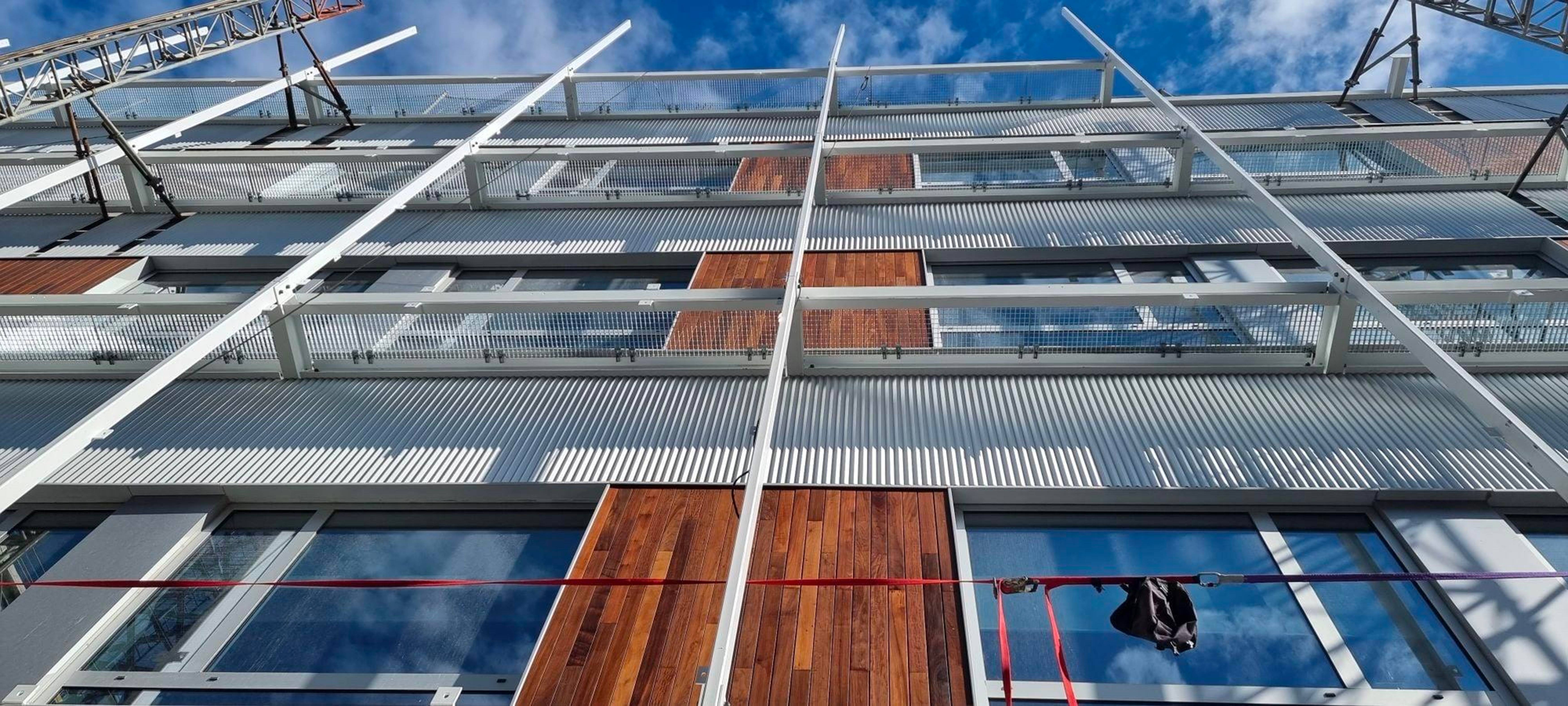
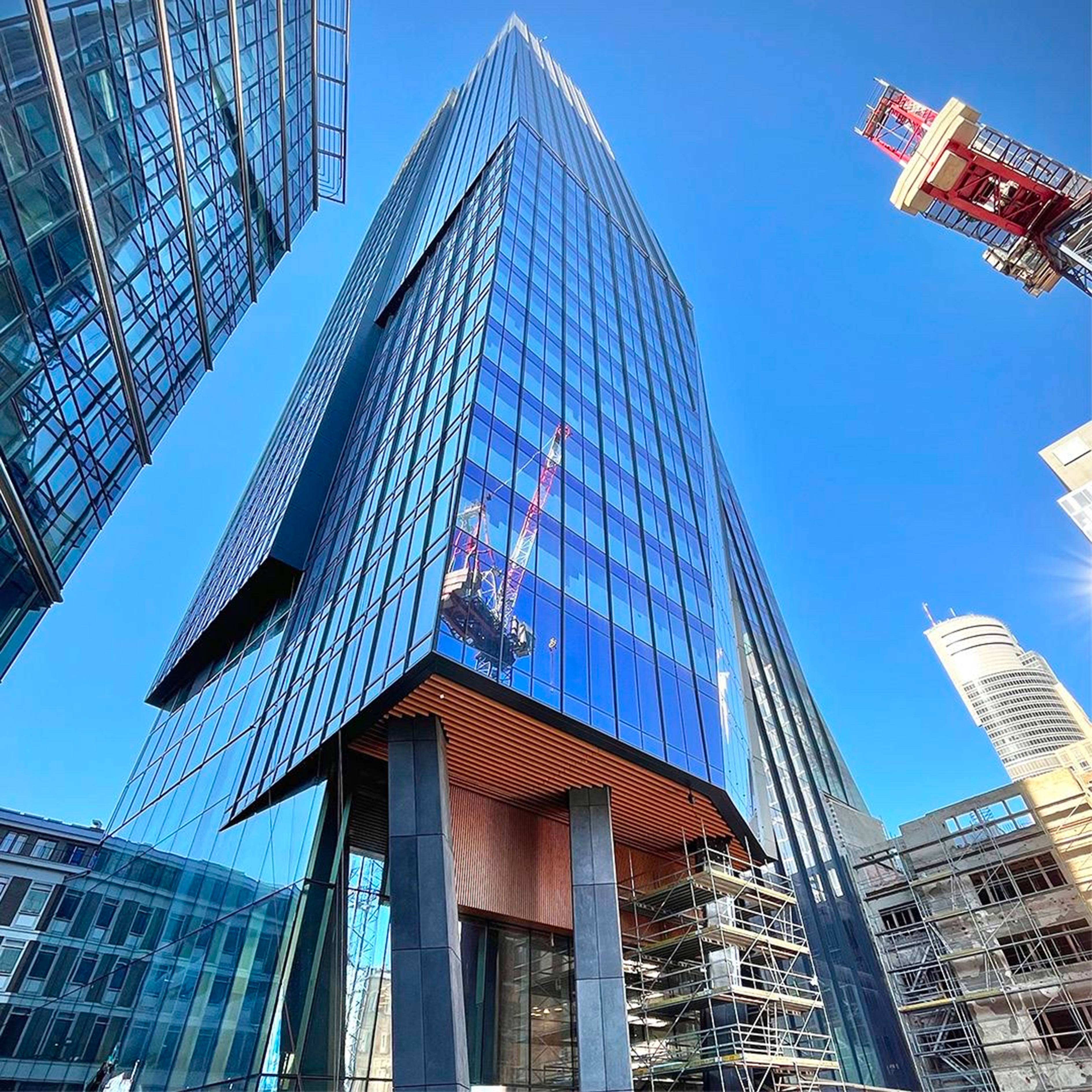
The Multi-Layer Façades are thus treated as a continuously updated computational system in which design information, performance data, control actions and lifecycle information remain connected rather than being separated into successive project phases (Figs. 6, 7).
MA.BA. Material Balance Lab + Engineering & Poli.Façades
MA.BA. Material Balance Lab + Engineering, directed by Prof. Ingrid Paoletti, and, in particular, the Poli.Façades sector, directed by Prof. Massimiliano Nastri, at the Politecnico di Milano undertake design and technical-scientific consultant activities for the development of executive design, modelling, and experimental prototyping of advanced building-envelope, cladding and window systems. Their activities are carried out in collaboration with architectural studios (i.e., Renzo Piano Building Workshop, SANAA Architects, Foster + Partners, Lombardini22, Pelli Clarke & Partners, Park Associati, Cino Zucchi Architetti, Stefano Boeri Architetti, Carlo Ratti Associati, Morphosis and Il Prisma), engineering companies (i.e., Rimond, Maffeis Engineering, Roger Group and D&D Engineering), brand companies (i.e., Pininfarina, Hugo Boss and MS Design), manufacturers and producers (i.e., Permasteelisa, Schüco, Graniti Fiandre and Manni Green Tech). Their expertise encompasses both theoretical and methodological knowledge and highly practical operative capabilities, extending through to the direction and supervision of production and on-site construction phases. They act as international references for the study, problem-solving and realisation of any functional or performance-related requirement, up to the detailed design, in accordance with the most advanced procedures and tools associated with parametric design, Machine Learning, 3D printing and Artificial Intelligence. Furthermore, Paoletti and Nastri are leading authors of manuals and treatises on advanced building-envelope and cladding systems, as well as recognised international references for the development of D.F.M.A. (Design for Manufacturing and Assembly) and bio-based technologies across all types of construction systems, components and technical interfaces.
Contacts:
https://materialbalance.polimi.it
References
Paoletti I, Nastri M (2025) Technology of the Multi-Layer Façade Systems. Executive Design, Construction Methodologies and Experimental Applications. Springer, Cham. https://doi.org/10.1007/978-3-032-04767-0
Eltaweel A, Su Y (2017) Parametric design and daylighting: A literature review. Renewable and Sustainable Energy Reviews, 73, pp. 1086–1103. https://doi.org/10.1016/j.rser.2017.02.011
Ascione F, Bianco N, De Masi R F, Mauro G M, Vanoli G P (2015) Design of the Building Envelope: A Novel Multi-Objective Approach for the Optimization of Energy Performance and Thermal Comfort. Sustainability, 7, pp. 10809–10836. https://doi.org/10.3390/su70810809
Grygierek K, Ferdyn-Grygierek J (2019) Multi-variable optimization models for building envelope design using energyplus simulation and metaheuristic algorithms. Architecture, Civil Engineering, Environment, 12, pp. 81–90. https://doi.org/10.21307/acee-2019-025
Yi H, Kim M-J, Kim Y, Kim S-S, Lee K-I (2019) Rapid Simulation of Optimally Responsive Façade during Schematic Design Phases: Use of a New Hybrid Metaheuristic Algorithm. Sustainability, 11(9). https://doi.org/10.3390/su11092681
Tabadkani A, Banihashemi S, Hosseini M R (2018) Daylighting and visual comfort of oriental sun responsive skins: A parametric analysis. Building Simulation, 11, pp. 663–676. https://doi.org/10.1007/s12273-018-0433-0
Tian Z, Zhang X, Jin X, Zhou X, Si B, Shi X (2018) Towards adoption of building energy simulation and optimization for passive building design: A survey and a review. Energy and Buildings, 158, pp. 1306–1316, https://doi.org/10.1016/j.enbuild.2017.11.022
Kheiri F (2018) A review on optimization methods applied in energy-efficient building geometry and envelope design. Renewable and Sustainable Energy Reviews, 92, pp. 897–920. https://doi.org/10.1016/j.rser.2018.04.080
Gonçalves M, Figueiredo A, Almeida R M S F, Vicente R (2024) Dynamic façades in buildings: A systematic review across thermal comfort, energy efficiency and daylight performance. Renewable Sustainable Energy Reviews, 199. https://doi.org/10.1016/j.rser.2024.114474
Mainini A G, Poli T, Speroni A, Cavaglià M, Blanco Cadena J D (2024) Parametric Building Envelope Design and Technology Integration, in Mainini A G, Poli T, Speroni A, Cavaglià M, Blanco Cadena J D, Eds, Unlocking the Potential of Building Envelopes. Springer, Cham, pp. 81–102. https://doi.org/10.1007/978-3-031-75298-8_5
Gerber D J, Lattuca L R, Parrish K, Atadero R, Baer A, Lavy S, Osman H (2022) Knowledge-based design and decision support in building design: Research trends and future directions. Journal of Construction Engineering and Management, 148(10).
Bertagna F, D’Acunto P, Ohlbrock P O, Moosavi V (2021) Holistic Design Explorations of Building Envelopes Supported by Machine Learning. Journal of Facade Design and Engineering, 9(1), pp. 31–46. https://doi.org/10.7480/jfde.2021.1.5423
Purup P B, Petersen S (2021) Characteristic traits of visualizations for decision-making in the early stages of building design. Journal of Building Performance Simulation, 14(4), pp. 403–419. https://doi.org/10.1080/19401493.2021.1961864
Zadeh P A, Diaz S, Staub-French S, Bhonde D (2025) A Conceptual Approach for the Knowledge-Based Computational Design of Prefabricated Façade Panels Using Constructability Features. Applied Sciences, 15. https://doi.org/10.3390/app15042035
Mohsen A (2020) Design to manufacture of complex building envelopes. Springer, Cham
Pauwels P, Zhang S, Lee Y-C (2017) Semantic web technologies in AEC industry: A literature overview. Automation in Construction, 73, pp. 145–165. https://doi.org/10.1016/j.autcon.2016.10.003
Lin V Y C, Shih S G (2025) AI-Augmented Parametric Façade Design: Exploring MCTS for Early-Stage Decision-Making. Nexus Network Journal, 27, pp. 619–638. https://doi.org/10.1007/s00004-025-00822-2
Brownlee A E I, Vanmosuinck E R O (2025) Surrogate-assisted evolutionary multi-objective optimization of office building glazing. Industrial Artificial Intelligence, 3(4). https://doi.org/10.1007/s44244-025-00025-1
Fathi S, Srinivasan R, Fenner A, Fathi S (2020) Machine learning applications in urban building energy performance forecasting: A systematic review. Renewewable and Sustainable Energy Reviews, 133. https://doi.org/10.1016/j.rser.2020.110287
Moghtadernejad S, Chouinard L E, Mirza M S (2018) Multi-criteria decision-making methods for preliminary design of sustainable facades. Journal of Building Engineering, 19, pp. 181–190. https://doi.org/10.1016/j.jobe.2018.05.006
Zong C, Margesin M, Staudt J, Deghim F, Lang W (2022) Decision-making under uncertainty in the early phase of building façade design based on multi-objective stochastic optimization. Building and Environment, 226. https://doi.org/10.1016/j.buildenv.2022.109729
Mehta R (2021) Optimal design and modelling of sustainable buildings based on multivariate fuzzy logic. International Journal of Sustainable Development and Planning, 16(1), pp. 195–206. https://doi.org/10.18280/ijsdp.160120
Gong J (2024) Building energy management model integrating rule-based control algorithm and genetic algorithm. International Journal of Renewable Energy Development, 14(1), pp. 136–145. https://doi.org/10.61435/ijred.2025.60628
Chen Z, Tang C, Herr C M (2025) A Workflow for Implementing Reinforcement Learning Incorporating Occupant Preference in Climate-Adaptive Facade Control, in Architectural Informatics, Proceedings of the 30th International Conference of the Association for Computer-Aided Architectural Design Research in Asia (CAADRIA), Hong Kong, 3, pp. 305–314.
Lin C-H, Tsay Y-S (2023) A practical decision process for building façade performance optimization by integrating machine learning and evolutionary algorithms. Journal of Asian Architecture and Building Engineering, 23(2), pp. 740–753.
Heidari S, Khoshelham K (2024) Application of digital twins for sustainable building envelopes: A review and research agenda. Journal of Building Engineering, 98. https://aplusbe.eu/index.php/p/article/view/221
Donkers A J A, Yang D, de Vries B, Baken N H G (2021) Real-time building performance monitoring using semantic digital twins. In Proceedings of the 9th Linked Data in Architecture and Construction Workshop, Luxembourg City, pp. 55–66.
Giovanardi M, Konstantinou T, Pollo R, Klein T (2023) The Internet of Things for circular transition in the façade sector. TECHNE. Journal of Technology for Architecture and Environment, 25, pp. 243–251. https://doi.org/10.36253/techne-13707
Aznar F, Echarri V, Rizo C, Rizo R (2018) Modelling the thermal behaviour of a building facade using deep learning. Plos One, 13(12). https://doi.org/10.1371/journal.pone.0207616
Barbaresi A, Ceccarelli M, Menichetti G, Torreggiani D, Tassinari P, Bovo M (2022) Application of Machine Learning Models for Fast and Accurate Predictions of Building Energy Need. Energies, 15(4). https://doi.org/10.3390/en15041266
Hong T, Kim J, Lee M (2019) A multi-objective optimization model for determining the building design and occupant behaviors based on energy, economic, and environmental performance. Energy, 174, pp. 823–834. https://doi.org/10.1016/j.energy.2019.02.035
Zhao J, Aziz F A, Deng Y, Ujang N, Xiao Y (2024) A Review of Comprehensive Post-Occupancy Evaluation Feedback on Occupant-Centric Thermal Comfort and Building Energy Efficiency. Buildings, 14(9). https://doi.org/10.3390/buildings14092892
Hartwell R, Macmillan S, Overend M (2021) Circular economy of façades: real-world challenges and opportunities. Resources, Conservation and Recycling, 175. https://doi.org/10.1016/j.resconrec.2021.105827
Events
%201.png)

%201.png)
%201.png)
News


Other Posts


Was your product part of an Urban Icon?
Join the archive that celebrates architecture’s most iconic façades. If your company played a role—through materials, systems, or expertise—let us know. We’re building a record of the people and products behind the world’s most influential buildings.

Further articles

The Newsletter
Stay close to the future of façades.
Receive curated stories, technical insights, interviews, and event updates from the global façade industry. One edition every Friday.
Oops! Something went wrong while submitting the form.
By subscribing, you agree to our Privacy Policy and consent to receive updates.

An independent editorial platform for façade innovation, material intelligence, and architectural envelope design.
Sections
Platform
Contact
© 2026 Fools for Façades. All rights reserved.
.svg)
.svg)