
0


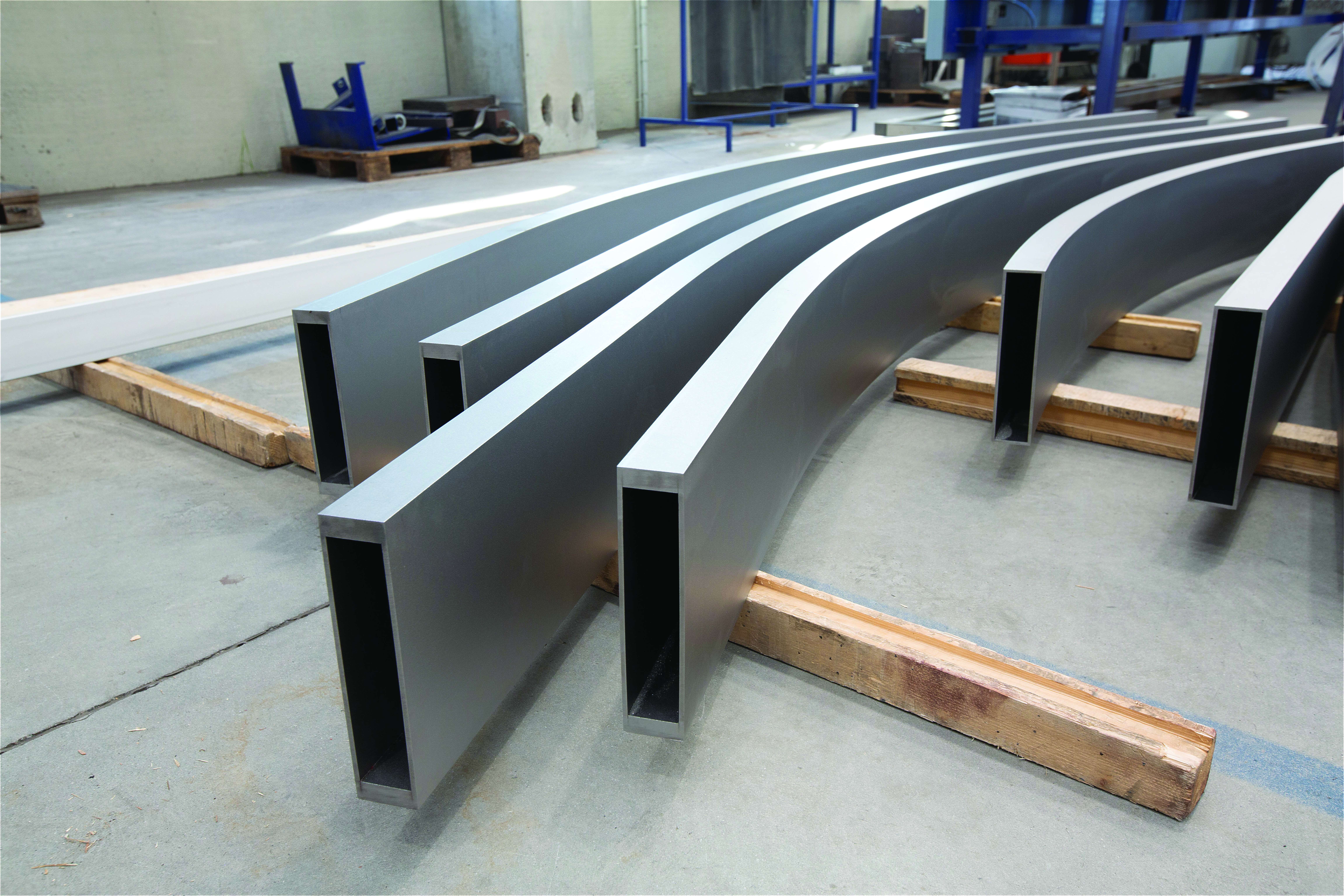
In contemporary façade design, the metal profile is no longer just a hidden technical component. It has become part of the architectural language.
From large glazed elevations to folded skins, curved geometries and exposed structural details, the quality of the profile increasingly defines the quality of the façade.
This is where Montanstahl’s laser-welded steel profiles become especially relevant.
By assembling carbon steel or stainless steel plates into custom sections, laser welding allows profiles to move beyond standard extrusion limits and respond directly to the project’s geometry, visual intent and structural requirements.
Steel and Aluminium: Two Different Design Logics
Aluminium remains one of the most common materials in curtain wall and façade systems. It is light, easily extruded and highly efficient for standardized production. For many projects, especially those based on repetition, established geometries and moderate structural loads, aluminium offers a practical and effective solution.
Steel operates differently. Its higher stiffness allows designers to work with thinner sections, more slender profiles and visually lighter spans while maintaining strong mechanical performance.
In façade design, this can reduce the apparent depthof mullions and transoms, increase transparency and allow the glass surface to become more dominant. The difference becomes especially important when the project requires non-standard geometries. Sharp-edged hollow sections, acute and obtuse angles, Y profiles, arrow-shaped profiles, curved sections or double-chamber profiles can be difficult to obtain through conventional aluminium extrusion.
In traditional extrusion, the die strongly defines the final geometry. Internal and external radii are often wider, and the design has to adapt to the limits of the production process.
Laser-welded steel follows a different logic.
Montanstahl’s approach allows profiles to be assembled from steel plates according to the specific geometry required by the project.
Instead of selecting a section from a catalogue or compromising around manufacturing constraints, the profile can be developed as a precise response to the architectural idea, structural needs and façade engineering requirements.
The Value of the Sharp Edge
One of the most distinctive qualities of Montanstahl’s architectural profiles is the sharp edge. In façade design, this is more than an aesthetic detail.
It defines lines, shadows, reflections and the perceived precision of the whole system.
Sharp-edged steel profiles create cleaner transitions between metal and glass, avoiding the softer appearance often found in extruded or conventionally welded sections.
This becomes especially important in façades where the profile remain svisible: curtain walls, corner mullions, balustrades, large glazed frames and public-space elements.
At Saint-Denis Pleyel Station in Paris, designed by Kengo Kuma &Associates, this precision becomes part of both the architectural identity and public safety strategy.
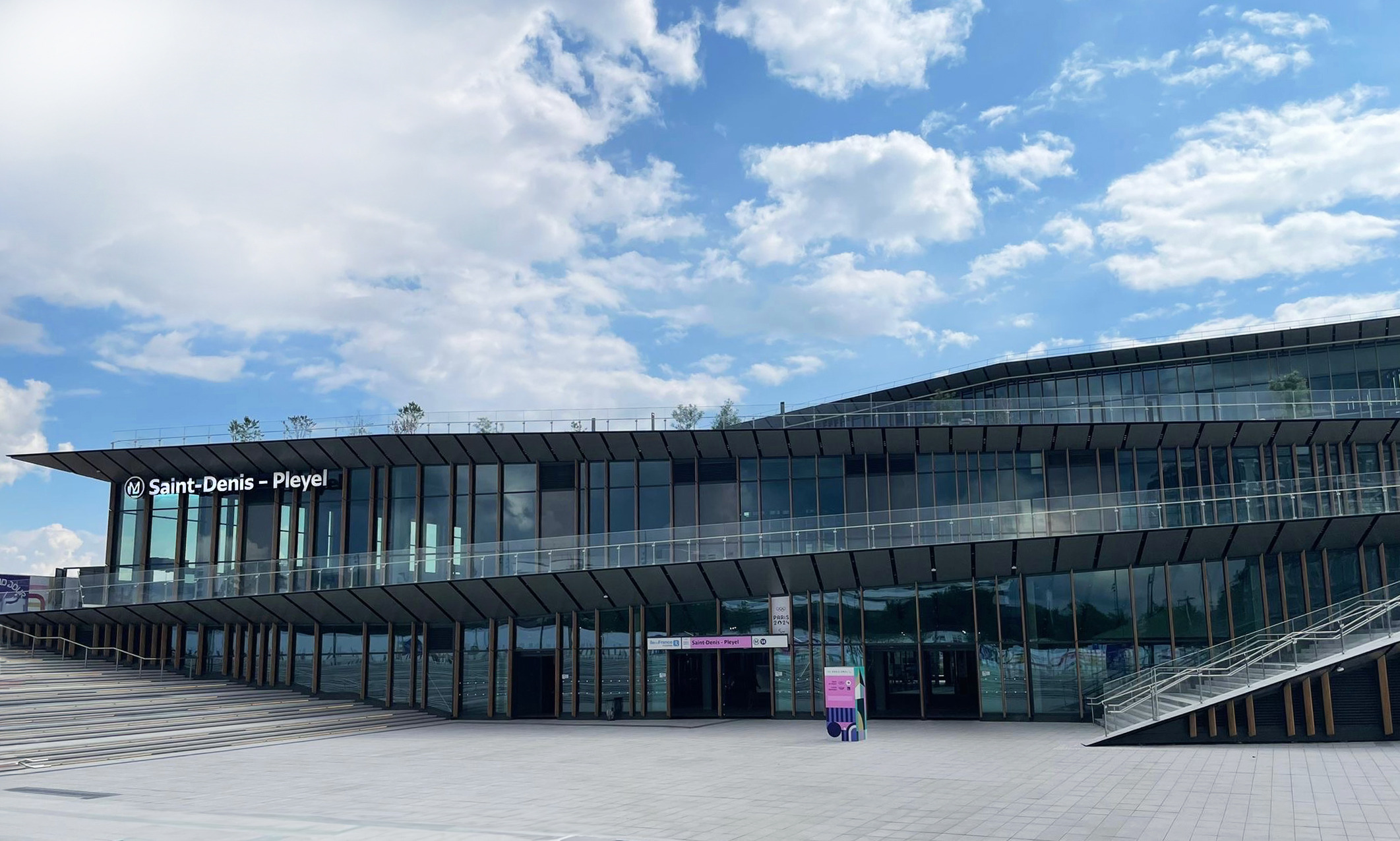
Montanstahl supplied approximately 150 tons of custom laser-welded steel profiles in S355J2 carbon steel, including arrow profiles with acute and obtuse angles, double-chamber hollow sections and edges milled to a 2 mm radius for safer use in public spaces. Here, the edge is not only visual. It is architectural, structural and urban.
Laser Welding vs Conventional Welding
Traditional welding processes such as MIG or TIG remain important in many industrial applications. They are flexible, familiar and widely used. However, when architectural profiles require exposed surfaces, tight tolerances and high visual precision, conventional welding can become limiting.
It introduces more heat into the material, which may generate deformation, residual stress and dimensional variation. The weld bead is alsousually more visible and often requires additional grinding or finishing.
Laser welding follows a different logic.
The laser beam concentrates energy in a very small area, creating a cleaner, more controlled weld with reduced deformation and minimal thermal stress in the material.
Unlike conventional methods, no filler material is used during the process: the seam is exceptionally thin and clean, with a refined appearance that minimizes visual impact while maintaining excellent mechanical properties. In Montanstahl’s profiles, the weld radius and seam can become almost imperceptible, with dimensions below 2 mm, a quality especially valued in exposed architectural elements, where aesthetics is just as important as structural performance.
From Standard Sections to Custom Profiles
Laser welding allows Montanstahl to move beyond standard sections.
One of the greatest advantages of the process is its flexibility: it allows highly complex cross-sections, including profiles with more than four sides and different wall thicknesses on each individual side.
This enables architects and engineers to optimize both the appearance and the structural efficiency of every profile. This is especially valuable when the envelope is no longer flat and repetitive, but made of folded planes, angled glass, directional changes and complex junctions.
In projects such as Cube Berlin, this supports a faceted and reflective façade language.
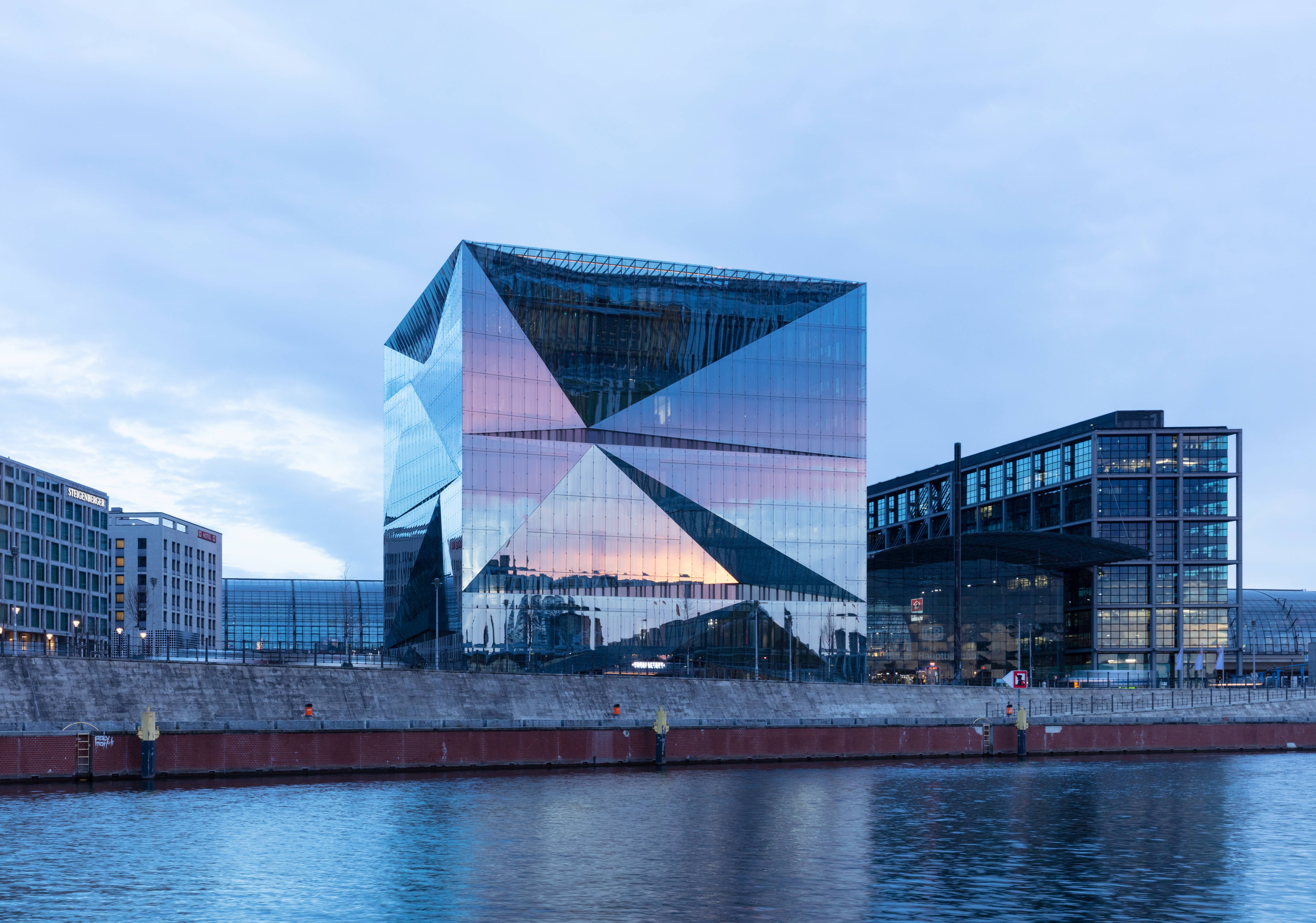
In YY London, curved profiles and custom hollow sections help deliver a sophisticated glazed envelope. At Saint-Denis Pleyel Station, special geometries support both load-bearing and visible architectural elements within a major public infrastructure project. The profile is therefore not only selected. It is designed.
Structural Performance and Design Freedom
Laser welding offers a unique combination of structural performance, aesthetic quality and design freedom. For most architectural projects, the required weld penetration is typically 5 mm per side, providing the structural performance needed for façade systems and glazed structures. When greater strength isrequired, the process can achieve full-penetration welds on material thicknesses of up to 20–25 mm.
Both standard and fullycustomized steel and stainless-steel profiles can be manufactured in lengths of up to 16 metres, offering architects and façade engineers greater flexibility, structural efficiency and maximum design freedom for even the most ambitious projects. In architecture, quality is often judged at close distance: this level of precision can be perceived in every line, edge and connection, from the scale of the city down to the scale of the hand.
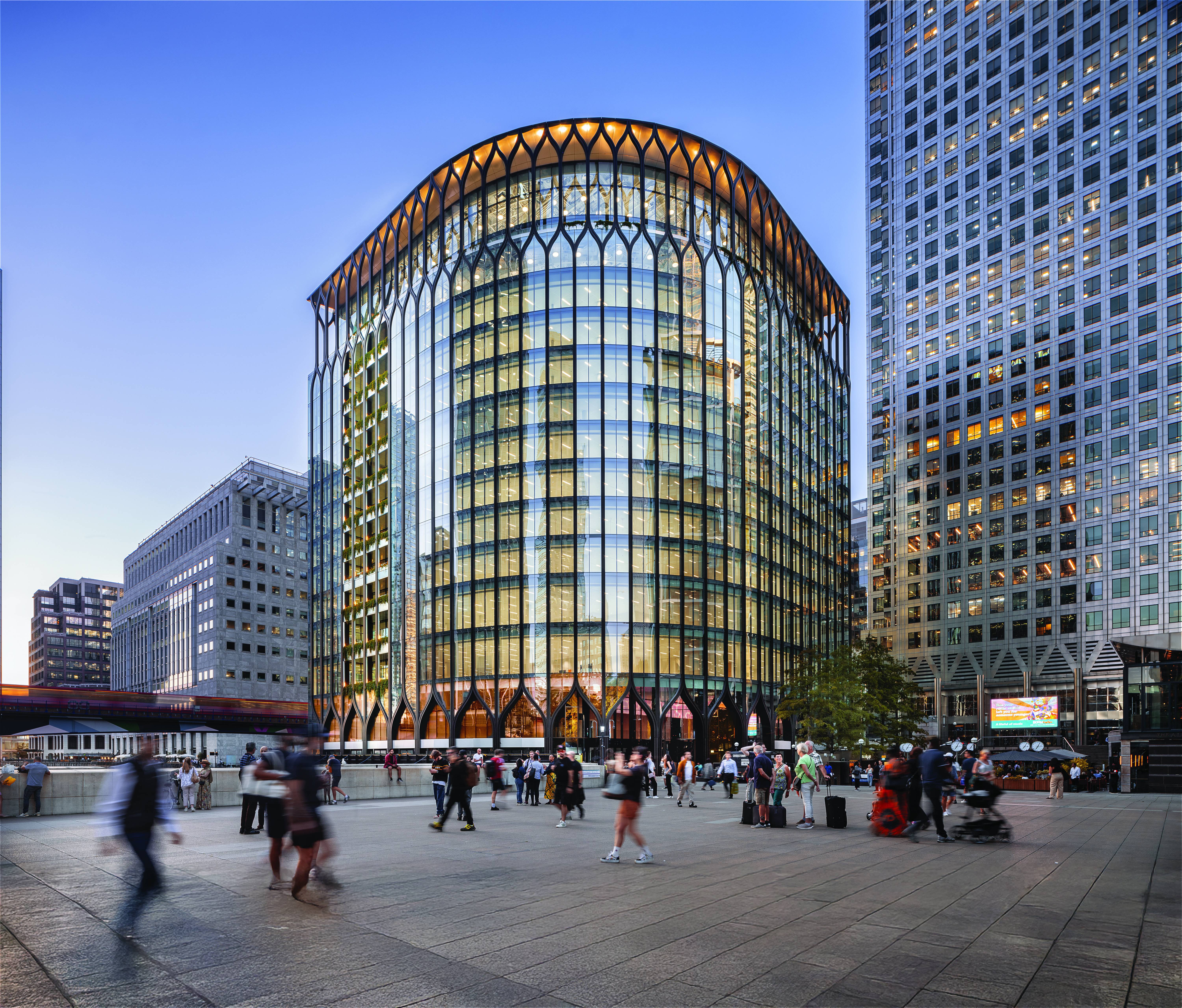
Montanstahl’s value is not only in the technology itself, but how it is applied it to real projects with complex geometries, tight tolerances and high architectural expectations.
The engineering team works closely with architects, façade engineers and contractors throughout the design phase to develop the most suitable profile geometry for each application. Together, they optimize the section to achieve the desired architectural appearance while meeting all technical requirements, including structural performance, load-bearing capacity and cost efficiency.
Future façades will demand components that are more precise, adaptable and performance-driven.
Architects and façade consultants will continue to ask for thinner visible lines, cleaner joints and more freedom in geometry. Laser-welded steel profiles respond to this demand by moving beyond catalogue sections and supporting custom façade components closer to the original design intent.
Montanstahl’s contribution lies in making this possible at the level of detail.
In ambitious architecture, the difference is often found where technology almost disappears.
Events
%201.png)

%201.png)
%201.png)
News


Other Posts
Was your product part of an Urban Icon?
Join the archive that celebrates architecture’s most iconic façades. If your company played a role—through materials, systems, or expertise—let us know. We’re building a record of the people and products behind the world’s most influential buildings.
Further articles
The Newsletter
Stay close to the future of façades.
Receive curated stories, technical insights, interviews, and event updates from the global façade industry. One edition every Friday.
Oops! Something went wrong while submitting the form.
By subscribing, you agree to our Privacy Policy and consent to receive updates.

An independent editorial platform for façade innovation, material intelligence, and architectural envelope design.
Sections
Platform
Contact
© 2026 Fools for Façades. All rights reserved.
.svg)
.svg)