
0


Understanding seismic resilience through the work of Prof.ssa Chiara Bedon and Dr. Nicola Cella
In the global conversation around façade design, topics like sustainability, aesthetics, and fabrication often dominate. Yet one aspect remains chronically underexplored — how façades behave when the ground itself moves.
Prof.ssa Chiara Bedon, Associate Professor at the University of Trieste, and Dr. Nicola Cella, researcher in the same department, are leading a cutting-edge investigation into the seismic vulnerability and performance of non-structural façade systems. The research, which forms a core part of Nicola’s doctoral project, brings attention to a crucial — and too often overlooked — question: What happens to the building envelope in an earthquake?
Their work offers an analytical and performance-driven approach to this question, blending structural engineering, empirical testing, simulation modeling, and a deep understanding of architectural systems.
Façades Beyond Aesthetics: A Seismic Responsibility
In seismic zones, structural systems are designed to deform and dissipate energy. But what about façades — the protective, performative skins that often sit just beyond the structural frame?
These elements are typically considered "non-structural," yet they are essential to building functionality and safety.
Bedon and Cella’s joint research asserts that façades cannot be designed in isolation from seismic strategy.
Failures in these systems — including glass breakage, anchorage failure, or panel detachment — can result in severe hazards to pedestrians, loss of thermal or weather protection, and significant costs in post-disaster repair.
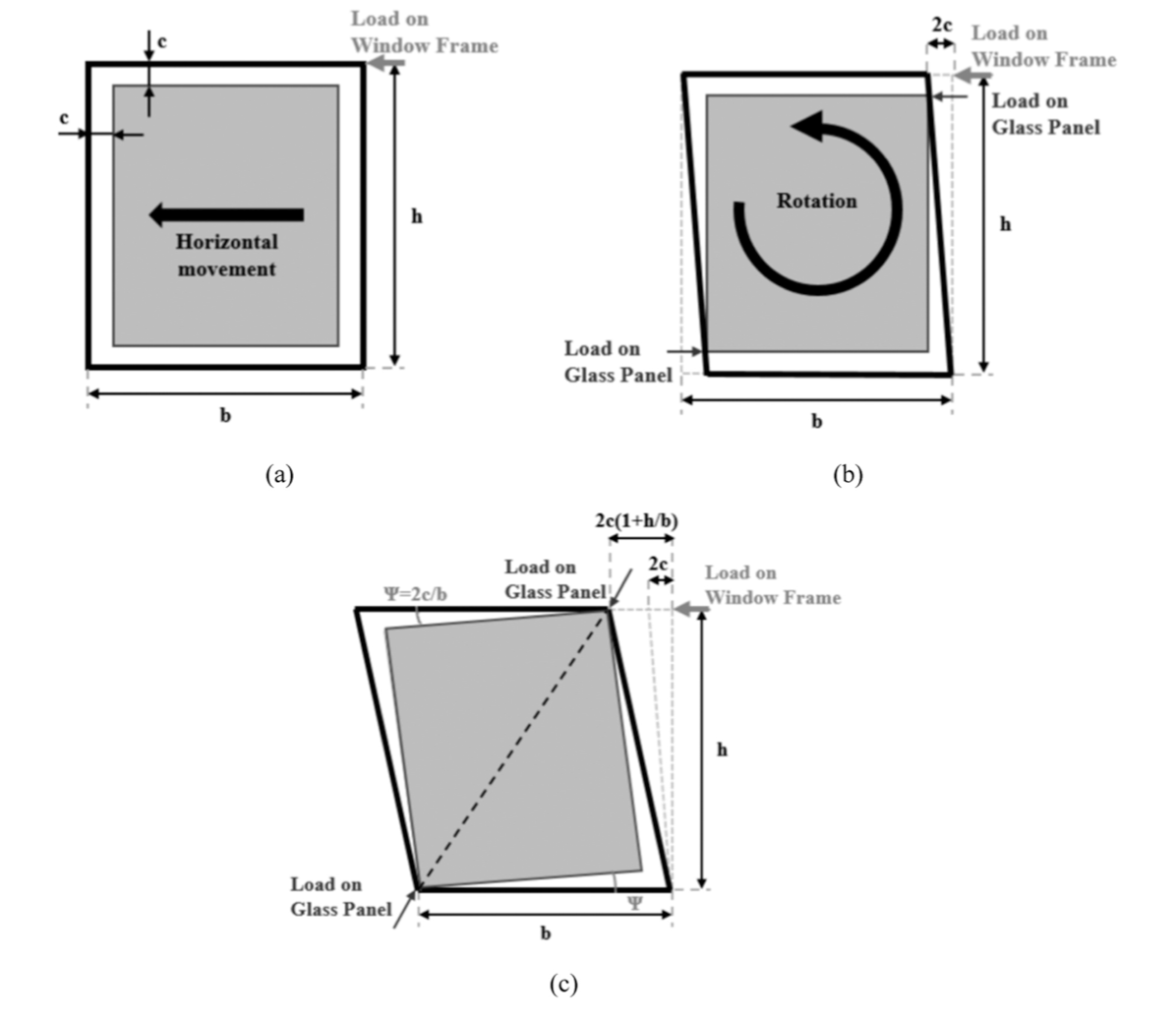
Their work draws attention to a critical vulnerability of modern façades: the incompatibility between the deformation capacity of the building’s structural system and that of the façade.
While structures in seismic zones are designed to flex and dissipate energy, façade systems — often treated as non-structural — may not be able to accommodate these movements.
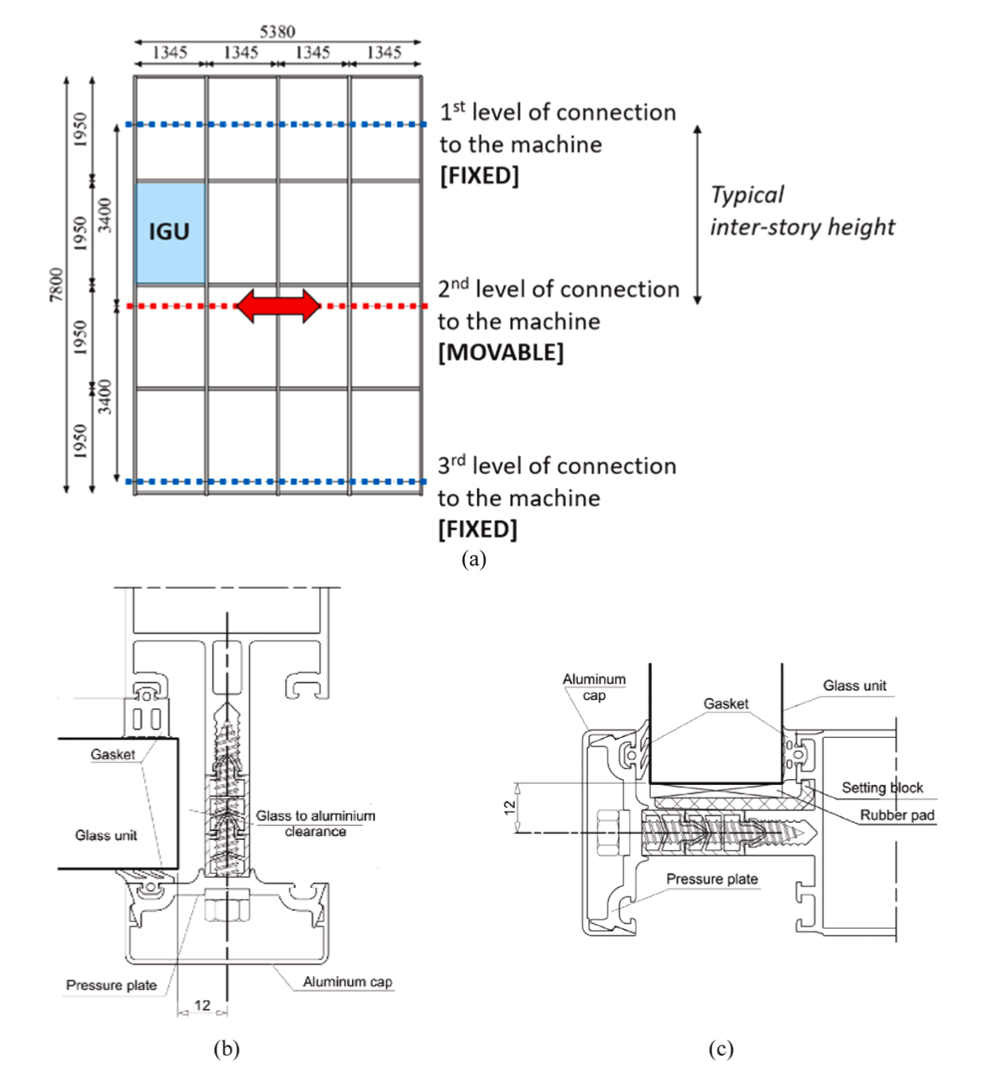
This growing complexity makes façade systems both architectural statements and structural liabilities. The movement of one component can have cascading effects across others — glass fractures, subframe deformations, and failures in anchor bolts or clips that can lead to catastrophic detachment.
Methods and Frameworks: Engineering Seismic Realism
In their research, Prof.ssa Chiara Bedon and PhD candidate Nicola Cella advance seismic engineering beyond the structural core to include the performance of glazed curtain wall systems.
Their work is grounded in advanced numerical modeling and analytical frameworks, focusing on how façades respond under seismic displacement scenarios, with particular attention to inter-story drift.
Rather than conducting new laboratory experiments, their investigation builds upon experimental data from previous full-scale testing campaigns HERE
These tests, often displacement-controlled, evaluate:
- Progressive failure in glazing systems under cyclic lateral loads
- Slippage, cracking, and detachment at connections and anchorage points
- Post-fracture behavior of laminated and insulating glass
- Drift accommodation and tolerance in ventilated façade brackets
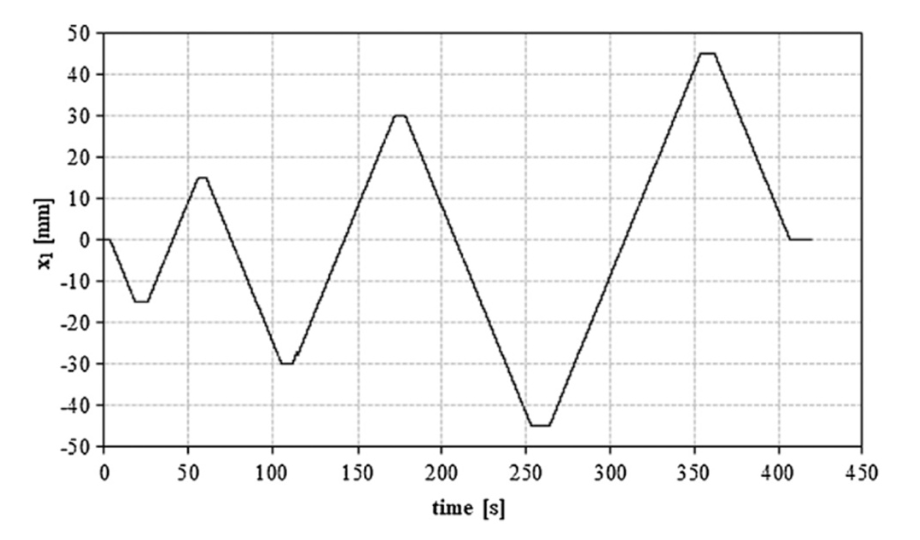
A pivotal part of their research focuses on inter-story drift ratios, simulating the horizontal displacement between floors during seismic events.
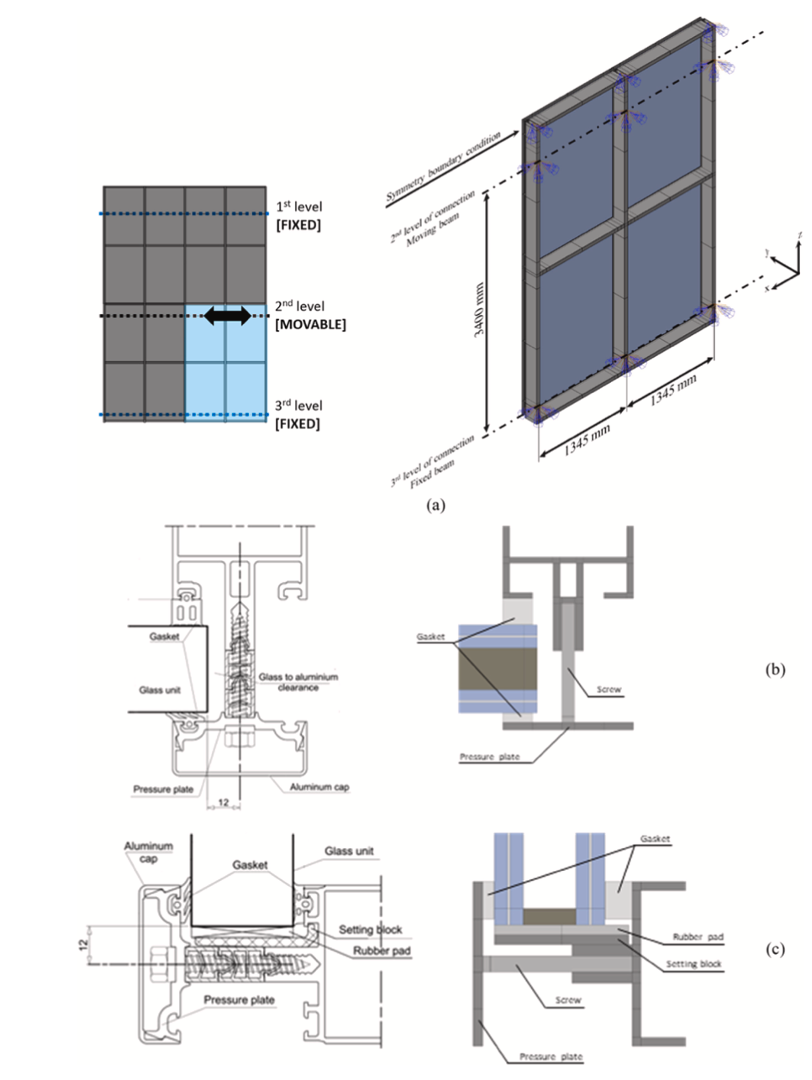
These earlier tests involved 1:1 mock-ups of façade systems, subjected to increasing inter-story drift ratios ranging from 0.5% to 2.5%, allowing for the observation of both elastic and post-elastic behaviors.
At 1.5% drift — a common upper design threshold — several façade systems already showed:
- micro-cracking of fasteners
- slippage and yielding in clip brackets
- delamination of finishes or insulation layers
- dislocation of multi-layer glazing units
These effects were meticulously recorded using high-speed video analysis, strain gauges, and displacement sensors positioned along anchor points, panel edges, and subframe interfaces.
Cella, with a specialization in modeling and structural dynamics, contributes detailed nonlinear finite element models to replicate and extend these findings. These models include:
- Material nonlinearity under biaxial loading
- Fracture propagation in tempered and laminated glass
- Anchor bolt deformation, slip, and rupture
- Time-history seismic loads across different geographic profiles
In addition, the team implemented probabilistic simulations to evaluate façade behavior under repeated seismic events or aftershock sequences. This allowed for identifying not only performance thresholds, but also cumulative degradation patterns.
Their collaboration also includes parametric studies to assess the influence of panel stiffness, bracket geometry, edge conditions, cavity spacing, insulation type, and fixative materials — creating an unprecedented data matrix for façade engineering.
Failure Mechanisms: More Than Aesthetic Loss
The research identifies not just the existence of seismic vulnerability, but the specific mechanisms by which façade systems degrade. For instance:
- Clip anchor failure was identified as a primary risk in ventilated systems, often magnified by edge detailing and poor tolerances.
- Fracture sequencing in IGUs (insulating glass units) revealed delayed breakage in inner panes — creating false assumptions of safety post-event.
- Connector fatigue accumulated over cycles, often leading to sudden release or panel drop, especially when rigid adhesives or brittle fasteners were used.
These mechanisms suggest that traditional design assumptions — where non-structural elements are presumed secondary — fail to capture the critical role of envelopes in post-earthquake functionality.
Moreover, the studies emphasize that many observed façade failures are not due to the intensity of a single seismic event, but to poor tolerance design and underestimation of cumulative displacement, creep, and thermal effects that compromise systems long before visual damage occurs.
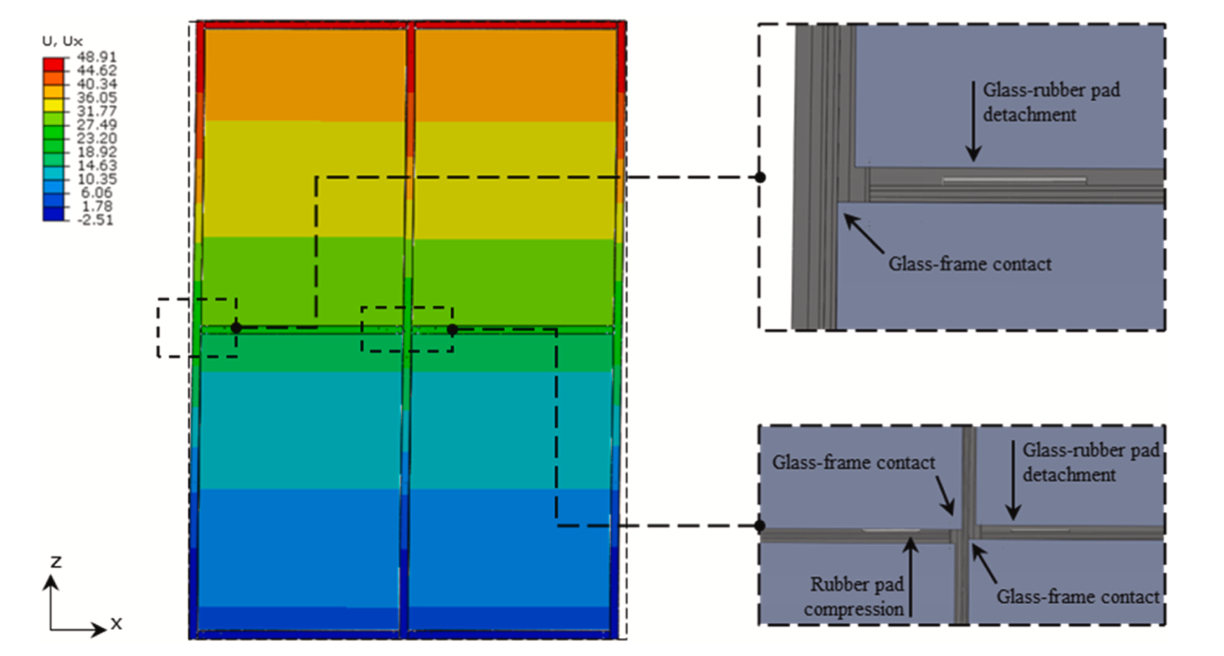
Post-test inspections confirmed permanent deformations in frame substructures, local buckling in aluminum mullions, tearing of gaskets, and even spontaneous breakage days after the seismic input, due to stress residuals.
A Call for Codes, Collaboration, and Co-Design
Bedon and Cella argue for the modernization of seismic codes to include performance-based criteria for façades. Their findings underscore the urgent need for:
- Codied test procedures for façade systems under seismic displacement
- Specific drift-tolerance requirements by material and panel type
- Cross-disciplinary standards that integrate architectural goals with structural constraints
They also advocate for early collaboration between architects, engineers, and manufacturers.
Their joint vision includes a future where façade design integrates real-time feedback, where AI optimizes fixings based on dynamic stress maps, and where standardization doesn’t sacrifice innovation but guides it toward safety and efficiency.
Toward Earthquake-Ready Envelopes
Through their combined research, Bedon and Cella are pushing for a new paradigm in envelope design — one that values not only structural robustness but functional continuity and ease of post-quake recovery.
They envision façade systems that are:
- Smart, with integrated sensing to detect displacement and fatigue
- Flexible, with hybrid joints that tolerate multi-directional drift
- Modular, allowing for rapid post-event repair or component replacement
- Predictive, using AI-assisted simulations to forecast envelope performance under varying seismic intensities
The idea is not simply to prevent detachment, but to maintain the full serviceability of façades in the immediate aftermath of seismic activity — from weather protection to daylight control, fire resistance to acoustic insulation.
Their ongoing collaboration is positioning Trieste as a node of excellence in seismic façade engineering — with international impact on both academic research and real-world construction.
Why It Matters Now
As climate change and tectonic activity continue to challenge urban stability, the resilience of non-structural components is no longer optional. Cities that overlook envelope performance in seismic strategy risk costly downtime, human harm, and architectural loss.
Bedon and Cella’s work shows that resilience is not simply about surviving an event, but about recovering quickly — and ensuring that buildings remain usable, safe, and intact in the aftermath.
Through rigorous testing, cross-disciplinary thinking, and a passion for bridging science and design, they are redefining the future of the façade — one earthquake at a time.
Citation:
N. Cella and C. Bedon, “Numerical modelling of global/local mechanisms and sensitivity analysis for the seismic vulnerability assessment of glass curtain walls,” Engineering Structures, vol. 319, p. 118859, Nov. 2024, doi: 10.1016/J.ENGSTRUCT.2024.118859.
The full report available HERE
Events
%201.png)

%201.png)
%201.png)
News


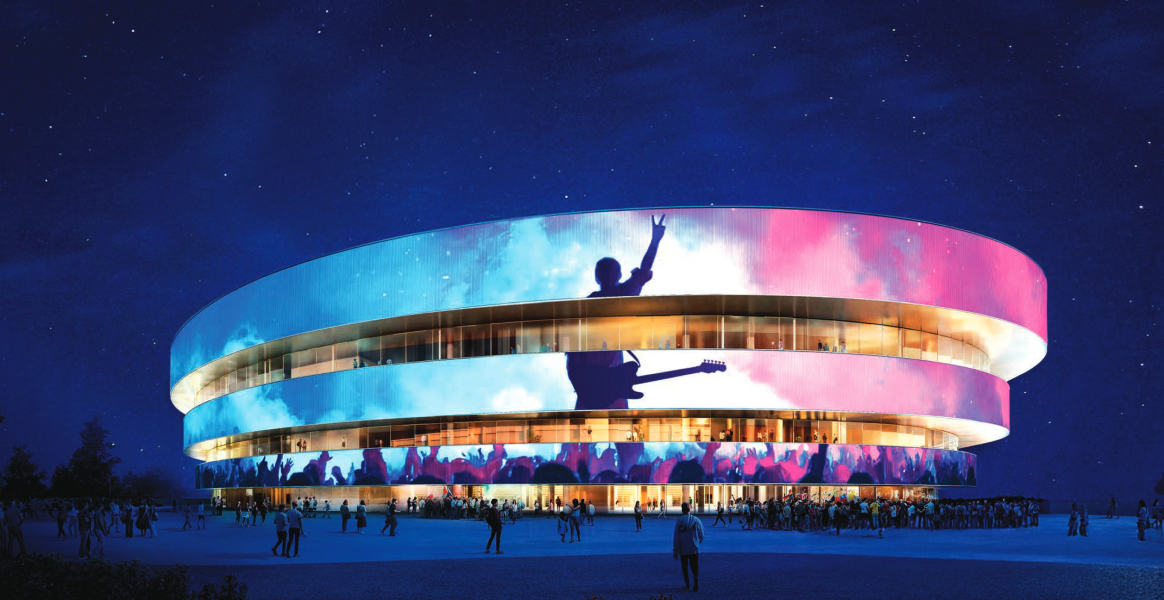
Was your product part of an Urban Icon?
Join the archive that celebrates architecture’s most iconic façades. If your company played a role—through materials, systems, or expertise—let us know. We’re building a record of the people and products behind the world’s most influential buildings.
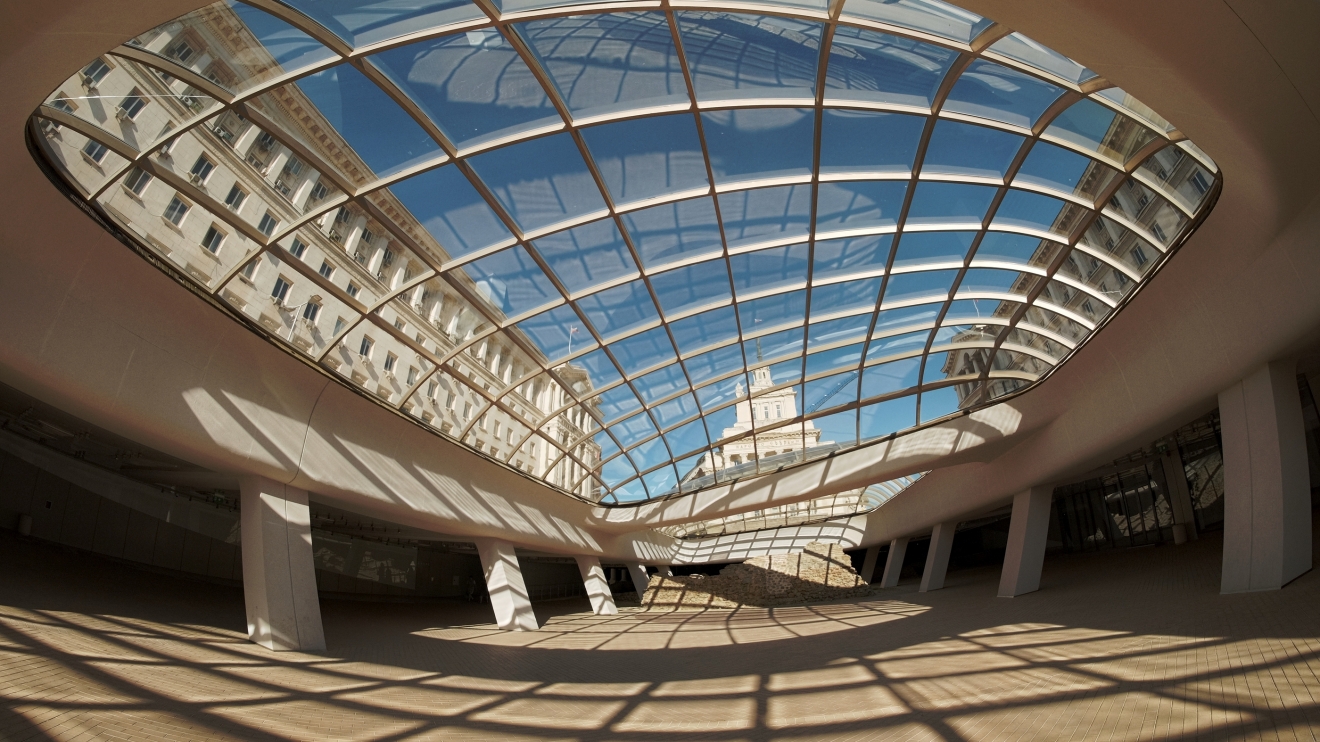
Further articles

.png)
The Newsletter
Stay close to the future of façades.
Receive curated stories, technical insights, interviews, and event updates from the global façade industry. One edition every Friday.
Oops! Something went wrong while submitting the form.
By subscribing, you agree to our Privacy Policy and consent to receive updates.

An independent editorial platform for façade innovation, material intelligence, and architectural envelope design.
Sections
Platform
Contact
© 2026 Fools for Façades. All rights reserved.
.svg)
.svg)