
0


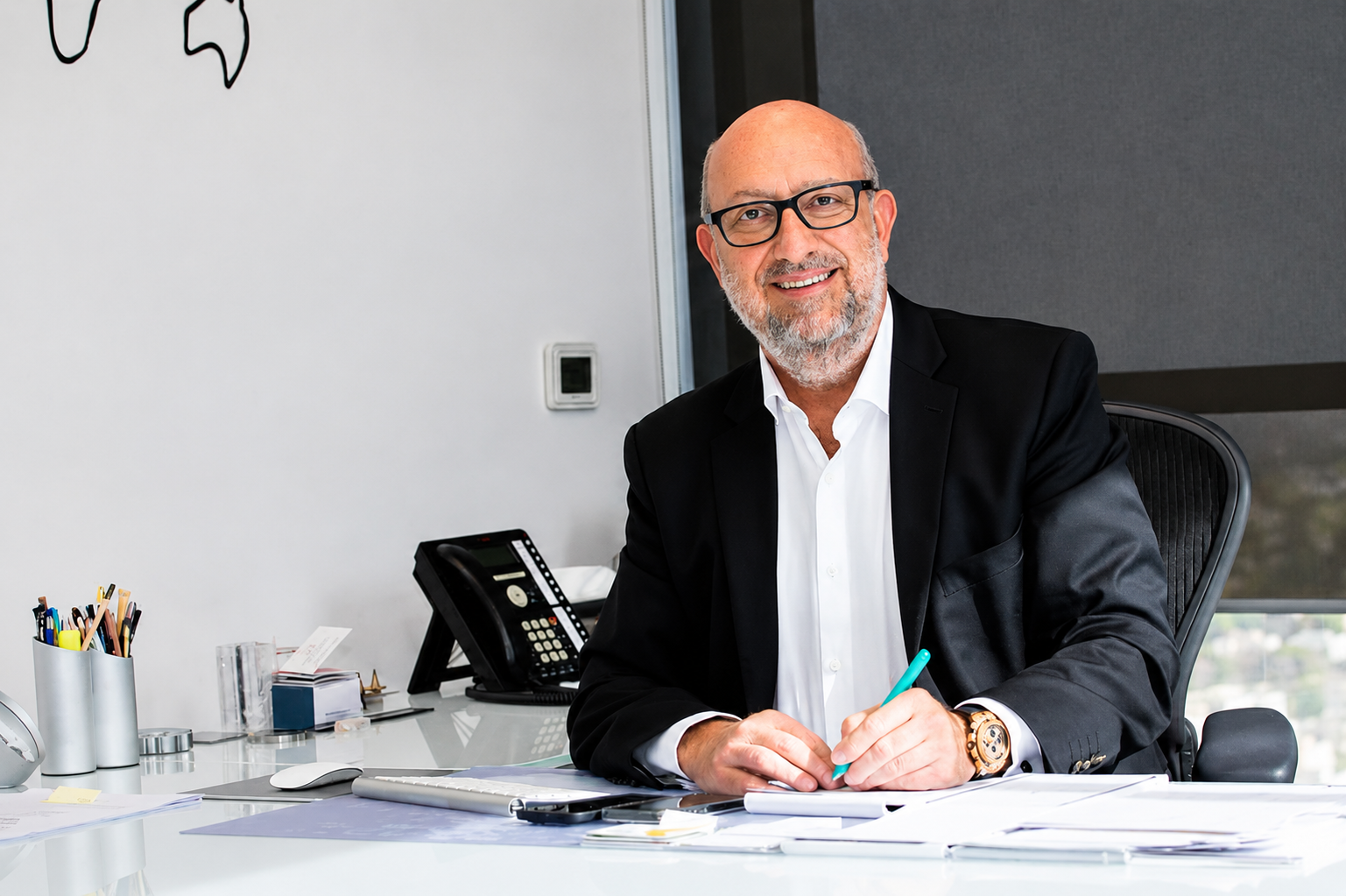
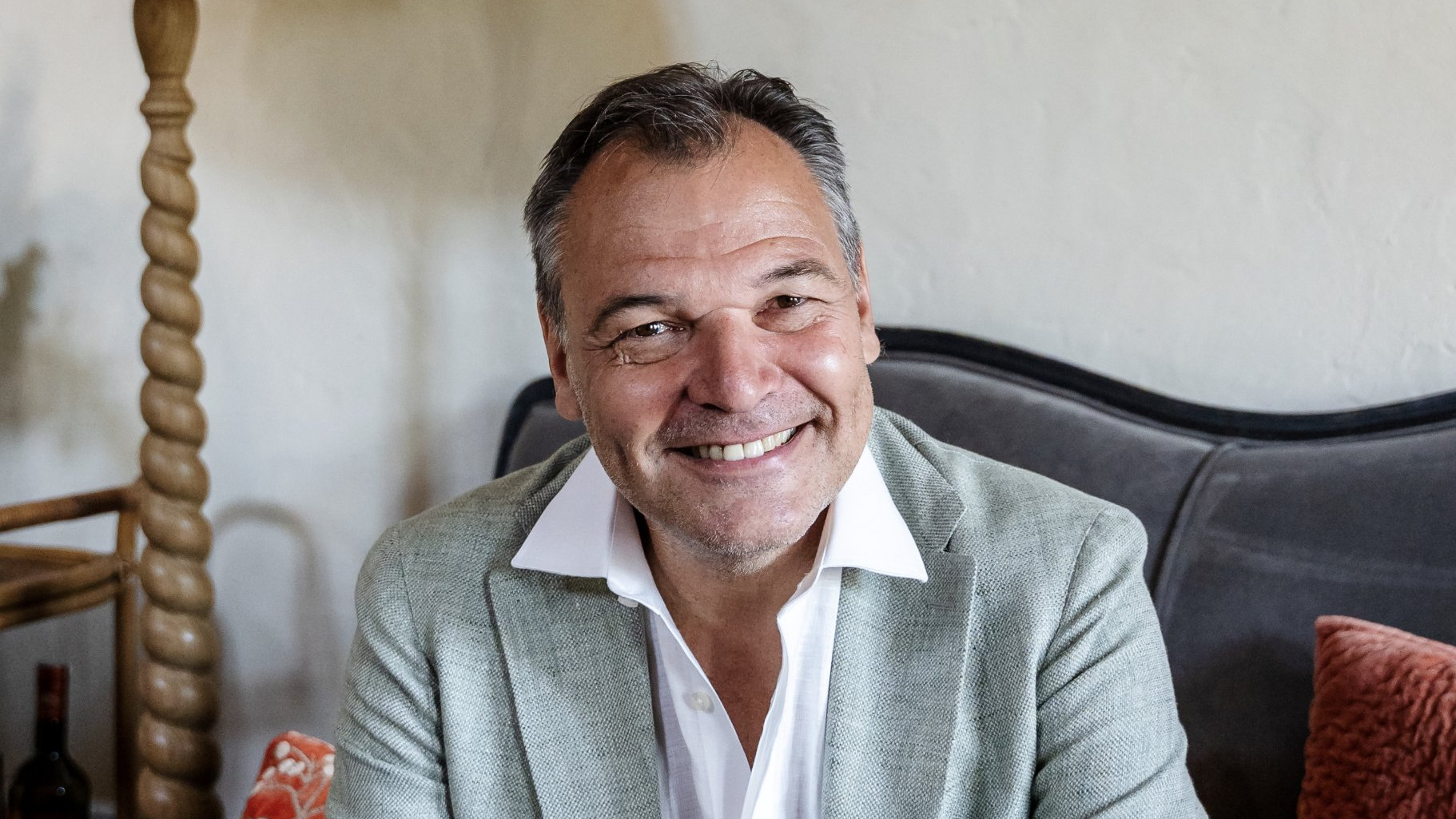
For more than three decades, Alex Dantziguian has worked across façades, aluminium, glazing, steel and thermoplastics.
But his understanding of the industry did not begin in a boardroom. It began in the factory and on site.
Raised inside his family’s façade contracting business in Lebanon, Alex learned to weld steel from experienced artisans before being sent to France at the age of twenty-one to machine, assemble, glaze and install a window with his own hands.
That practical foundation later followed him through major projects in Thailand and Vietnam, and eventually into Technoform, where he helped develop the company’s business across the Middle East, India and Africa. Today, as shareholder, board member and Managing Director of Technoform Middle East, Alex brings a rare perspective across the complete façade chain: from fabrication and installation to specifications, thermal performance, procurement, business strategy and long-term industry relationships.
In this conversation, he reflects on the realities of façade performance in harsh climates, the gap between specification and execution, the true value of thermal breaks, intelligent value engineering and what more than thirty years in the industry have taught him about leadership and people.
FFF: Alex, you have spent more than 30 years working across façades, aluminium, glazing, steel and thermoplastics. When you look at the industry today, what has changed the most and what has not changed enough?
Alex: From a Middle East and GCC perspective, what has changed most is the understanding of quality in fenestration and façades. Quality of specifications, materials, air/water/wind infiltration, thermal isolation, and execution. The level of technical sophistication at the specification stage is essential, and having the proper specialists and consultants early on in projects has become more widespread.
Thermal performance is one area that is now part of the conversation in a way it simply was not thirty years ago. I have seen windows go from single-glazed cold systems to double and even triple glazed using warm edge spacers in thermally broken and well-designed aluminium systems.

What has not changed enough is the gap between specification and execution. While the understanding is there, the actual products used in the execution are not always present. A project can be designed to a high thermal standard and still be compromised during procurement when value engineering removes the very components that make it perform. That gap is costing building owners money for decades after handover. In addition, what is the point of having a well-designed and insulated system if the installation is not done correctly?
This is where façade consultants are needed to ensure that there is no corner-cutting.
FFF: Your career started in your family’s façade contracting business in Lebanon before expanding internationally and later leading Technoform Middle East. How has this journey shaped the way you look at façades today?
Alex: Starting in my family business in Lebanon put me in the factory and field early. I learnt how to weld steel together from old and experienced artisans at the age of 17-19.
When I was 21, my father sent me alone to France to learn how to machine, assemble, glaze, and install a window with my own hands. Not because we didn’t have enough workers. But he said, when you tell one of your workers, you are not doing that correctly, or fix this screw this way, they will think, what does this kid know? But when you have learned how to do it professionally, you can instruct and correct with confidence. Later, I worked for my father’s fabrication company in Thailand, where I managed big projects in Bangkok, both from a management and technical side. From there, I expanded the business to Vietnam, where we completed a 200-room hotel in Hanoi. In all, I worked 12 years in my family’s business.
Then I went from one family business to another family business: Technoform. When I joined Technoform, as a partner to build up the MEIA region business, I brought that bottom-up perspective and my contacts in the closely knit aluminium industry with me. It helped me a lot to understand the systems of our customers from the technical eyes of a fabricator who has been there.
FFF: Having worked with architects, consultants, developers, system houses, extruders, contractors and glass processors, where do you think real façade quality actually begins?
Alex: It begins right at the start,when the Architect has an idea or sketch and brings the façade consultant alongside him/her from that point on. Convincing the developer or client that it’s a must for the success, efficiency, cost saving, and durability of their project. This is where the quality begins.
If all the parameters are not clearly defined at the outset, every party downstream is making assumptions, and those assumptions compound.
The same applies when a system house comes to us early on when designing a new system. This is the time when we can best support them. Once the system is designed and aluminium extrusion dies are produced,it is very difficult and costly to think about thermal insulation and make changes to the existing dies.
At every step, there must be a conscious choice of quality. No one is an expert in all aspects and all steps. It’s ok not to know. It is not ok not to ask for support from a specialist.
FFF: In the Middle East, India and Africa, buildings often need to perform under extreme heat, solar radiation, dust, humidity and fast construction timelines. What do many people still underestimate about designing façades for these climates?
Alex: One of the biggest issues we see is that most systems are designed for European or American climates.
While in the Middle East, India, and Africa, the climate is very different. Many of our international clients have understood this early and have designed systems especially suited for the regional climate.
Extreme heat, dust, sand, humidity, and condensation on the opposite side are considerations to be taken into account.

Another point is that most energy modelling in this region still relies on centre-of-glass U-values, as though the frame and edge-of-glass zones do not exist.
In a climate where outdoor temperatures can exceed what the human body tolerates, that is not a marginal error; it is a material one. This is one reason why façade consultants are so important.
The other underestimated factor is durability. A façade that performs on day one and fails at year seven is not a success. It is a liability.
That is why PVC or other plastics, without glass fibre filling or thermal break strips, will fail in this climate.
They soften at 80-120 deg C. In our climate with 50+ deg C ambient temperature, with direct sunlight at peak midday, direct sunlight can easily push the internal closed chamber temperature of a façade over 100 deg C, especially if the aluminium or glazing is of dark colour.
Our Polyamide with 25-40% glass fibre infill resists up to 250 deg C. It is the perfect material for resisting such a climate.
FFF: Technoform is known globally for thermal insulation solutions. In simple terms, how would you explain the real value of a thermal break to a developer or architect who still sees it as a small component?
Alex: Without it, aluminium, one of the most thermally conductive metals used in construction, becomes a direct bridge for heat or cold between the outside and inside of a building.
In a climate like Dubai, that means exterior heat is conducted through every window frame, door frame, and curtain wall mullion.

A thermal break interrupts that conduction. Specifying an aluminium system without one in the Middle East is like installing insulation in a wall and leaving a steel rod running through it from outside to inside. The component is small. The physics are not.
The real value of thermal break is in both the Capex and Opex of any building.
During design and construction, there is a big saving on the building HVAC or cooling system units, which are very costly, take space, and emit CO2 into our atmosphere.
During the operation of the building, there is a large cost savings on the power consumption of the users to cool their homes.
This is directly felt by the residents and their pockets. A great marketing tool for developers who can say if you buy in our building, you can save 20-40% on your monthly electricity or cooling bill. As the cost of energy increases worldwide, this becomes an important consideration.
FFF: Many iconic buildings are designed around transparency, slim profiles and large glass surfaces. How do you balance architectural ambition with the need for real energy performance?
Alex: It is true that Architects in our region design amazing and iconic buildings, many of which are what one would call “glass boxes”. However, they do put an incredible amount of time and resources into adjusting the façade direction to reduce direct sunlight and sometimes place external shading elements to reduce the thermal stress on the façades. Still, U-values do matter, and while there are many high-performance glazing solutions on the market these days, it is essential to also use warm edge spacers for all insulated glass. Shading coefficient and U centre-of-glass are simply not enough. The edge of glass between the frames and the glazing is an area where additional performance is required. These calculations are part of the free services we offer to our clients and glass producers/coaters.
FFF: From your experience, what is the most common mistake made when people evaluate façade performance only through glass specifications and overlook the rest of the system?
Alex: Energy passes through the weakest point of a window or façade system. Just like water seeps through the weakest point of concrete, which is the micro cracks. You can install the most performant glass in your building, but if you don’t also take care of breaking the other thermal bridges of the system, energy will find the weakest point and pass through anyway. In this case, the weakest point is the metal frame. I have seen projects where significant investment went into triple-glazed, low-e units installed in aluminium frames with no thermal break. The glass may perform to specification. The building does not.
FFF: At what point in a project should thermal performance, edge-of-glass behaviour and aluminium system efficiency become part of the design conversation?
Alex: At the concept stage, even before the design stage and certainly not at the tender stage. The decisions made at the concept level determine what is possible at every subsequent stage.

If a building is designed with a south-facing all-glass elevation in Dubai, the thermal performance conversation that follows is constrained from the outset. The façade engineer and the thermal performance specialist need to be in the room before the massing is fixed.
FFF: You have seen projects from design, extrusion and processing all the way to installation. Where does the biggest loss of performance usually happen between the specification and the completed building?
Alex: In two places: procurement and installation.
The loss happens when a specification moves through a competitive tender, and the team under commercial pressure accepts substitutions that are not equivalent. A thermal break substituted on price alone, without verifying thermal conductivity, geometry, and durability, can appear identical to a non-specialist and underperform significantly.
The other is during installation, as explained earlier. It is useless to have the best-performing thermally broken windows or curtain wall when the installation is done incorrectly, allows air infiltration, or reconnects the exterior and interior façades.
Specification is only as good as the chain of custody that carries it through a well-installed product on site.
FFF: In fast-moving markets, value engineering is often unavoidable. How can project teams reduce cost without damaging the long-term performance and durability of the façade?
Alex: There are intelligent ways to offer value engineering and reduce costs without compromising the long-term performance and durability of the façade. The important thing is not to cut costs on the components which actually save you money during the life of the building. That is not value; it is a cost.
For example, if you are saving money on the quality of sealants, structural connectors, or the quality of gaskets, then you are not really saving. You are damaging. The same goes for thermal insulation in such regional climates. You are actually increasing the cost over the next 20-30 years.
The smart way for value engineering is when you use standard products, materials or dimensions which are available on the market.
Be it glass sizes or thermal break strip widths and geometries. Instead of customising the glass types, colours, shapes, or multitude of dimensions in the same façade, unify them. Instead of designing a bespoke façade system or thermal break strip with its own die. Use standard ones.
This is where large savings can be made without compromising on quality or performance.
FFF: What separates a façade that looks impressive on handover from one that still performs well after 10, 20 or 30 years in a harsh climate?
Alex: Material selection, correct detailing in installation, and maintenance provision. In the MEIA region, UV degradation, thermal cycling, and wind-driven dust are accelerated compared to temperate climates. Materials that perform for thirty years in Germany may not perform for thirty years in Riyadh or Mumbai without adjustment to the specification. That regional adaptation is often where the difference is made. That is why façade consultants with regional offices and experts who have been living and working in this region for years have the upper hand. They know and understand how façades and materials behave here.
FFF: As a shareholder, board member and managing director of Technoform Middle East, how do you build trust in a market where technical decisions are also commercial, strategic and sometimes political?
Alex: By being technically credible before being commercially interested. My approach has consistently been to understand the project, understand the constraint, and give an honest technical answer even in cases when that answer does not favour our product or is not one which we produce. That builds a different kind of trust than a sales conversation does.
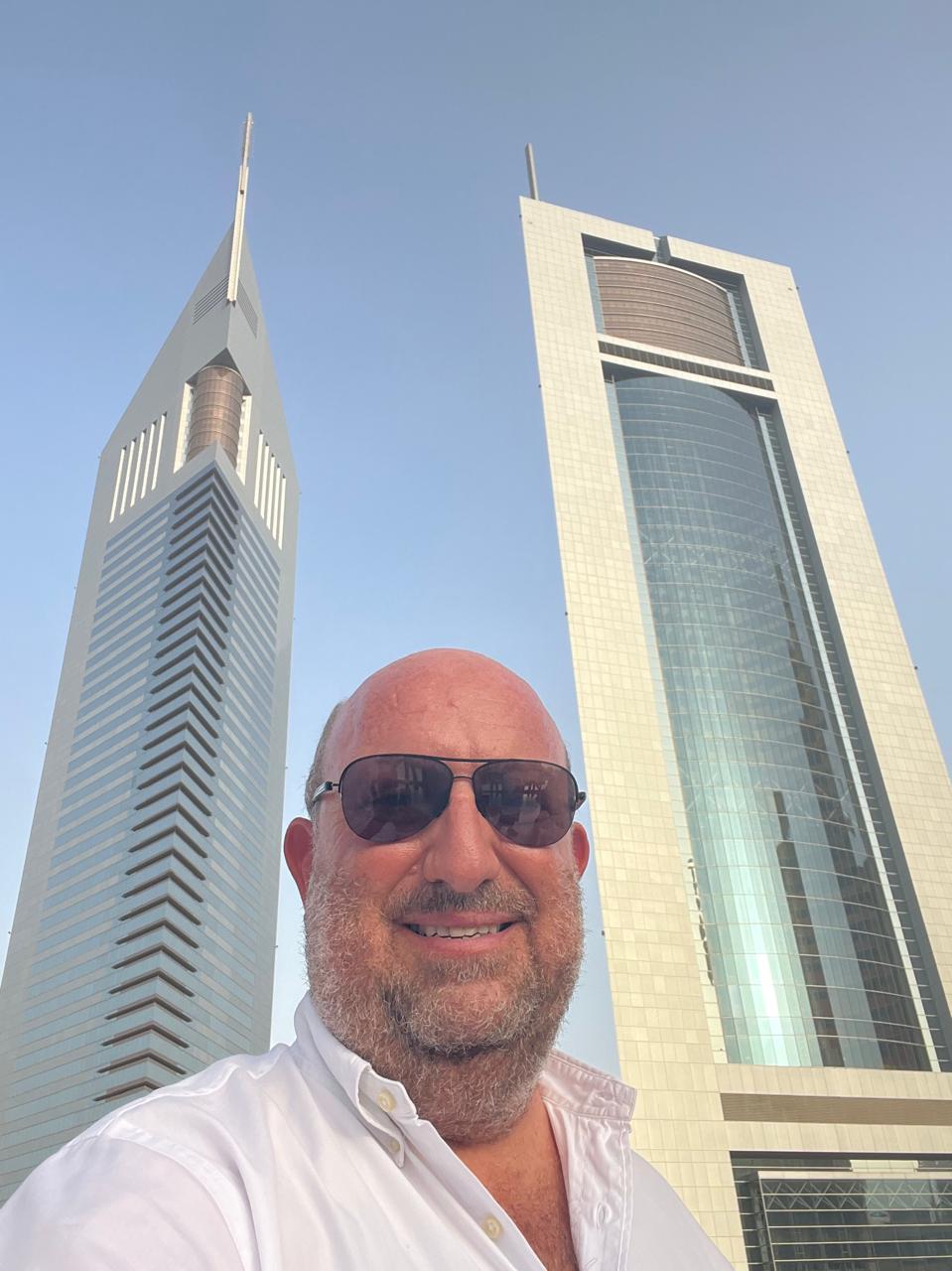
Once you establish trust, the people who know you also trust you. Many business deals in this region are still based on trust and a handshake. Your reputation and connections are paramount.
I navigate the political dimension by being clear about what Technoform offers, where it is the right solution, and where it is not. That honesty is noticed.
FFF: You have built and scaled operations across different regions and cultures. What has the façade industry taught you about leadership, negotiation and long-term relationships?
Alex: It has taught me that technical expertise without cultural intelligence and empathy is a ceiling. I speak six languages, and each one has given me a different way of understanding how people from different cultures make decisions and what they value in a partner. Whether with clients from the region or suppliers and partners internationally.
In negotiation, the industry has taught me patience. A project lifecycle is long. The counterpart across the table today may be on the other side of a specification decision three years from now. That context changes how you negotiate; you are not optimising for a single transaction; you are managing a relationship through many. Our industry is quite small, and we all know each other well. People change companies often in this region, so chances are, you will be negotiating with the same person for another project with another company, in another country, in the future. As one of my close friends in the industry always says to me: Alex, you and I are two of the very few people who still hold the same business card after 20 years.
FFF: Looking ahead, what do you believe will define the next generation of façade systems in the Middle East: regulation, energy performance, materials, digital tools, or client awareness?
Alex: Regulation, followed by client awareness, is moving faster than the industry expects. The UAE energy codes are leading and closing the gap with international standards.
Plans, such as Vision 2030 and 2040, are creating demand for building performance that did not exist at scale five years ago. What regulations establish, client awareness reinforces.
Another area is how people view façades.
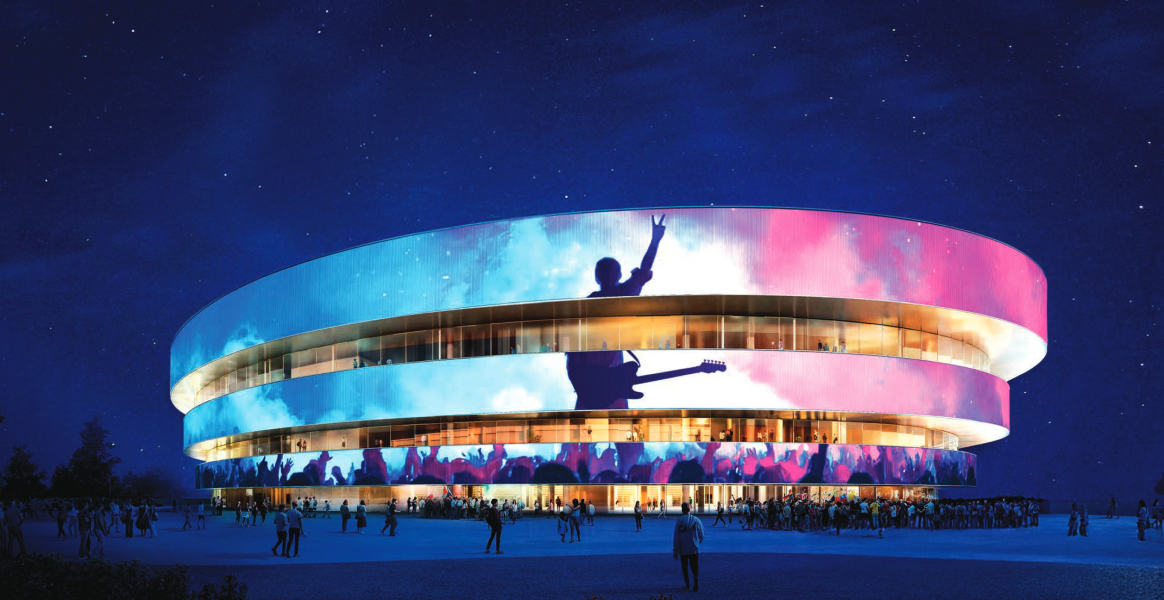
They are becoming digital spaces which generate income by harvesting solar power or selling advertising space by using the façade as a digital screen.
FFF: After more than three decades in the industry, what still gives you energy, the technical challenge, the business side, the people, or the possibility of shaping landmark buildings?
Definitely the people. I have built connections and teams across three continents and worked alongside engineers, architects, and developers from dozens of cultures and languages.
The technical challenge is stimulating and landmark projects carry real satisfaction.
But I am a people person at heart. I love the networking, the conversations, and the business which is created from those interactions.
What genuinely energises me is the moment I look into the eyes of a customer, shake hands, and close a deal. I am still a salesman at heart.
The Excel sheets, reports, and endless online meetings are not my favourite parts. People are!

FFF Perspective
Alex Dantziguian's journey reminds us that façades are not understood from meeting rooms alone. They are understood on factory floors, construction sites, and through decades of solving real problems under real constraints.
His perspective reinforces a fundamental principle: façade performance is never the result of a single product. It is the outcome of thousands of decisions made across design, specification, procurement, fabrication, installation, and long-term maintenance.
Too often, the industry celebrates performance on paper while losing it during execution. Thermal breaks, material quality, installation, value engineering, and attention to detail all determine whether a façade performs for thirty years—or only until handover.
Perhaps the strongest message is that technical expertise alone is not enough. Trust, long-term relationships, and understanding how different cultures work together remain essential to delivering successful projects across global markets.
For Fools for Façades, the future of the building envelope will belong not only to better technologies, but to professionals who combine technical knowledge, practical experience, and the ability to protect design intent from concept to completion.
Events
%201.png)

%201.png)
%201.png)
News

Other Posts
Was your product part of an Urban Icon?
Join the archive that celebrates architecture’s most iconic façades. If your company played a role—through materials, systems, or expertise—let us know. We’re building a record of the people and products behind the world’s most influential buildings.
Further articles

The Newsletter
Stay close to the future of façades.
Receive curated stories, technical insights, interviews, and event updates from the global façade industry. One edition every Friday.
Oops! Something went wrong while submitting the form.
By subscribing, you agree to our Privacy Policy and consent to receive updates.

An independent editorial platform for façade innovation, material intelligence, and architectural envelope design.
Sections
Platform
Contact
© 2026 Fools for Façades. All rights reserved.
.svg)
.svg)